Clemency board recommends pardon for Dominic LaPreme, 4–1, citing ongoing penalties and family hardship
March 12, 2026 | Board Council Commission Agencies , Executive, Washington
This article was created by AI summarizing key points discussed. AI makes mistakes, so for full details and context, please refer to the video of the full meeting. Please report any errors so we can fix them. Report an error »
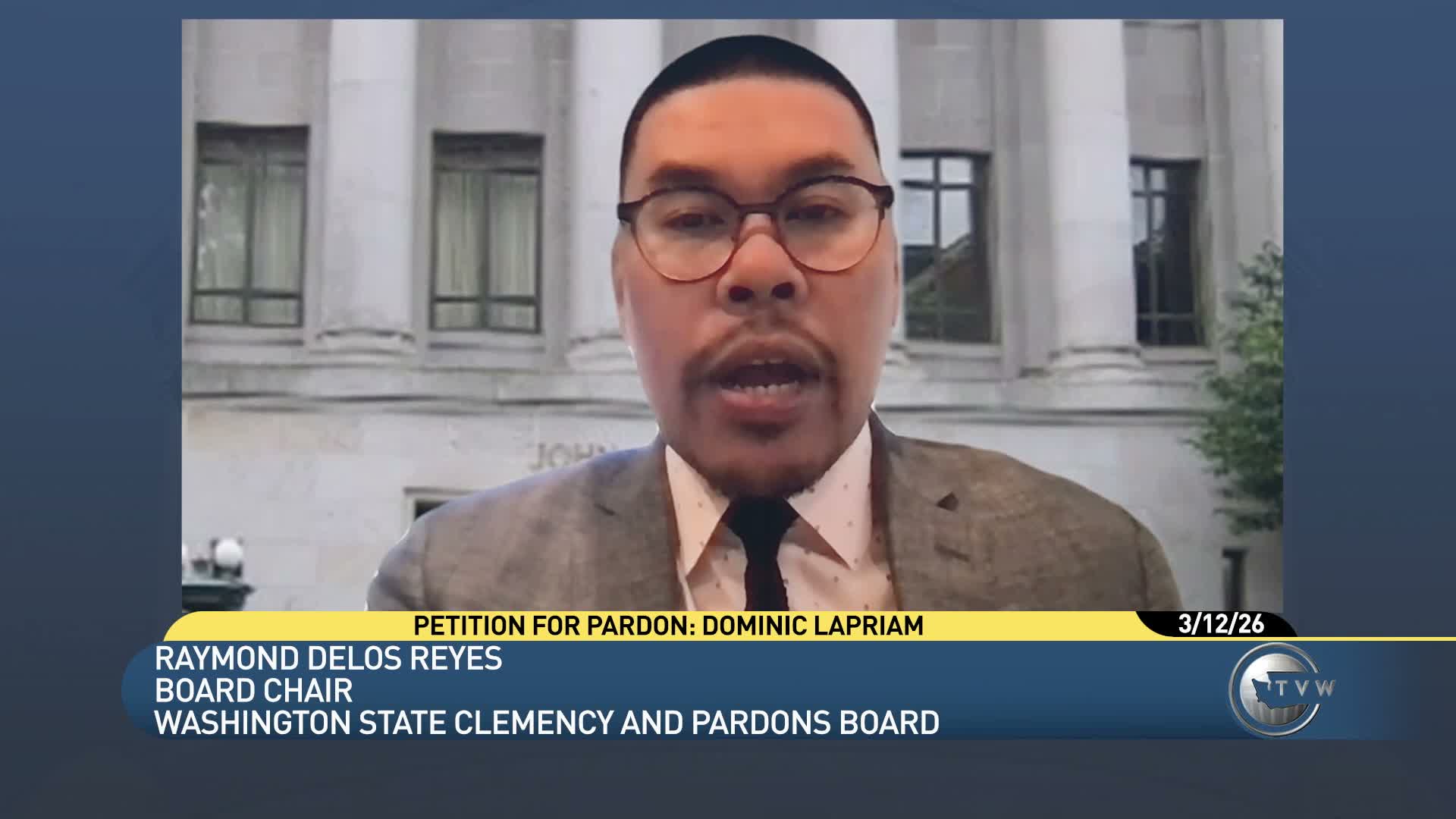
The Washington State Clemency and Pardons Board voted 4–1 on March 12, 2026, to recommend a pardon for petitioner Dominic LaPreme, who said he sought relief from enduring penalties and disabilities tied to convictions more than 25 years old.
Attorney Kurt Bennett told the board LaPreme’s convictions (burglary 1 and kidnapping 2 among other counts) are not vacatable under statute and that, as a result, the petitioner faces ongoing barriers: he cannot bid for government and military-base contracts, is blocked from taking on certain coaching roles, and cannot travel to Canada to visit family. Bennett said those restrictions limit LaPreme’s business and mentoring opportunities.
LaPreme addressed the board directly, apologized to victims and described the impacts on his family and business, including being unable to coach his son’s football team and missing family events in Canada. His spouse, Jacqueline LaPreme, read a statement describing the family’s ties to Canada and the emotional cost of prolonged separation.
Deputy Prosecuting Attorney Joseph Jackson told the board the prosecutor’s office was not taking a position on how the board should exercise its discretion; he noted that some charges were vacated in Thurston County Superior Court but that the remaining convictions fall under statutory limits (referenced in the record as "RCW 9 94 a 6 40" as stated) and that the question for the board was whether extraordinary circumstances exist.
Board Member Rhonda Salveson moved to recommend a pardon, citing what she called ongoing penalties and disabilities affecting the petitioner’s ability to obtain federal contracts and fully participate in family life; Vice Chair Doug Baldwin seconded. The board voted 4–1 to forward the recommendation to the governor. Chair Raymond Delis Reyes reminded participants that the governor has the final authority to grant a pardon.
What happens next: the board’s recommendation and the case materials will be sent to the governor for review under the executive pardon process.
Attorney Kurt Bennett told the board LaPreme’s convictions (burglary 1 and kidnapping 2 among other counts) are not vacatable under statute and that, as a result, the petitioner faces ongoing barriers: he cannot bid for government and military-base contracts, is blocked from taking on certain coaching roles, and cannot travel to Canada to visit family. Bennett said those restrictions limit LaPreme’s business and mentoring opportunities.
LaPreme addressed the board directly, apologized to victims and described the impacts on his family and business, including being unable to coach his son’s football team and missing family events in Canada. His spouse, Jacqueline LaPreme, read a statement describing the family’s ties to Canada and the emotional cost of prolonged separation.
Deputy Prosecuting Attorney Joseph Jackson told the board the prosecutor’s office was not taking a position on how the board should exercise its discretion; he noted that some charges were vacated in Thurston County Superior Court but that the remaining convictions fall under statutory limits (referenced in the record as "RCW 9 94 a 6 40" as stated) and that the question for the board was whether extraordinary circumstances exist.
Board Member Rhonda Salveson moved to recommend a pardon, citing what she called ongoing penalties and disabilities affecting the petitioner’s ability to obtain federal contracts and fully participate in family life; Vice Chair Doug Baldwin seconded. The board voted 4–1 to forward the recommendation to the governor. Chair Raymond Delis Reyes reminded participants that the governor has the final authority to grant a pardon.
What happens next: the board’s recommendation and the case materials will be sent to the governor for review under the executive pardon process.
View the Full Meeting & All Its Details
This article offers just a summary. Unlock complete video, transcripts, and insights as a Founder Member.
✓
Watch full, unedited meeting videos
✓
Search every word spoken in unlimited transcripts
✓
AI summaries & real-time alerts (all government levels)
✓
Permanent access to expanding government content
30-day money-back guarantee
