Committee advances rural health stabilization language, splits on Maguire funding
March 12, 2026 | 2026 Legislature ME, Maine
This article was created by AI summarizing key points discussed. AI makes mistakes, so for full details and context, please refer to the video of the full meeting. Please report any errors so we can fix them. Report an error »
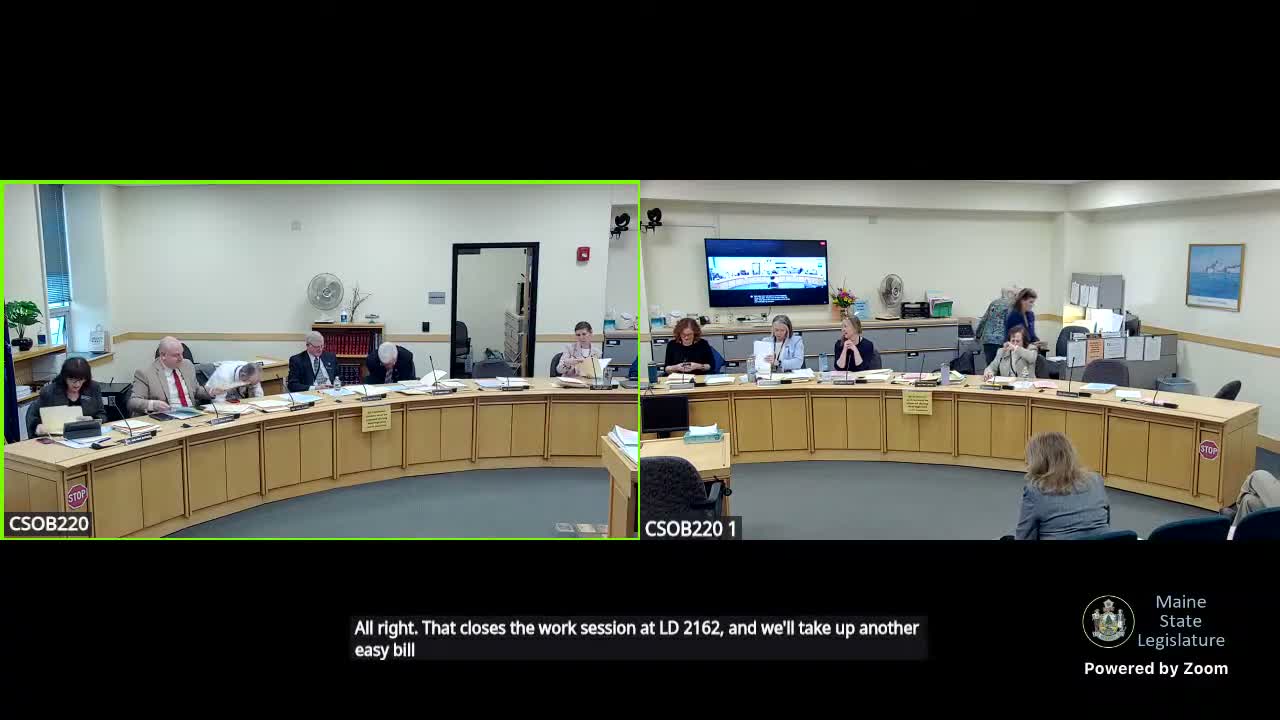
The committee reviewed a combined amendment to LD 2208 that would create a rural health stabilization fund, attach conditions to grants (including a five-year limit on facility price increases and a cap on charges at up to 200% of the Medicare rate for participating hospitals), and add language intended to minimize federal tax consequences for subsidy recipients. Committee staff explained the draft combined sponsor amendment and pointed to new funding-eligibility language for hospitals.
Members debated where the funding should be targeted. Representative Sally Clucci urged focusing money on primary care and federally qualified health centers rather than hospitals; others said the tool as drafted is a voluntary, carrot-based approach that conditions grant eligibility on price limits and that the proposed caps are intended to reward hospitals that agree to constrain charges. Representative Paul Flynn and others expressed concern that the proposed conditions could make grants unattractive to hospitals, and members asked staff whether the department could administer and monitor compliance.
On the question of funding for Maguire (the state's health care affordability program), the majority report recommended converting a one-time $80 million appropriation into an ongoing $40 million annual appropriation; the committee adopted a motion as amended and filed a minority report. The motion passed on a roll-call (6 in favor, 5 opposed); the committee recorded a minority report arguing for a different combination of funding. Members also discussed how federal changes to premium tax credits could affect the need for a state premium stabilization program and asked staff to include fiscal estimates.
What happens next: the majority-amended report will be transmitted as the committee's recommendation; fiscal notes and language review will follow before any floor or AFA (Appropriations & Financial Affairs) consideration.
Members debated where the funding should be targeted. Representative Sally Clucci urged focusing money on primary care and federally qualified health centers rather than hospitals; others said the tool as drafted is a voluntary, carrot-based approach that conditions grant eligibility on price limits and that the proposed caps are intended to reward hospitals that agree to constrain charges. Representative Paul Flynn and others expressed concern that the proposed conditions could make grants unattractive to hospitals, and members asked staff whether the department could administer and monitor compliance.
On the question of funding for Maguire (the state's health care affordability program), the majority report recommended converting a one-time $80 million appropriation into an ongoing $40 million annual appropriation; the committee adopted a motion as amended and filed a minority report. The motion passed on a roll-call (6 in favor, 5 opposed); the committee recorded a minority report arguing for a different combination of funding. Members also discussed how federal changes to premium tax credits could affect the need for a state premium stabilization program and asked staff to include fiscal estimates.
What happens next: the majority-amended report will be transmitted as the committee's recommendation; fiscal notes and language review will follow before any floor or AFA (Appropriations & Financial Affairs) consideration.
View the Full Meeting & All Its Details
This article offers just a summary. Unlock complete video, transcripts, and insights as a Founder Member.
✓
Watch full, unedited meeting videos
✓
Search every word spoken in unlimited transcripts
✓
AI summaries & real-time alerts (all government levels)
✓
Permanent access to expanding government content
30-day money-back guarantee
