West Virginia Senate approves series of House-amended bills, restores 900 instructional hours in school-calendar change
March 14, 2026 | 2026 Legislature WV, West Virginia
This article was created by AI summarizing key points discussed. AI makes mistakes, so for full details and context, please refer to the video of the full meeting. Please report any errors so we can fix them. Report an error »
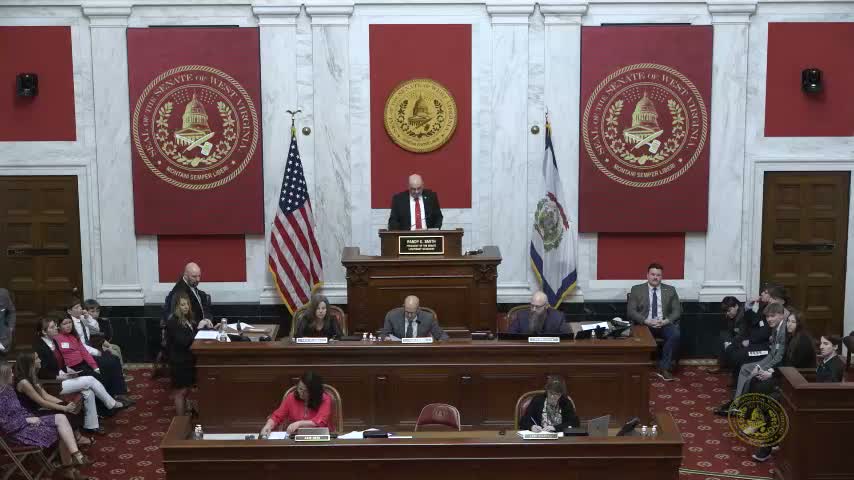
CHARLESTON, W.Va. — The West Virginia Senate spent the floor session on a steady stream of House messages and motions, concurring with a series of House-amended bills and taking a notable vote on a school-calendar measure that drew public objections.
The chamber unanimously or overwhelmingly approved a number of committee substitutes and House amendments covering tax credits, appropriations and regulatory tweaks. Senators approved a disaster repair and recovery tax credit (Senate Bill 243), extended a mine-safety technology tax credit (SB 622), and agreed to supplemental appropriations for the Division of Natural Resources and the Department of Human Services that together increased spending authority by $5 million for DNR and made technical corrections or funding adjustments in other bills.
Why it matters: The cluster of votes advances multiple policy priorities — tax incentives for energy and mining sectors, funding changes for state agencies, and a disputed school-calendar overhaul that shifts how required instruction is measured. Those decisions affect state budgets and how schools will schedule instruction and assessments in coming years.
On the school calendar: The Senate adopted an amendment to Senate Bill 890 that restores 900 hours of required instruction and removes language about when statewide assessments may occur. A senator identified in the transcript as the senator from the 13th voiced opposition, arguing the change reduces high school attendance by 14 to 23 days depending on the version and raises concerns about teacher contracts and lost instructional time: “Our children need instruction time. They need quality instruction,” the senator said. The Senate declared the bill passed; later the chamber voted to make that bill effective July 1, 2027 (vote recorded in the transcript as 32 yays, 2 nays).
Other floor actions: The Senate concurred in House amendments and passed bills that (among other items) authorize county recovery of costs for public-safety use of wireless towers (SB 506); create a new offense of theft by conversion (SB 705); and permit prescribed fire control on private property without a burning permit (SB 886). The chamber also refused to concur in House amendments to certain bills — for example, it declined to concur in House changes to SB 691 (utility relocation reimbursement) and SB 1033 (commissioner of agriculture powers), requesting the House to recede.
Senators repeatedly urged adoption of the House amendments on the floor. For example, the senator from Lewis frequently moved concurrence and described some House amendments as technical corrections; in floor remarks he repeatedly said, “I urge this adoption.”
Votes at a glance (recorded in the floor transcript):
- SB 243 (disaster repair and recovery tax credit): Senate concurred and passed (34 yays, 0 nays).
- SB 427 (loan form-related change): Senate concurred and passed (34 yays, 0 nays).
- SB 506 (county wireless towers — cost recovery): Senate concurred and passed (34 yays, 0 nays).
- SB 558 (school bus safety violations): Title amendment adopted; Senate concurred and passed (34 yays, 0 nays).
- SB 622 (mine safety technology tax credit extension): Senate concurred and passed (34 yays, 0 nays).
- SB 691 (DOH reimbursement for utility relocation): Senate refused to concur in the House amendment; motion adopted.
- SB 705 (offensive theft by conversion): Senate concurred and passed (34 yays, 0 nays).
- SB 772 (claims declared moral obligations): Senate concurred and passed; later the chamber voted to make the bill effective from passage.
- SB 826 (supplemental appropriation to Division of Natural Resources): House amendment creates $1,000,000 equipment appropriation and $4,000,000 current expense increase; Senate concurred and passed; the Senate later voted to make it effective from passage.
- SB 828 (supplemental appropriation to DHHR): Senate concurred and passed (34 yays, 0 nays) and moved effective-from-passage status.
- SB 886 (permitting prescribed fire control on private property): Senate concurred and passed (34 yays, 0 nays).
- SB 890 (school calendar requirements — days to hours): Senate adopted amendment restoring 900 instructional hours and passed the bill; recorded effective date vote 07/01/2027 (32 yays, 2 nays).
- SB 977 (benefit for duty-related partial disability): Senate concurred and passed.
- SB 1033 (powers/duties of commissioner of agriculture): Senate refused to concur in House amendment and requested the House to recede.
- SJR 9 (citizenship requirement to vote amendment): Senate concurred in House amendment and adopted the resolution (34 yays, 0 nays).
What happened procedurally: Most House amendments were described on the floor as technical corrections or clarifications; the senator who moved concurrence (recorded as the senator from Lewis in the transcript) frequently framed the changes as technical and urged adoption. The chamber used recorded machine votes for passage on numerous bills, with many recorded tallies reported as unanimous (34-0) in the transcript. Where the transcript text was unclear about an exact tally for a particular passage vote, the chamber nonetheless declared the bill passed and recorded later effective-date votes when applicable.
Next steps and context: The Senate recessed to allow committee activity; the confirmations committee was scheduled to meet shortly after recess. Several guests and honorees were introduced during the session, and the floor actions will be communicated to the House as the bicameral process continues.
The Senate recessed subject to announcements and was scheduled to reconvene at 3:15 p.m.
The chamber unanimously or overwhelmingly approved a number of committee substitutes and House amendments covering tax credits, appropriations and regulatory tweaks. Senators approved a disaster repair and recovery tax credit (Senate Bill 243), extended a mine-safety technology tax credit (SB 622), and agreed to supplemental appropriations for the Division of Natural Resources and the Department of Human Services that together increased spending authority by $5 million for DNR and made technical corrections or funding adjustments in other bills.
Why it matters: The cluster of votes advances multiple policy priorities — tax incentives for energy and mining sectors, funding changes for state agencies, and a disputed school-calendar overhaul that shifts how required instruction is measured. Those decisions affect state budgets and how schools will schedule instruction and assessments in coming years.
On the school calendar: The Senate adopted an amendment to Senate Bill 890 that restores 900 hours of required instruction and removes language about when statewide assessments may occur. A senator identified in the transcript as the senator from the 13th voiced opposition, arguing the change reduces high school attendance by 14 to 23 days depending on the version and raises concerns about teacher contracts and lost instructional time: “Our children need instruction time. They need quality instruction,” the senator said. The Senate declared the bill passed; later the chamber voted to make that bill effective July 1, 2027 (vote recorded in the transcript as 32 yays, 2 nays).
Other floor actions: The Senate concurred in House amendments and passed bills that (among other items) authorize county recovery of costs for public-safety use of wireless towers (SB 506); create a new offense of theft by conversion (SB 705); and permit prescribed fire control on private property without a burning permit (SB 886). The chamber also refused to concur in House amendments to certain bills — for example, it declined to concur in House changes to SB 691 (utility relocation reimbursement) and SB 1033 (commissioner of agriculture powers), requesting the House to recede.
Senators repeatedly urged adoption of the House amendments on the floor. For example, the senator from Lewis frequently moved concurrence and described some House amendments as technical corrections; in floor remarks he repeatedly said, “I urge this adoption.”
Votes at a glance (recorded in the floor transcript):
- SB 243 (disaster repair and recovery tax credit): Senate concurred and passed (34 yays, 0 nays).
- SB 427 (loan form-related change): Senate concurred and passed (34 yays, 0 nays).
- SB 506 (county wireless towers — cost recovery): Senate concurred and passed (34 yays, 0 nays).
- SB 558 (school bus safety violations): Title amendment adopted; Senate concurred and passed (34 yays, 0 nays).
- SB 622 (mine safety technology tax credit extension): Senate concurred and passed (34 yays, 0 nays).
- SB 691 (DOH reimbursement for utility relocation): Senate refused to concur in the House amendment; motion adopted.
- SB 705 (offensive theft by conversion): Senate concurred and passed (34 yays, 0 nays).
- SB 772 (claims declared moral obligations): Senate concurred and passed; later the chamber voted to make the bill effective from passage.
- SB 826 (supplemental appropriation to Division of Natural Resources): House amendment creates $1,000,000 equipment appropriation and $4,000,000 current expense increase; Senate concurred and passed; the Senate later voted to make it effective from passage.
- SB 828 (supplemental appropriation to DHHR): Senate concurred and passed (34 yays, 0 nays) and moved effective-from-passage status.
- SB 886 (permitting prescribed fire control on private property): Senate concurred and passed (34 yays, 0 nays).
- SB 890 (school calendar requirements — days to hours): Senate adopted amendment restoring 900 instructional hours and passed the bill; recorded effective date vote 07/01/2027 (32 yays, 2 nays).
- SB 977 (benefit for duty-related partial disability): Senate concurred and passed.
- SB 1033 (powers/duties of commissioner of agriculture): Senate refused to concur in House amendment and requested the House to recede.
- SJR 9 (citizenship requirement to vote amendment): Senate concurred in House amendment and adopted the resolution (34 yays, 0 nays).
What happened procedurally: Most House amendments were described on the floor as technical corrections or clarifications; the senator who moved concurrence (recorded as the senator from Lewis in the transcript) frequently framed the changes as technical and urged adoption. The chamber used recorded machine votes for passage on numerous bills, with many recorded tallies reported as unanimous (34-0) in the transcript. Where the transcript text was unclear about an exact tally for a particular passage vote, the chamber nonetheless declared the bill passed and recorded later effective-date votes when applicable.
Next steps and context: The Senate recessed to allow committee activity; the confirmations committee was scheduled to meet shortly after recess. Several guests and honorees were introduced during the session, and the floor actions will be communicated to the House as the bicameral process continues.
The Senate recessed subject to announcements and was scheduled to reconvene at 3:15 p.m.
Don't Miss a Word: See the Full Meeting!
Go beyond summaries. Unlock every video, transcript, and key insight with a Founder Membership.
✓
Get instant access to full meeting videos
✓
Search and clip any phrase from complete transcripts
✓
Receive AI-powered summaries & custom alerts
✓
Enjoy lifetime, unrestricted access to government data
30-day money-back guarantee
