West Virginia Senate concurs in House amendments, passes package of bills including tax cut, workforce and healthcare measures
March 14, 2026 | 2026 Legislature WV, West Virginia
This article was created by AI summarizing key points discussed. AI makes mistakes, so for full details and context, please refer to the video of the full meeting. Please report any errors so we can fix them. Report an error »
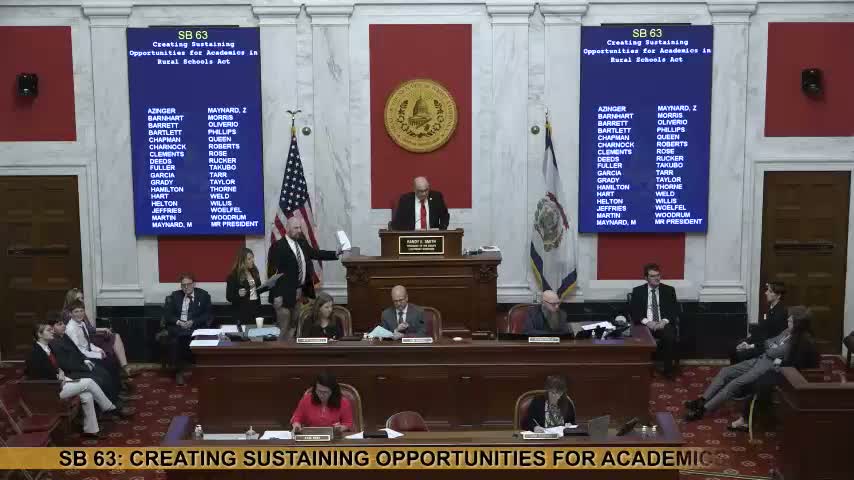
The West Virginia Senate met in session and agreed to concur in numerous House amendments, approving a package of bills that legislative leaders said address tax policy, workforce development and regulatory matters.
Senator from Lewis moved concurrence on each House amendment and urged adoption on the floor. “I urge its adoption,” the senator said repeatedly as bills were taken up and put to recorded votes. Most measures passed with near-unanimous support, with tallies recorded on the floor ranging from unanimous 34-0 votes to the personal income tax reduction, which initially passed 31-2-1 and was later reconsidered and recorded as 32-2 on re-vote.
Key measures approved included: a reduction in personal income tax (Senate Bill 392), changes tied to workforce-readiness and micro-credential provisions (Senate Bill 402), authorization of a workforce automation and administration fund with a contribution termination once $60 million is collected or by July 1, 2031 (Senate Bill 1053), and a provision permitting lawful prescription of crystalline polymorph psilocybin consistent with U.S. Food and Drug Administration recommendations (Senate Bill 906). The Senate also concurred with bills addressing birth-certificate access for homeless individuals, criminal penalties for abuse or neglect of incapacitated adults, and licensing and education-related measures.
Votes at a glance (selected floor tallies reported on the record): confirmations (committee slate excluding nominee 54): 33-0-1 (y-n-a); nominee 54 confirmed 30-3-1; SB 723 (law-enforcement cooperation): 33-0-1; SB 947 (birth certificates for homeless individuals): 33-0-1; SB 392 (personal income tax reduction): initially 31-2-1, reconsidered and recorded 32-2; SB 54 (abuse/neglect penalties): 34-0-0; SB 228 (child-abuse investigation technology/pilot): 34-0-0; SB 231 (value-based payment): 34-0-0; SB 402 (workforce readiness act): 34-0-0; SB 553 (contractor license transfers): 34-0-0; SB 575 (refusal review hearings): 34-0-0; SB 686 (coal co-tenancy modernization/minors): 34-0-0; SB 906 (psilocybin prescribing): 34-0-0; SB 1026 (disturbing religious worship penalties): 34-0-0; SB 63 (rural schools act): 32-2-0; SB 502 (women’s collegiate sports protection act): 34-0-0; SB 1053 (workforce automation fund): 34-0-0.
Several bills were made effective on passage or given specific effective dates on the floor. For example, some measures were declared effective from passage; others were set to take effect July 1, 2026, as recorded on the chamber floor. Where the Senate record specified an effective date, it was recorded and communicated to the House.
The Senate’s routine also included introductions and brief floor remarks; the body recessed until 5:30 p.m. The clerk was instructed to communicate actions to the House following each adoption and passage.
What happens next: The Senate’s actions will be communicated to the House as required by legislative procedure; measures that were made effective on passage will take effect according to the dates announced on the floor.
Senator from Lewis moved concurrence on each House amendment and urged adoption on the floor. “I urge its adoption,” the senator said repeatedly as bills were taken up and put to recorded votes. Most measures passed with near-unanimous support, with tallies recorded on the floor ranging from unanimous 34-0 votes to the personal income tax reduction, which initially passed 31-2-1 and was later reconsidered and recorded as 32-2 on re-vote.
Key measures approved included: a reduction in personal income tax (Senate Bill 392), changes tied to workforce-readiness and micro-credential provisions (Senate Bill 402), authorization of a workforce automation and administration fund with a contribution termination once $60 million is collected or by July 1, 2031 (Senate Bill 1053), and a provision permitting lawful prescription of crystalline polymorph psilocybin consistent with U.S. Food and Drug Administration recommendations (Senate Bill 906). The Senate also concurred with bills addressing birth-certificate access for homeless individuals, criminal penalties for abuse or neglect of incapacitated adults, and licensing and education-related measures.
Votes at a glance (selected floor tallies reported on the record): confirmations (committee slate excluding nominee 54): 33-0-1 (y-n-a); nominee 54 confirmed 30-3-1; SB 723 (law-enforcement cooperation): 33-0-1; SB 947 (birth certificates for homeless individuals): 33-0-1; SB 392 (personal income tax reduction): initially 31-2-1, reconsidered and recorded 32-2; SB 54 (abuse/neglect penalties): 34-0-0; SB 228 (child-abuse investigation technology/pilot): 34-0-0; SB 231 (value-based payment): 34-0-0; SB 402 (workforce readiness act): 34-0-0; SB 553 (contractor license transfers): 34-0-0; SB 575 (refusal review hearings): 34-0-0; SB 686 (coal co-tenancy modernization/minors): 34-0-0; SB 906 (psilocybin prescribing): 34-0-0; SB 1026 (disturbing religious worship penalties): 34-0-0; SB 63 (rural schools act): 32-2-0; SB 502 (women’s collegiate sports protection act): 34-0-0; SB 1053 (workforce automation fund): 34-0-0.
Several bills were made effective on passage or given specific effective dates on the floor. For example, some measures were declared effective from passage; others were set to take effect July 1, 2026, as recorded on the chamber floor. Where the Senate record specified an effective date, it was recorded and communicated to the House.
The Senate’s routine also included introductions and brief floor remarks; the body recessed until 5:30 p.m. The clerk was instructed to communicate actions to the House following each adoption and passage.
What happens next: The Senate’s actions will be communicated to the House as required by legislative procedure; measures that were made effective on passage will take effect according to the dates announced on the floor.
Don't Miss a Word: See the Full Meeting!
Go beyond summaries. Unlock every video, transcript, and key insight with a Founder Membership.
✓
Get instant access to full meeting videos
✓
Search and clip any phrase from complete transcripts
✓
Receive AI-powered summaries & custom alerts
✓
Enjoy lifetime, unrestricted access to government data
30-day money-back guarantee
