Public commenters press commissioners on ethics and call for stronger wolf and predator protections
March 14, 2026 | Board Council Commission Agencies , Executive, Washington
This article was created by AI summarizing key points discussed. AI makes mistakes, so for full details and context, please refer to the video of the full meeting. Please report any errors so we can fix them. Report an error »
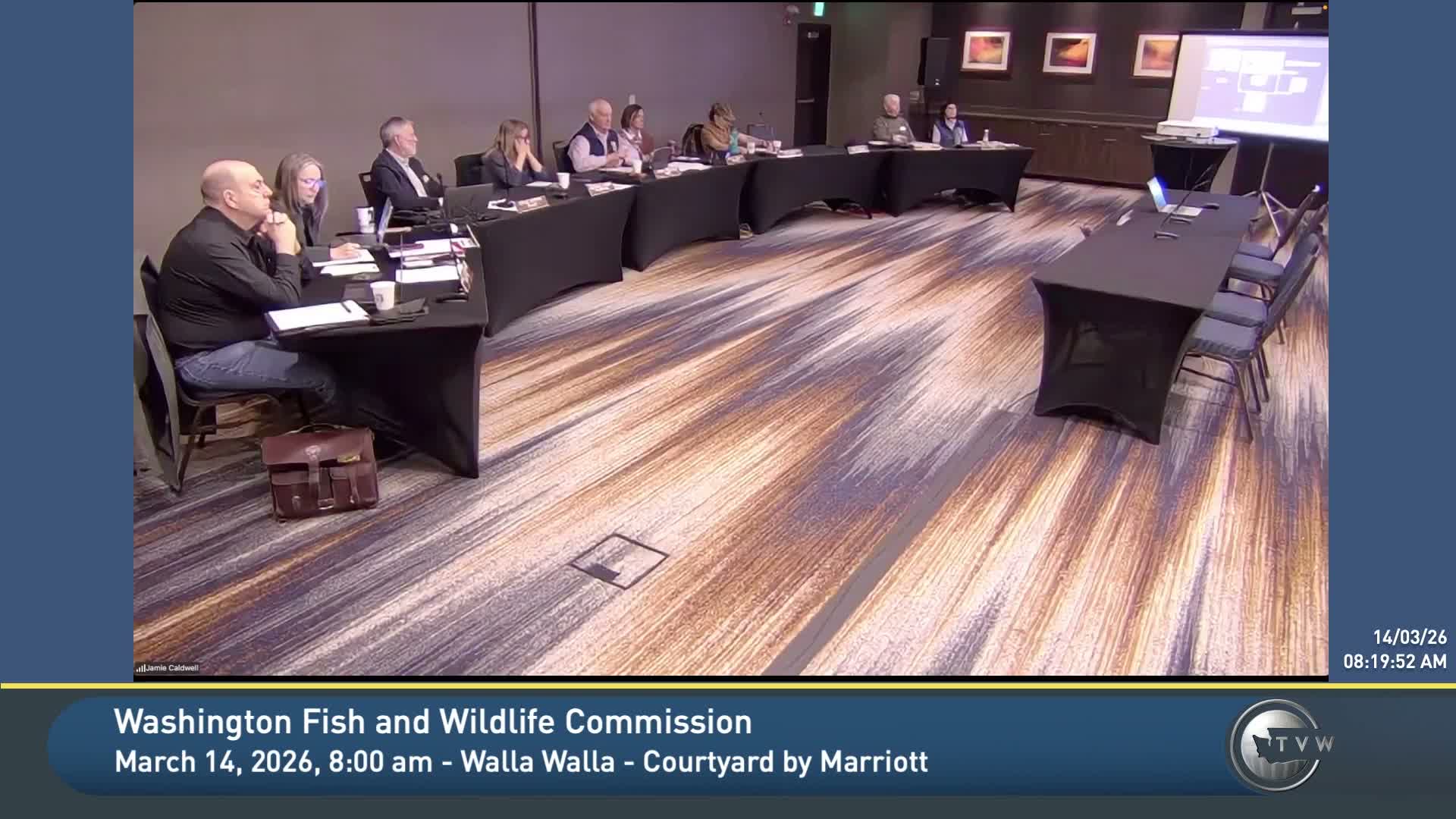
Several public commenters used the Fish and Wildlife Commission's open‑input period to raise ethics questions about commissioners and to press for stronger wolf and predator protections.
Douglas Bose of Skagit County challenged a commissioner by name in his testimony, asking, "what makes you think you are above the law?" He criticized use of private devices for state business and said that failure to follow recordkeeping procedures should be grounds for removal from the commission. Dane Czarnecki urged the Commission to address an op‑ed by a commissioner, accused some commissioners of colluding with anti‑hunting organizations and said public records provided corroboration; he asked the Commission to release investigation records rather than prolonging litigation.
At the same time, speakers including Allison Anderson and Liz Carr urged policy actions to protect wolves and other imperiled species: Allison Anderson recommended amending WAC 220‑440‑080 to align with the 2011 wolf conservation management plan’s definition of an 'active wolf attack' and to emphasize nonlethal deterrents and best practices from other states. Liz Carr asked the department to make predator‑prey project results more accessible on its website, noting the five‑year study did not find wolves as a primary driver of deer declines in northeast Washington.
Quotes capturing the tenor of the session include Douglas Bose: "I asked, commissioner Roland, what makes you think you are above the law?" and Allison Anderson: "There should not be wolves killed. They have a right to make a living just like us." Dane Czarnecki said records show alleged collusion and called for the Commission to cooperate with public records requests rather than delaying them.
What the record shows: multiple speakers alleged ethics violations or collusion by commissioners and called for release or completion of investigations; those are claims in the public record at the meeting. Commission staff and commissioners discussed process improvements and staff follow‑up but the transcript records no formal adjudication or administrative finding during the session.
Next steps noted: staff will track public‑input requests and report back at future meetings; any formal employment or ethics determinations would proceed through established investigative processes and are not recorded as resolved in this meeting's transcript.
Douglas Bose of Skagit County challenged a commissioner by name in his testimony, asking, "what makes you think you are above the law?" He criticized use of private devices for state business and said that failure to follow recordkeeping procedures should be grounds for removal from the commission. Dane Czarnecki urged the Commission to address an op‑ed by a commissioner, accused some commissioners of colluding with anti‑hunting organizations and said public records provided corroboration; he asked the Commission to release investigation records rather than prolonging litigation.
At the same time, speakers including Allison Anderson and Liz Carr urged policy actions to protect wolves and other imperiled species: Allison Anderson recommended amending WAC 220‑440‑080 to align with the 2011 wolf conservation management plan’s definition of an 'active wolf attack' and to emphasize nonlethal deterrents and best practices from other states. Liz Carr asked the department to make predator‑prey project results more accessible on its website, noting the five‑year study did not find wolves as a primary driver of deer declines in northeast Washington.
Quotes capturing the tenor of the session include Douglas Bose: "I asked, commissioner Roland, what makes you think you are above the law?" and Allison Anderson: "There should not be wolves killed. They have a right to make a living just like us." Dane Czarnecki said records show alleged collusion and called for the Commission to cooperate with public records requests rather than delaying them.
What the record shows: multiple speakers alleged ethics violations or collusion by commissioners and called for release or completion of investigations; those are claims in the public record at the meeting. Commission staff and commissioners discussed process improvements and staff follow‑up but the transcript records no formal adjudication or administrative finding during the session.
Next steps noted: staff will track public‑input requests and report back at future meetings; any formal employment or ethics determinations would proceed through established investigative processes and are not recorded as resolved in this meeting's transcript.
View the Full Meeting & All Its Details
This article offers just a summary. Unlock complete video, transcripts, and insights as a Founder Member.
✓
Watch full, unedited meeting videos
✓
Search every word spoken in unlimited transcripts
✓
AI summaries & real-time alerts (all government levels)
✓
Permanent access to expanding government content
30-day money-back guarantee
