Katy ISD trustees hear plan for districtwide AI framework, ask for implementation details
February 23, 2025 | KATY ISD, School Districts, Texas
This article was created by AI summarizing key points discussed. AI makes mistakes, so for full details and context, please refer to the video of the full meeting. Please report any errors so we can fix them. Report an error »
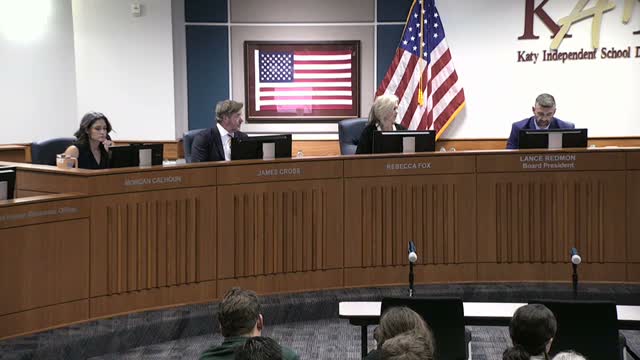
Katy Independent School District officials presented a proposed artificial intelligence framework at the Feb. 23 board meeting that aims to permit responsible AI use while protecting instructional quality and student privacy.
Dr. Senay Bell, the presenter, told trustees the framework will define role‑based expectations for students, teachers and staff; include data privacy and security guardrails; and establish oversight and vendor review processes. She said the district plans three near‑term deliverables this spring and summer: finalizing the framework, rolling out mandatory AI training for all staff, and offering AI literacy professional learning for teachers.
"Our goal is to ensure AI is used in Katy ISD in ways that strengthen learning and operations while protecting instructional quality, ethical practice, and student privacy," Dr. Bell said.
Trustees pressed for specifics on several fronts. They asked how the district will detect AI‑assisted cheating in remote assessments, what age‑appropriate AI literacy will look like for early elementary grades, and how the district will gather representative stakeholder feedback. Dr. Bell said the work is being developed by a cross‑departmental design team and will include student leadership panels, PTA groups, teacher leadership forums and surveys.
One trustee described a classroom example in which a student used prompts to mask AI use and get a high grade without understanding the assignment; trustees said such cases underscore the need for clear academic‑integrity guidance. Dr. Bell responded that the framework will provide practical guidance for teachers to design assignments that require original thinking and to use AI‑proof assessment strategies.
Board members also asked whether the district has received any formal guidance from the Texas Education Agency (TEA). Dr. Bell said TEA has not issued comprehensive AI standards yet and that the district will incorporate any forthcoming state guidance.
The presentation did not include final, districtwide policy language or a vendor whitelist. Trustees asked staff to return with more detailed implementation timelines, examples of staff training and sample classroom‑level guidance before a formal adoption vote.
The board took no immediate action on the framework at the meeting; administrators described the session as the start of a community conversation and requested additional trustee input before bringing a formal policy forward.
Dr. Senay Bell, the presenter, told trustees the framework will define role‑based expectations for students, teachers and staff; include data privacy and security guardrails; and establish oversight and vendor review processes. She said the district plans three near‑term deliverables this spring and summer: finalizing the framework, rolling out mandatory AI training for all staff, and offering AI literacy professional learning for teachers.
"Our goal is to ensure AI is used in Katy ISD in ways that strengthen learning and operations while protecting instructional quality, ethical practice, and student privacy," Dr. Bell said.
Trustees pressed for specifics on several fronts. They asked how the district will detect AI‑assisted cheating in remote assessments, what age‑appropriate AI literacy will look like for early elementary grades, and how the district will gather representative stakeholder feedback. Dr. Bell said the work is being developed by a cross‑departmental design team and will include student leadership panels, PTA groups, teacher leadership forums and surveys.
One trustee described a classroom example in which a student used prompts to mask AI use and get a high grade without understanding the assignment; trustees said such cases underscore the need for clear academic‑integrity guidance. Dr. Bell responded that the framework will provide practical guidance for teachers to design assignments that require original thinking and to use AI‑proof assessment strategies.
Board members also asked whether the district has received any formal guidance from the Texas Education Agency (TEA). Dr. Bell said TEA has not issued comprehensive AI standards yet and that the district will incorporate any forthcoming state guidance.
The presentation did not include final, districtwide policy language or a vendor whitelist. Trustees asked staff to return with more detailed implementation timelines, examples of staff training and sample classroom‑level guidance before a formal adoption vote.
The board took no immediate action on the framework at the meeting; administrators described the session as the start of a community conversation and requested additional trustee input before bringing a formal policy forward.
View the Full Meeting & All Its Details
This article offers just a summary. Unlock complete video, transcripts, and insights as a Founder Member.
✓
Watch full, unedited meeting videos
✓
Search every word spoken in unlimited transcripts
✓
AI summaries & real-time alerts (all government levels)
✓
Permanent access to expanding government content
30-day money-back guarantee
