Oro Valley neighbors divided over proposed 25,000‑sq‑ft KTR recreation center at Suffolk and Oracle
March 12, 2026 | Oro Valley, Pima County, Arizona
This article was created by AI summarizing key points discussed. AI makes mistakes, so for full details and context, please refer to the video of the full meeting. Please report any errors so we can fix them. Report an error »
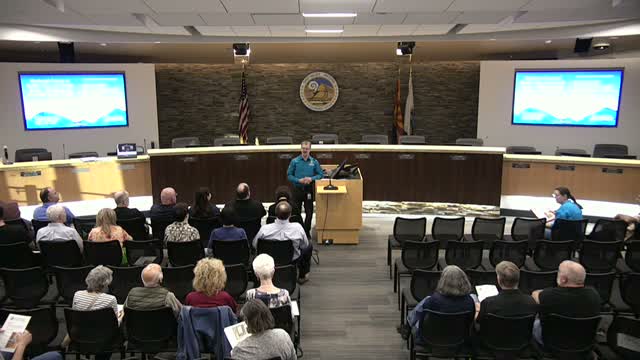
Town of Oro Valley planning staff and the applicant presented plans for a 25,000‑square‑foot KTR indoor recreation facility with about 5,000 square feet of adjoining retail and restaurant space at the northeast corner of Suffolk Drive and Oracle Road, drawing both support from parents and sharp opposition from nearby residents at the first neighborhood meeting.
Kyle Packer, a senior planner for the town, opened the meeting and stressed this was a property‑owner request that will be reviewed for code compliance, followed by Planning & Zoning and Town Council hearings. Applicant representatives asked for a rezoning from RS (residential service) to CN (neighborhood commercial) and a conditional‑use permit to allow a single tenant larger than the standard 5,000‑square‑foot per‑tenant limit.
The applicant said the project sits on 4.7 acres and is proposed as a 25‑foot‑tall building that would include a 25,000‑square‑foot KTR action‑sports indoor playground with a mezzanine and space for classes, plus roughly 5,000 square feet of retail/restaurant space. The team said the design places the building as far west and north on the lot as feasible, provides a 100‑foot setback from the eastern property line, 15 feet of landscaping and a 5‑foot wall on the east, and a 30‑foot landscape border with a 3.5‑foot screen wall along Oracle and Suffolk. Applicant materials shown at the meeting indicated about 244 parking spaces, versus a code calculation of roughly 227 required spaces.
Engineer Trey Mueller of Rick Engineering said the site currently conveys an estimated flow of about 420 cubic feet per second (CFS) and that the plan is to pipe that flow underground beneath the parking area using reinforced concrete box culverts or a concrete arch per ADOT standards, with two cells proposed to convey and stabilize flows. "We plan to take that underground through the parking lot," he said, adding the arch option could leave an earthen bottom that might continue to provide habitat passage for wildlife.
Traffic and access were central questions. The applicant said a formal traffic impact study will be completed after a formal application is filed, using ITE trip‑generation rates tied to the project's uses and square footage; the study will identify whether intersection work (including signal adjustments) or other mitigations are needed. The team said two access points are proposed, one on Oracle (aligned with the stoplight) and one on Suffolk; ADOT will not permit two Oracle access points and the Suffolk access is required for fire and maneuverability.
Neighbors voiced a range of concerns. Eric presented a petition signed by 26 residents "objecting to the rezoning of the Northeast corner of Oracle Road and Suffolk Drive from RS to CN with conditional use permit," and said the neighborhood is historic and primarily residential. Justin Williams, who said his house sits closest to the site, warned that the proposed landscaping and easement areas can become encampments and that balconies and late restaurant hours would harm his privacy and property values. Linda Snow, president of the Suffolk Hills Property Owners Association, said the proposal would change neighborhood views and could increase flood and drainage impacts on adjacent homes.
Other residents pointed to noise and operational concerns based on larger KTR locations in the Phoenix area. One attendee who visited a Phoenix KTR described it as "huge and loud" with outdoor speakers and continuous music; the applicant said the Tucson KTR would not have outdoor speakers and that the building and internal courtyard are intended to contain noise. Supporters spoke as well: David Goldstein and Jessica Graves said an indoor family recreation option is needed locally and would help keep families in Oro Valley rather than traveling to Phoenix.
On staffing and safety, the owner and applicant said the facility will include security cameras and that they plan to work with the Oro Valley Police Department and the town’s design standards (including "safe by design" guidance) to minimize opportunities for crime. The applicant said developers typically cover costs of private security if required, but that town policing is funded from the municipal tax base rather than directly by a single project.
Next steps: the applicant expects to submit a formal application that will include a traffic‑impact assessment and drainage report, after which the town will post meeting notes on ovprojects.com and schedule a second neighborhood meeting followed by Planning & Zoning and Town Council hearings. Staff asked residents to sign up to receive notices by postcard or via ask@OroValleyAZ.gov.
The meeting closed with staff and the applicant offering to continue design discussions with neighbors and to return with the technical studies required by the town.
Kyle Packer, a senior planner for the town, opened the meeting and stressed this was a property‑owner request that will be reviewed for code compliance, followed by Planning & Zoning and Town Council hearings. Applicant representatives asked for a rezoning from RS (residential service) to CN (neighborhood commercial) and a conditional‑use permit to allow a single tenant larger than the standard 5,000‑square‑foot per‑tenant limit.
The applicant said the project sits on 4.7 acres and is proposed as a 25‑foot‑tall building that would include a 25,000‑square‑foot KTR action‑sports indoor playground with a mezzanine and space for classes, plus roughly 5,000 square feet of retail/restaurant space. The team said the design places the building as far west and north on the lot as feasible, provides a 100‑foot setback from the eastern property line, 15 feet of landscaping and a 5‑foot wall on the east, and a 30‑foot landscape border with a 3.5‑foot screen wall along Oracle and Suffolk. Applicant materials shown at the meeting indicated about 244 parking spaces, versus a code calculation of roughly 227 required spaces.
Engineer Trey Mueller of Rick Engineering said the site currently conveys an estimated flow of about 420 cubic feet per second (CFS) and that the plan is to pipe that flow underground beneath the parking area using reinforced concrete box culverts or a concrete arch per ADOT standards, with two cells proposed to convey and stabilize flows. "We plan to take that underground through the parking lot," he said, adding the arch option could leave an earthen bottom that might continue to provide habitat passage for wildlife.
Traffic and access were central questions. The applicant said a formal traffic impact study will be completed after a formal application is filed, using ITE trip‑generation rates tied to the project's uses and square footage; the study will identify whether intersection work (including signal adjustments) or other mitigations are needed. The team said two access points are proposed, one on Oracle (aligned with the stoplight) and one on Suffolk; ADOT will not permit two Oracle access points and the Suffolk access is required for fire and maneuverability.
Neighbors voiced a range of concerns. Eric presented a petition signed by 26 residents "objecting to the rezoning of the Northeast corner of Oracle Road and Suffolk Drive from RS to CN with conditional use permit," and said the neighborhood is historic and primarily residential. Justin Williams, who said his house sits closest to the site, warned that the proposed landscaping and easement areas can become encampments and that balconies and late restaurant hours would harm his privacy and property values. Linda Snow, president of the Suffolk Hills Property Owners Association, said the proposal would change neighborhood views and could increase flood and drainage impacts on adjacent homes.
Other residents pointed to noise and operational concerns based on larger KTR locations in the Phoenix area. One attendee who visited a Phoenix KTR described it as "huge and loud" with outdoor speakers and continuous music; the applicant said the Tucson KTR would not have outdoor speakers and that the building and internal courtyard are intended to contain noise. Supporters spoke as well: David Goldstein and Jessica Graves said an indoor family recreation option is needed locally and would help keep families in Oro Valley rather than traveling to Phoenix.
On staffing and safety, the owner and applicant said the facility will include security cameras and that they plan to work with the Oro Valley Police Department and the town’s design standards (including "safe by design" guidance) to minimize opportunities for crime. The applicant said developers typically cover costs of private security if required, but that town policing is funded from the municipal tax base rather than directly by a single project.
Next steps: the applicant expects to submit a formal application that will include a traffic‑impact assessment and drainage report, after which the town will post meeting notes on ovprojects.com and schedule a second neighborhood meeting followed by Planning & Zoning and Town Council hearings. Staff asked residents to sign up to receive notices by postcard or via ask@OroValleyAZ.gov.
The meeting closed with staff and the applicant offering to continue design discussions with neighbors and to return with the technical studies required by the town.
View the Full Meeting & All Its Details
This article offers just a summary. Unlock complete video, transcripts, and insights as a Founder Member.
✓
Watch full, unedited meeting videos
✓
Search every word spoken in unlimited transcripts
✓
AI summaries & real-time alerts (all government levels)
✓
Permanent access to expanding government content
30-day money-back guarantee
