Washington leaders tout budgets, ‘millionaires tax’ and public-safety bills as 60-day session ends
March 12, 2026 | Legislative Sessions, Washington
This article was created by AI summarizing key points discussed. AI makes mistakes, so for full details and context, please refer to the video of the full meeting. Please report any errors so we can fix them. Report an error »
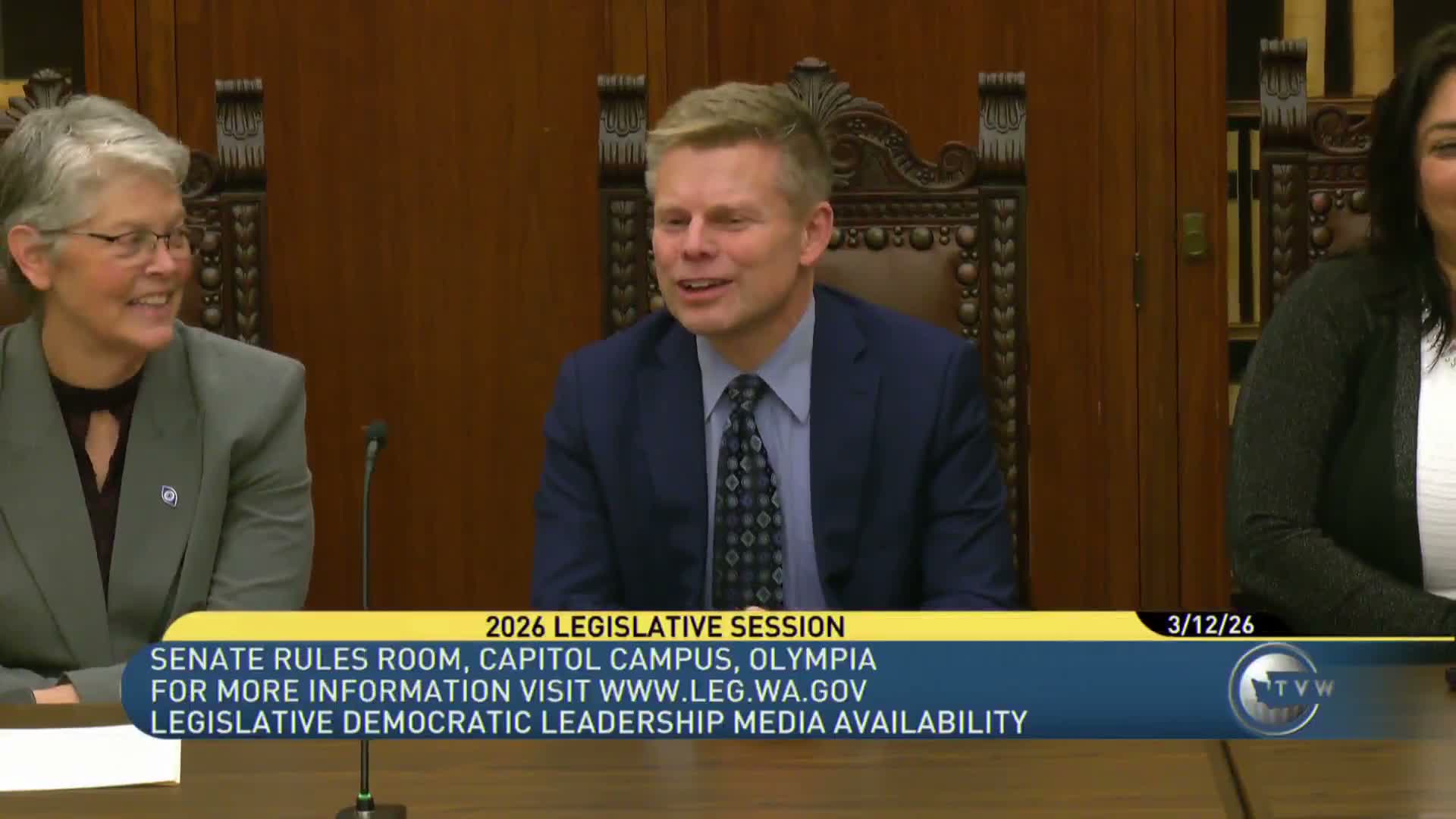
Senate Majority Leader Jamie Peterson said the Legislature closed a 60-day session having "land[ed] all of our, 3 budgets" and passed a slate of bills on public safety, health and affordability.
"I'm Jamie Peterson, the senate majority leader," Peterson said, opening the event and listing measures he described as major highlights: a masking bill for law enforcement officers, a bill to protect election data integrity, joining the West Coast Health Collaborative and a bill to align vaccine recommendations with scientific guidance. He said the Legislature also passed what he called the "millionaires tax," which he said will reduce sales taxes on everyday items such as over-the-counter medicines, diapers and grooming and hygiene products.
House Speaker Lori Jenkins said House and Senate priorities were closely aligned this session. "As I frequently... say this, there is 0 sunlight between what he just said and what I would have said," Jenkins said, adding that the House also passed bills on flock cameras, immigrant-rights protections, a prohibition on impersonating law-enforcement officers and uniform standards for law enforcement across the state.
Leaders emphasized budget work as a central accomplishment. Peterson credited recent revenue forecasts and collaborative budget teams for allowing the operating, capital and transportation budgets to be finalized despite earlier revenue concerns. Jenkins highlighted that elements of the budget include free school lunches and expanded preventive-care coverage designed to remove co-pays for some services.
Both leaders credited close communication with the governor and his staff during the final days of the session. Jenkins noted the governor had been present with the caucus and that executive-legislative coordination helped move items toward signature.
Why it matters: Leaders framed the package as a mix of public-safety, health and affordability measures aimed at providing immediate relief for families (school meals and reduced sales taxes on essentials) while setting groundwork for longer-term policy work in areas such as AI regulation and education funding.
What’s next: Several lawmakers said unfinished items will return next year for further work, and staff and interchamber teams will continue planning during the interim.
"I'm Jamie Peterson, the senate majority leader," Peterson said, opening the event and listing measures he described as major highlights: a masking bill for law enforcement officers, a bill to protect election data integrity, joining the West Coast Health Collaborative and a bill to align vaccine recommendations with scientific guidance. He said the Legislature also passed what he called the "millionaires tax," which he said will reduce sales taxes on everyday items such as over-the-counter medicines, diapers and grooming and hygiene products.
House Speaker Lori Jenkins said House and Senate priorities were closely aligned this session. "As I frequently... say this, there is 0 sunlight between what he just said and what I would have said," Jenkins said, adding that the House also passed bills on flock cameras, immigrant-rights protections, a prohibition on impersonating law-enforcement officers and uniform standards for law enforcement across the state.
Leaders emphasized budget work as a central accomplishment. Peterson credited recent revenue forecasts and collaborative budget teams for allowing the operating, capital and transportation budgets to be finalized despite earlier revenue concerns. Jenkins highlighted that elements of the budget include free school lunches and expanded preventive-care coverage designed to remove co-pays for some services.
Both leaders credited close communication with the governor and his staff during the final days of the session. Jenkins noted the governor had been present with the caucus and that executive-legislative coordination helped move items toward signature.
Why it matters: Leaders framed the package as a mix of public-safety, health and affordability measures aimed at providing immediate relief for families (school meals and reduced sales taxes on essentials) while setting groundwork for longer-term policy work in areas such as AI regulation and education funding.
What’s next: Several lawmakers said unfinished items will return next year for further work, and staff and interchamber teams will continue planning during the interim.
Don't Miss a Word: See the Full Meeting!
Go beyond summaries. Unlock every video, transcript, and key insight with a Founder Membership.
✓
Get instant access to full meeting videos
✓
Search and clip any phrase from complete transcripts
✓
Receive AI-powered summaries & custom alerts
✓
Enjoy lifetime, unrestricted access to government data
30-day money-back guarantee
