Developers and business groups urge Portland planning board not to impose a large spacing rule for performance venues
March 10, 2026 | Portland, Cumberland County, Maine
This article was created by AI summarizing key points discussed. AI makes mistakes, so for full details and context, please refer to the video of the full meeting. Please report any errors so we can fix them. Report an error »
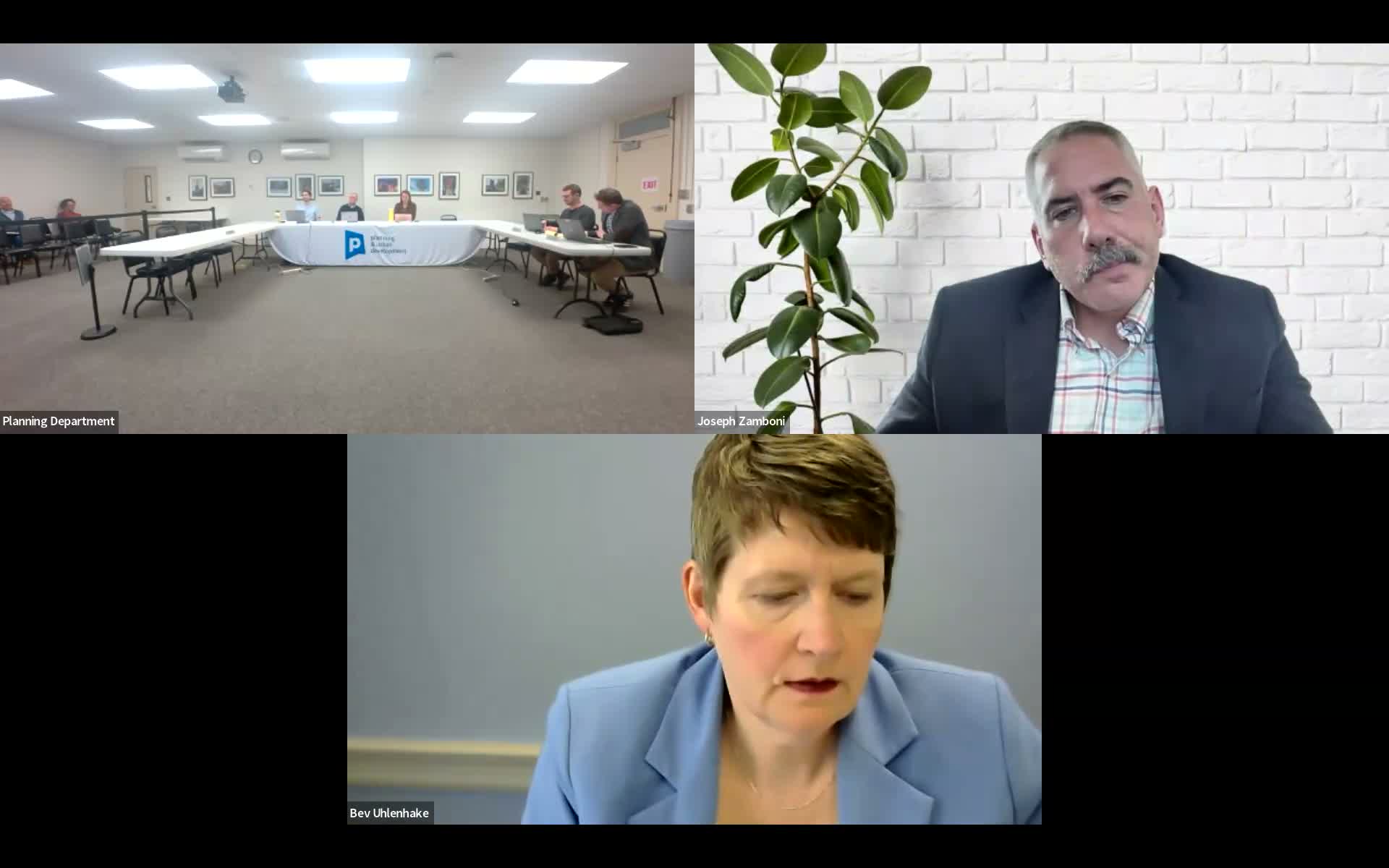
At a Portland Planning Board workshop, a string of public commenters asked the board to reject proposed buffer spacing that speakers said would operate as retroactive zoning and chill investment.
Mary Poppstein, counsel for the applicant, said the 100-foot buffer adopted in 2007 was rooted in concerns about late-night bars and liquor licensing — not modern large-capacity music venues — and warned that the 750-foot proposal, if applied retroactively, "would kill that project." Todd Goldenbark, the project's developer, told the board his team filed a complete application on Dec. 19, 2024, and asked the board to consider the effect of moving regulatory expectations after an application is already submitted.
The Portland Regional Chamber's Thomas O'Boyle noted staff analysis and an Oxford Economics projection that the proposed venue could yield more than $44 million in annual economic impact and roughly $3 million in local tax revenue; he urged the board to rely on existing regulatory tools rather than adopt fixed spacing requirements.
Several developers and local residents argued downtown activation depends on clustering arts and entertainment uses. Joe Dasko (Reuben Dasko Properties) said the 750-foot proposal "is the equivalent of 2 to 3 city blocks" and accused sponsors of targeting the applicant, a claim other commenters also raised; staff and other participants framed that as a disputed assertion.
Speakers emphasized technical questions that should be resolved at the ordinance stage: how the city measures separation (walking distance versus straight line), from which points at an entrance measurement is taken, and whether arenas would be covered by the same standard as theaters. Staff committed to provide written clarifications from permanent inspections and to research retroactivity precedent before the public hearing.
The public comment period closed with the planning board taking no immediate action; staff will return with clarified language and additional background at the next meeting before the board votes on a recommendation to City Council.
Mary Poppstein, counsel for the applicant, said the 100-foot buffer adopted in 2007 was rooted in concerns about late-night bars and liquor licensing — not modern large-capacity music venues — and warned that the 750-foot proposal, if applied retroactively, "would kill that project." Todd Goldenbark, the project's developer, told the board his team filed a complete application on Dec. 19, 2024, and asked the board to consider the effect of moving regulatory expectations after an application is already submitted.
The Portland Regional Chamber's Thomas O'Boyle noted staff analysis and an Oxford Economics projection that the proposed venue could yield more than $44 million in annual economic impact and roughly $3 million in local tax revenue; he urged the board to rely on existing regulatory tools rather than adopt fixed spacing requirements.
Several developers and local residents argued downtown activation depends on clustering arts and entertainment uses. Joe Dasko (Reuben Dasko Properties) said the 750-foot proposal "is the equivalent of 2 to 3 city blocks" and accused sponsors of targeting the applicant, a claim other commenters also raised; staff and other participants framed that as a disputed assertion.
Speakers emphasized technical questions that should be resolved at the ordinance stage: how the city measures separation (walking distance versus straight line), from which points at an entrance measurement is taken, and whether arenas would be covered by the same standard as theaters. Staff committed to provide written clarifications from permanent inspections and to research retroactivity precedent before the public hearing.
The public comment period closed with the planning board taking no immediate action; staff will return with clarified language and additional background at the next meeting before the board votes on a recommendation to City Council.
Don't Miss a Word: See the Full Meeting!
Go beyond summaries. Unlock every video, transcript, and key insight with a Founder Membership.
✓
Get instant access to full meeting videos
✓
Search and clip any phrase from complete transcripts
✓
Receive AI-powered summaries & custom alerts
✓
Enjoy lifetime, unrestricted access to government data
30-day money-back guarantee
