Sen. Erin McQuay seeks statewide study of AI’s environmental footprint; public calls for EIS on hyperscale data centers
March 11, 2026 | 2026 Legislature MN, Minnesota
This article was created by AI summarizing key points discussed. AI makes mistakes, so for full details and context, please refer to the video of the full meeting. Please report any errors so we can fix them. Report an error »
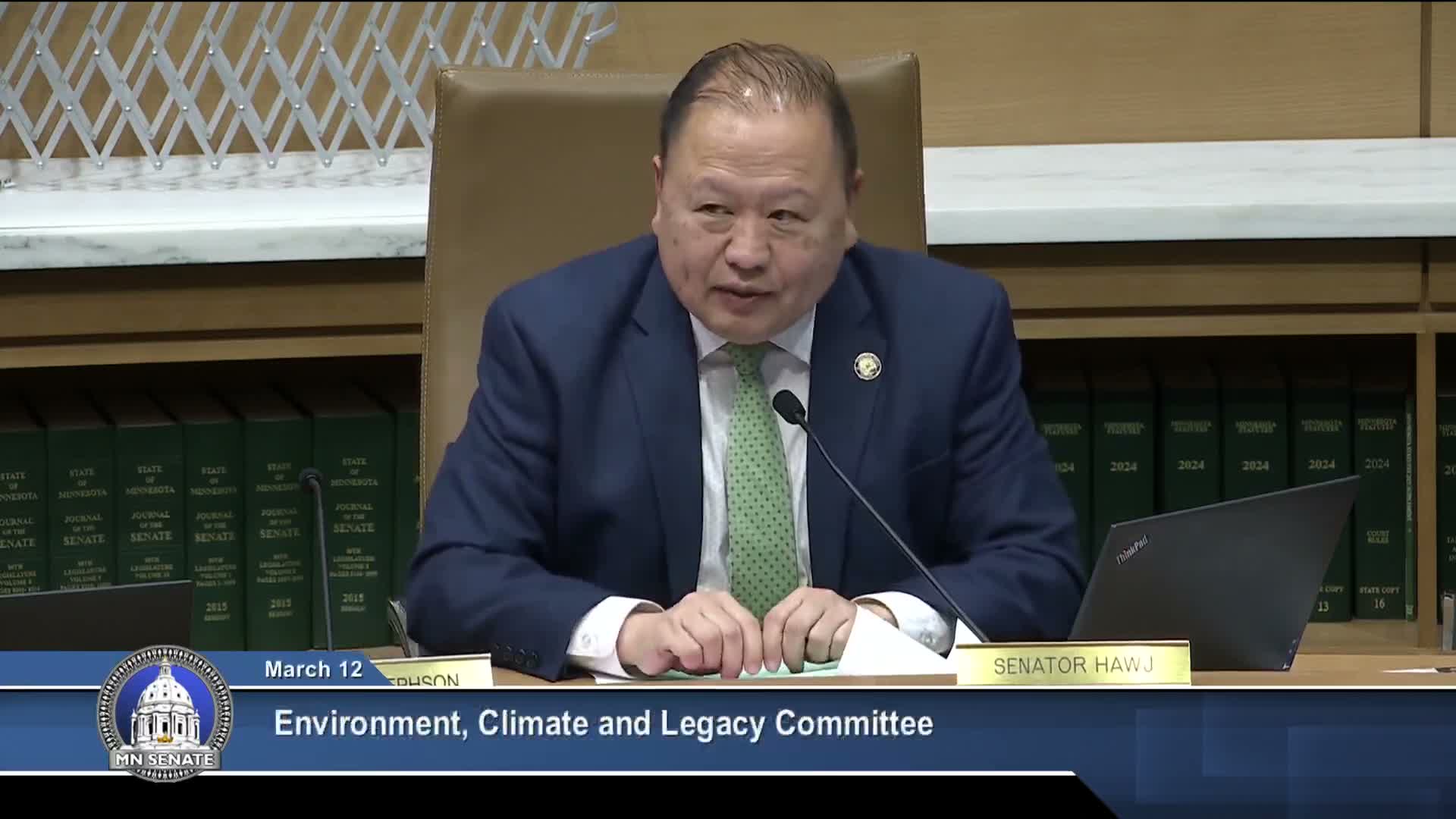
Sen. Erin McQuay told the committee that rapid growth in artificial intelligence and data-center development requires better data on environmental effects, including energy and water consumption across hardware lifecycle, design and deployment choices, and potential positive or negative impacts.
The committee adopted a technical title amendment (A1). Public testimony from Kathy Johnson, a Farmington resident, argued that the environmental review currently used for some large data-center proposals (an AUAR) is insufficient and said communities need full Environmental Impact Statements (EIS) to assess water demand, air, noise, light and ecological effects. "Please demand an EIS to protect Minnesota's resources and residents from predatory hands of developers who want to use them for profit," Johnson told the committee.
Sen. McQuay said the bill is a study and not an immediate mandate for an EIS; she framed the measure as a way to collect statewide data on how AI systems and supporting infrastructure affect water and energy use, hardware life-cycle impacts and potential mitigation strategies. Committee members debated whether existing permitting and environmental-review processes already capture some concerns and whether an EIS requirement should be added; the sponsor said she intends the bill in its current form as an information-gathering effort.
The committee laid SF 11-17 over to allow staff time to complete a fiscal note and to continue discussions about scope and potential next steps.
The committee adopted a technical title amendment (A1). Public testimony from Kathy Johnson, a Farmington resident, argued that the environmental review currently used for some large data-center proposals (an AUAR) is insufficient and said communities need full Environmental Impact Statements (EIS) to assess water demand, air, noise, light and ecological effects. "Please demand an EIS to protect Minnesota's resources and residents from predatory hands of developers who want to use them for profit," Johnson told the committee.
Sen. McQuay said the bill is a study and not an immediate mandate for an EIS; she framed the measure as a way to collect statewide data on how AI systems and supporting infrastructure affect water and energy use, hardware life-cycle impacts and potential mitigation strategies. Committee members debated whether existing permitting and environmental-review processes already capture some concerns and whether an EIS requirement should be added; the sponsor said she intends the bill in its current form as an information-gathering effort.
The committee laid SF 11-17 over to allow staff time to complete a fiscal note and to continue discussions about scope and potential next steps.
View the Full Meeting & All Its Details
This article offers just a summary. Unlock complete video, transcripts, and insights as a Founder Member.
✓
Watch full, unedited meeting videos
✓
Search every word spoken in unlimited transcripts
✓
AI summaries & real-time alerts (all government levels)
✓
Permanent access to expanding government content
30-day money-back guarantee
