Senate approves multiple bills, including employment verification threshold, optometrist scope expansion and child home‑visiting framework
March 12, 2026 | 2026 Legislature TN, Tennessee
This article was created by AI summarizing key points discussed. AI makes mistakes, so for full details and context, please refer to the video of the full meeting. Please report any errors so we can fix them. Report an error »
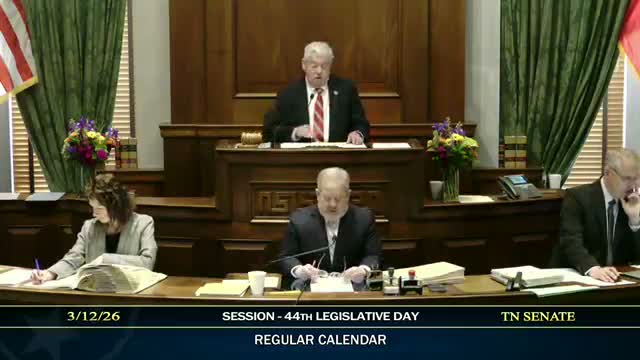
The Tennessee Senate on March 12 moved a wide array of measures through final consideration, adopting committee amendments and recorded votes as it advanced the legislative calendar.
Why it matters: The package includes bills with implications for employers, health care professionals, local governments and early‑childhood programs. Lawmakers adopted amendments intended to clarify scope, add certification requirements or preserve confidentiality; multiple votes were unanimous while several measures provoked substantive questions on the floor.
Votes at a glance (selected items):
- House Bill 11‑94 (Hensley): Lowers the employee threshold under the Tennessee Lawful Employment Act from six employees to one, expanding the act's coverage and employer documentation requirements; passed on third and final consideration, Ayes 19, Nays 13.
- Senate Bill 17‑13 (Briggs, committee amendment): Requires annual attestations to the Comptroller regarding compliance with statutory prohibitions on discriminatory DEI preferences for executive heads of specified entities; amendment adopted and bill passed, Ayes 27, Nays 6.
- Senate Bill 19‑56 (Briggs, committee amendment): Prohibits state agencies from issuing or renewing certifications or licenses to corporate entities if officers or employees provide material support to entities designated by the U.S. Department of State as foreign terrorist organizations or are specially designated by the U.S. Department of the Treasury; amendment adopted and bill passed, Ayes 27, Nays 5.
- Senate Bill 19‑70 (Briggs, committee amendment): Allows noncitizens to inspect or receive copies of law‑enforcement records that pertain solely to them; amendment adopted and bill passed unanimously, Ayes 32, Nays 0.
- Senate Bill 20‑32 (Bailey, committee amendment): Requires public-safety employers to provide reasonable access to employment records and allows applicants to submit alternative evaluations at their own expense; amendment adopted and bill passed, Ayes 33, Nays 0.
- Senate Bill 20‑55 (White, education amendment): Requires LEAs and charter schools to permit private-pay providers contracted by parents to access students during the school day for services; amendment adopted and bill passed, Ayes 33, Nays 0.
- Senate Bill 21‑53 (Wally): Authorizes the Department of Health to establish a voluntary, evidence‑based home visiting program for early‑childhood mental health (birth–5); sponsor said the bill creates a framework without current funding and that the program would be voluntary; passed on third and final consideration, Ayes 30, Nays 3.
- Senate Bill 22‑22 (Johnson, judiciary amendment): Adds vicarious liability for entities compensating demonstrators who commit specified offenses; amendment adopted and bill passed, Ayes 27, Nays 6.
- Senate Bill 20‑76 (Watson, health amendment): Expands optometrists' scope to permit certain office‑based laser procedures with board certification and rulemaking; sponsor said a House amendment will specify the procedures on the record; bill passed, Ayes 29, Nays 3.
- Senate Bill 20‑28 (Lowe): Committee amendment clarified state authority over hunting and fishing and generated significant debate about municipal safety limits; passed, Ayes 24, Nays 7.
- Senate Joint Resolution 6‑17 (Hatcher): Urged Congress to permit states to use technology to block or monitor cell phones in correctional facilities; adopted, Ayes 29, Nays 0.
Procedural notes: Several constitutional amendment resolutions were read for the first time (for example, SJR 6‑18 and SJR 6‑24) and were laid over to the next legislative day. The Senate also took multiple concurrences on House amendments across bills and set deadlines and schedules for appropriation amendments.
Next steps: Bills passed by the Senate advance according to legislative procedure; some measures (constitutional amendments) require further readings or referral. Several items noted funding or rulemaking requirements that will shape implementation.
Vote tallies and recorded actions are taken from the Senate floor transcription and were announced by the clerk during the session.
Why it matters: The package includes bills with implications for employers, health care professionals, local governments and early‑childhood programs. Lawmakers adopted amendments intended to clarify scope, add certification requirements or preserve confidentiality; multiple votes were unanimous while several measures provoked substantive questions on the floor.
Votes at a glance (selected items):
- House Bill 11‑94 (Hensley): Lowers the employee threshold under the Tennessee Lawful Employment Act from six employees to one, expanding the act's coverage and employer documentation requirements; passed on third and final consideration, Ayes 19, Nays 13.
- Senate Bill 17‑13 (Briggs, committee amendment): Requires annual attestations to the Comptroller regarding compliance with statutory prohibitions on discriminatory DEI preferences for executive heads of specified entities; amendment adopted and bill passed, Ayes 27, Nays 6.
- Senate Bill 19‑56 (Briggs, committee amendment): Prohibits state agencies from issuing or renewing certifications or licenses to corporate entities if officers or employees provide material support to entities designated by the U.S. Department of State as foreign terrorist organizations or are specially designated by the U.S. Department of the Treasury; amendment adopted and bill passed, Ayes 27, Nays 5.
- Senate Bill 19‑70 (Briggs, committee amendment): Allows noncitizens to inspect or receive copies of law‑enforcement records that pertain solely to them; amendment adopted and bill passed unanimously, Ayes 32, Nays 0.
- Senate Bill 20‑32 (Bailey, committee amendment): Requires public-safety employers to provide reasonable access to employment records and allows applicants to submit alternative evaluations at their own expense; amendment adopted and bill passed, Ayes 33, Nays 0.
- Senate Bill 20‑55 (White, education amendment): Requires LEAs and charter schools to permit private-pay providers contracted by parents to access students during the school day for services; amendment adopted and bill passed, Ayes 33, Nays 0.
- Senate Bill 21‑53 (Wally): Authorizes the Department of Health to establish a voluntary, evidence‑based home visiting program for early‑childhood mental health (birth–5); sponsor said the bill creates a framework without current funding and that the program would be voluntary; passed on third and final consideration, Ayes 30, Nays 3.
- Senate Bill 22‑22 (Johnson, judiciary amendment): Adds vicarious liability for entities compensating demonstrators who commit specified offenses; amendment adopted and bill passed, Ayes 27, Nays 6.
- Senate Bill 20‑76 (Watson, health amendment): Expands optometrists' scope to permit certain office‑based laser procedures with board certification and rulemaking; sponsor said a House amendment will specify the procedures on the record; bill passed, Ayes 29, Nays 3.
- Senate Bill 20‑28 (Lowe): Committee amendment clarified state authority over hunting and fishing and generated significant debate about municipal safety limits; passed, Ayes 24, Nays 7.
- Senate Joint Resolution 6‑17 (Hatcher): Urged Congress to permit states to use technology to block or monitor cell phones in correctional facilities; adopted, Ayes 29, Nays 0.
Procedural notes: Several constitutional amendment resolutions were read for the first time (for example, SJR 6‑18 and SJR 6‑24) and were laid over to the next legislative day. The Senate also took multiple concurrences on House amendments across bills and set deadlines and schedules for appropriation amendments.
Next steps: Bills passed by the Senate advance according to legislative procedure; some measures (constitutional amendments) require further readings or referral. Several items noted funding or rulemaking requirements that will shape implementation.
Vote tallies and recorded actions are taken from the Senate floor transcription and were announced by the clerk during the session.
Don't Miss a Word: See the Full Meeting!
Go beyond summaries. Unlock every video, transcript, and key insight with a Founder Membership.
✓
Get instant access to full meeting videos
✓
Search and clip any phrase from complete transcripts
✓
Receive AI-powered summaries & custom alerts
✓
Enjoy lifetime, unrestricted access to government data
30-day money-back guarantee
