Senate committee hears bill to add mental‑health education to Alaska K–12 schools
March 10, 2026 | 2026 Legislature Alaska, Alaska
This article was created by AI summarizing key points discussed. AI makes mistakes, so for full details and context, please refer to the video of the full meeting. Please report any errors so we can fix them. Report an error »
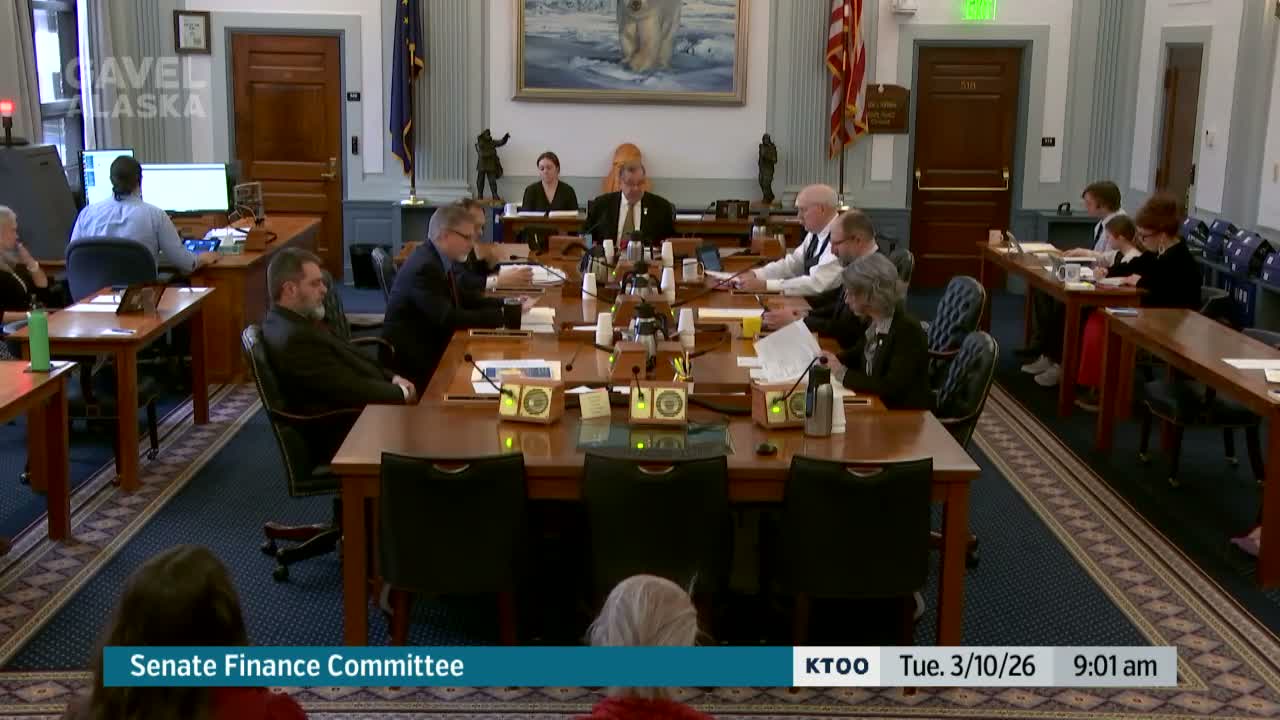
Senator LB Gray Jackson told the Senate Finance Committee in Juneau that Senate Bill 41 would ensure "mental health education is incorporated into our K through 12 curriculum, giving it the same importance as physical health." She said the bill directs the State Board of Education to develop age‑appropriate guidelines in consultation with state and national mental‑health experts, tribal health organizations and the Departments of Health and Family and Community Services, requires at least two weeks' parental notification before instruction, and calls for a two‑year report to the Legislature on how the guidelines were developed.
Supporters said the bill addresses urgent needs. Anne Ringstad, executive director of NAMI Alaska, said the measure has been vetted for five years and called early education critical, noting that "50 percent of all mental health conditions begin by age 14 and 75 percent by age 25." James Bila of the American Foundation for Suicide Prevention—Alaska chapter, who described personal loss to suicide, said educating students can be lifesaving and urged passage, saying "talk saves lives." Other proponents, including the Alaska Children's Trust and service‑provider witnesses, cited state data showing elevated rates of sadness, hopelessness and suicide‑related behavior among Alaska youth.
Not all testimony was supportive. Kathleen Wiedemeyer of the Citizens Commission on Human Rights testified that the bill is "vague and overly broad," warned it could allow the mental‑health industry to shape school guidance and said it risks "turning schools into mental health indoctrination centers." Wiedemeyer urged amending the bill to require parental opt‑in authorization rather than notification.
Senator Kiel reviewed fiscal notes: the Department of Family and Community Services and Department of Health placed no fiscal impact on the bill, while the Department of Education and Early Development listed a one‑time unrestricted general‑fund cost of $216,000 to implement the curriculum. After closing testimony and brief sponsor remarks, the committee "set the bill aside" for further consideration; no committee vote was recorded at the hearing.
The bill's next steps are parliamentary: the committee may schedule further consideration after staff review of fiscal effects and any requested language changes.
Supporters said the bill addresses urgent needs. Anne Ringstad, executive director of NAMI Alaska, said the measure has been vetted for five years and called early education critical, noting that "50 percent of all mental health conditions begin by age 14 and 75 percent by age 25." James Bila of the American Foundation for Suicide Prevention—Alaska chapter, who described personal loss to suicide, said educating students can be lifesaving and urged passage, saying "talk saves lives." Other proponents, including the Alaska Children's Trust and service‑provider witnesses, cited state data showing elevated rates of sadness, hopelessness and suicide‑related behavior among Alaska youth.
Not all testimony was supportive. Kathleen Wiedemeyer of the Citizens Commission on Human Rights testified that the bill is "vague and overly broad," warned it could allow the mental‑health industry to shape school guidance and said it risks "turning schools into mental health indoctrination centers." Wiedemeyer urged amending the bill to require parental opt‑in authorization rather than notification.
Senator Kiel reviewed fiscal notes: the Department of Family and Community Services and Department of Health placed no fiscal impact on the bill, while the Department of Education and Early Development listed a one‑time unrestricted general‑fund cost of $216,000 to implement the curriculum. After closing testimony and brief sponsor remarks, the committee "set the bill aside" for further consideration; no committee vote was recorded at the hearing.
The bill's next steps are parliamentary: the committee may schedule further consideration after staff review of fiscal effects and any requested language changes.
View the Full Meeting & All Its Details
This article offers just a summary. Unlock complete video, transcripts, and insights as a Founder Member.
✓
Watch full, unedited meeting videos
✓
Search every word spoken in unlimited transcripts
✓
AI summaries & real-time alerts (all government levels)
✓
Permanent access to expanding government content
30-day money-back guarantee
