Lawmakers hear invited testimony for HB352 to join health licensing compacts including PSYPACT
March 11, 2026 | 2026 Legislature Alaska, Alaska
This article was created by AI summarizing key points discussed. AI makes mistakes, so for full details and context, please refer to the video of the full meeting. Please report any errors so we can fix them. Report an error »
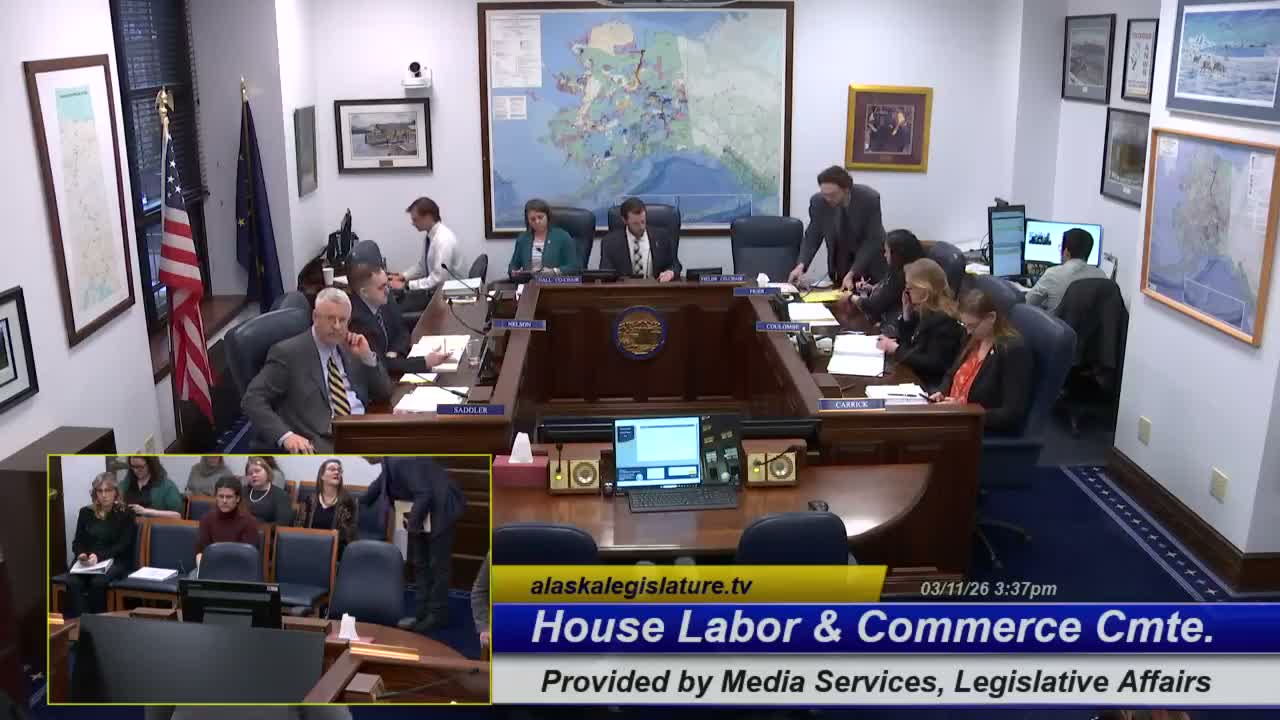
The House Labor and Commerce Committee took invited testimony on House Bill 352, a broad bill that would allow Alaska to join several multi-state health-care licensing compacts, including the Psychology Interjurisdictional Compact (PSYPACT).
Multiple clinicians and stakeholders told the committee the compacts shorten licensing timelines, reduce duplicative paperwork and expand access to specialists and telehealth services. "It took me eight months to get my temporary license to practice in Alaska," said Dr. Jenna Schmidt, testifying in support of compact licensure for physicians and describing delays that can keep positions vacant. Dr. Anne Zink, a practicing emergency physician, said compacts "reduce unnecessary bureaucracy" and help hospitals recruit clinicians without compromising state licensing standards.
Representatives of the Alaska Psychological Association presented survey results showing majority support among responding members for joining PSYPACT. Dr. Kevin Tarlo said the association found continuity of care and greater rural access among the top benefits, while concerns included potential exclusion of non-APA graduates and cultural competence for out-of-state practitioners.
PSYPACT officials and commission representatives (including Patrick Hyde) explained how the compact works: psychologists obtain an "e-passport" credential and then may seek an APIT authorization for telepsychology or a temporary in-person authorization (up to 30 days) to practice in member jurisdictions. Testimony emphasized that authorization holders must follow the laws of the state where the patient is located; PSYPACT does not replace Alaska licensure for providers who wish to reside and practice permanently in the state.
On enforcement and compliance, PSYPACT representatives said the commission has rulemaking and dispute-resolution procedures and that termination of a member jurisdiction would require a serious, rule-mediated process; they noted remediation steps are used before any extreme sanctions. Committee members repeatedly asked for follow-up data (for example, workforce figures from the American Psychological Association) and clarifications on whether non-APA graduates could qualify under newer attestation pathways; witnesses said the new pathways and attestation process were designed to allow some non-APA-trained graduates to qualify for the e-passport.
No committee vote was taken on HB352 during the hearing; the committee asked staff to collect additional data and will revisit the measure.
What happened next: Committee staff will gather requested workforce and efficacy data and clarifications on program eligibility; the bill remains under committee consideration.
Multiple clinicians and stakeholders told the committee the compacts shorten licensing timelines, reduce duplicative paperwork and expand access to specialists and telehealth services. "It took me eight months to get my temporary license to practice in Alaska," said Dr. Jenna Schmidt, testifying in support of compact licensure for physicians and describing delays that can keep positions vacant. Dr. Anne Zink, a practicing emergency physician, said compacts "reduce unnecessary bureaucracy" and help hospitals recruit clinicians without compromising state licensing standards.
Representatives of the Alaska Psychological Association presented survey results showing majority support among responding members for joining PSYPACT. Dr. Kevin Tarlo said the association found continuity of care and greater rural access among the top benefits, while concerns included potential exclusion of non-APA graduates and cultural competence for out-of-state practitioners.
PSYPACT officials and commission representatives (including Patrick Hyde) explained how the compact works: psychologists obtain an "e-passport" credential and then may seek an APIT authorization for telepsychology or a temporary in-person authorization (up to 30 days) to practice in member jurisdictions. Testimony emphasized that authorization holders must follow the laws of the state where the patient is located; PSYPACT does not replace Alaska licensure for providers who wish to reside and practice permanently in the state.
On enforcement and compliance, PSYPACT representatives said the commission has rulemaking and dispute-resolution procedures and that termination of a member jurisdiction would require a serious, rule-mediated process; they noted remediation steps are used before any extreme sanctions. Committee members repeatedly asked for follow-up data (for example, workforce figures from the American Psychological Association) and clarifications on whether non-APA graduates could qualify under newer attestation pathways; witnesses said the new pathways and attestation process were designed to allow some non-APA-trained graduates to qualify for the e-passport.
No committee vote was taken on HB352 during the hearing; the committee asked staff to collect additional data and will revisit the measure.
What happened next: Committee staff will gather requested workforce and efficacy data and clarifications on program eligibility; the bill remains under committee consideration.
Don't Miss a Word: See the Full Meeting!
Go beyond summaries. Unlock every video, transcript, and key insight with a Founder Membership.
✓
Get instant access to full meeting videos
✓
Search and clip any phrase from complete transcripts
✓
Receive AI-powered summaries & custom alerts
✓
Enjoy lifetime, unrestricted access to government data
30-day money-back guarantee
