Committee hears concerns about workplace protective-orders bill; bill set aside for public comment
March 11, 2026 | 2026 Legislature Alaska, Alaska
This article was created by AI summarizing key points discussed. AI makes mistakes, so for full details and context, please refer to the video of the full meeting. Please report any errors so we can fix them. Report an error »
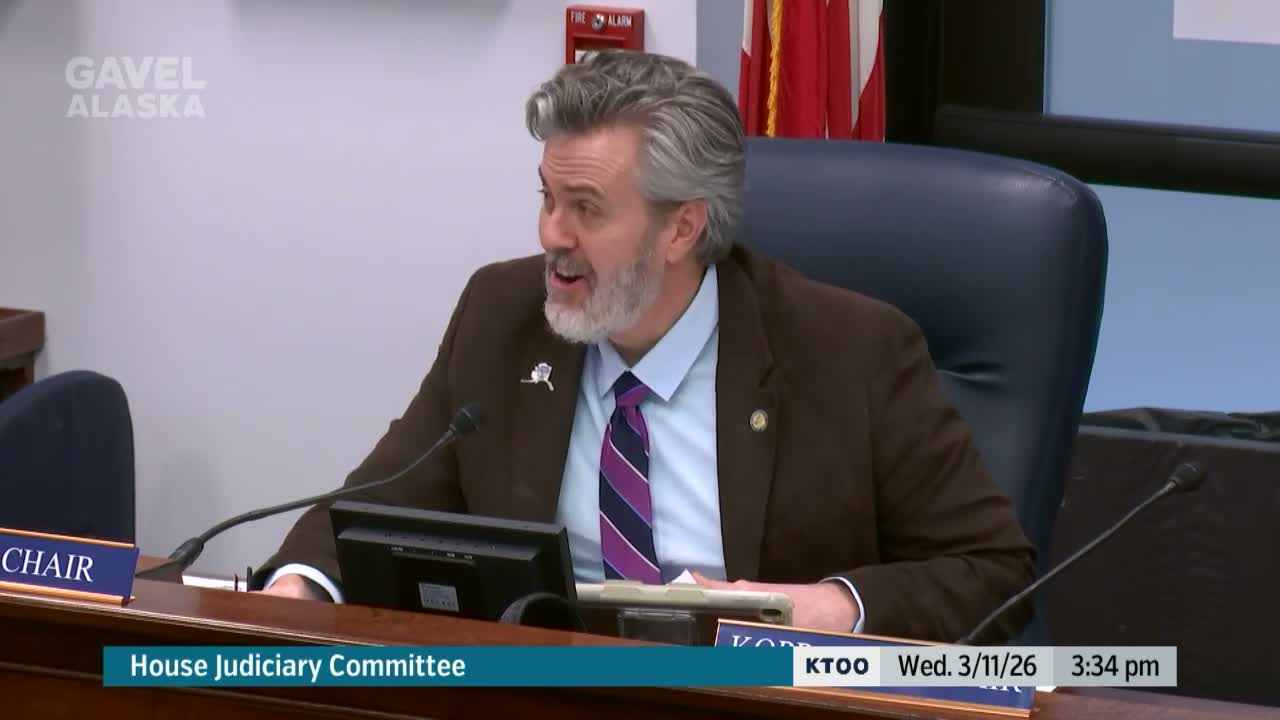
Staff to Representative Hall, Keith Bruce, described House Bill 222 to the House Judiciary Committee as a narrowly tailored tool to allow employers to petition for a workplace violence protective order when an individual commits or credibly threatens violence at a workplace. Bruce said violations would be a class A misdemeanor and that the bill aligns workplace protective orders with existing protective-order procedures.
Representative Hall and her staff said the bill responds to incidents at shelters and other workplaces in which staff face threats, harassment or intimidating presence and where temporary civil remedies or trespass orders are slow or ineffective in rural areas. Brenda Stanfield of the Alaska Network on Domestic Violence and Sexual Assault told the committee that shelter operators have struggled to protect staff and residents when law enforcement response is delayed by geography and distance.
Nancy Mead, general counsel for the Alaska Court System, explained how the bill parallels current protective-order procedures: a court may issue a short ex parte order (20 days) pending a hearing and, after a hearing, may issue a long-term order (six months under the draft) if the judge finds by a preponderance of the evidence that the respondent committed violence or made a credible threat that could be carried out at the workplace. Mead said judges apply a reasonable-person standard and that the process is intended to balance safety and due process.
Committee members pressed on several policy questions: only an employer (not a co-worker) could file; how the bill would affect schools and public spaces; whether supervisors might misuse the authority against employees; interaction with tribal protective orders and whether tribes had been consulted; the bill’s prohibition on awarding attorney fees against petitioners; and whether employers face liability for failing to seek an order. Mead noted the bill contains a provision insulating employers from civil liability for failing to seek an order and that petitions for protective orders are free to file.
Members requested comparative materials showing how workplace protective orders differ from existing ex parte and long-term domestic-violence, stalking or assault protective orders and asked staff to pursue outreach to tribal governments and shelters. Representative Hall agreed to provide a comparison chart and the committee decided to set HB 222 aside and bring it back with public comment at a later date.
Next steps: Committee staff will prepare comparative materials and pursue outreach to tribes and shelter operators before the committee takes public testimony and resumes consideration of HB 222.
Representative Hall and her staff said the bill responds to incidents at shelters and other workplaces in which staff face threats, harassment or intimidating presence and where temporary civil remedies or trespass orders are slow or ineffective in rural areas. Brenda Stanfield of the Alaska Network on Domestic Violence and Sexual Assault told the committee that shelter operators have struggled to protect staff and residents when law enforcement response is delayed by geography and distance.
Nancy Mead, general counsel for the Alaska Court System, explained how the bill parallels current protective-order procedures: a court may issue a short ex parte order (20 days) pending a hearing and, after a hearing, may issue a long-term order (six months under the draft) if the judge finds by a preponderance of the evidence that the respondent committed violence or made a credible threat that could be carried out at the workplace. Mead said judges apply a reasonable-person standard and that the process is intended to balance safety and due process.
Committee members pressed on several policy questions: only an employer (not a co-worker) could file; how the bill would affect schools and public spaces; whether supervisors might misuse the authority against employees; interaction with tribal protective orders and whether tribes had been consulted; the bill’s prohibition on awarding attorney fees against petitioners; and whether employers face liability for failing to seek an order. Mead noted the bill contains a provision insulating employers from civil liability for failing to seek an order and that petitions for protective orders are free to file.
Members requested comparative materials showing how workplace protective orders differ from existing ex parte and long-term domestic-violence, stalking or assault protective orders and asked staff to pursue outreach to tribal governments and shelters. Representative Hall agreed to provide a comparison chart and the committee decided to set HB 222 aside and bring it back with public comment at a later date.
Next steps: Committee staff will prepare comparative materials and pursue outreach to tribes and shelter operators before the committee takes public testimony and resumes consideration of HB 222.
Don't Miss a Word: See the Full Meeting!
Go beyond summaries. Unlock every video, transcript, and key insight with a Founder Membership.
✓
Get instant access to full meeting videos
✓
Search and clip any phrase from complete transcripts
✓
Receive AI-powered summaries & custom alerts
✓
Enjoy lifetime, unrestricted access to government data
30-day money-back guarantee
