Committee hears testimony on HB305 to raise pay for rideshare drivers; organizers cite Washington State model
March 11, 2026 | 2026 Legislature Alaska, Alaska
This article was created by AI summarizing key points discussed. AI makes mistakes, so for full details and context, please refer to the video of the full meeting. Please report any errors so we can fix them. Report an error »
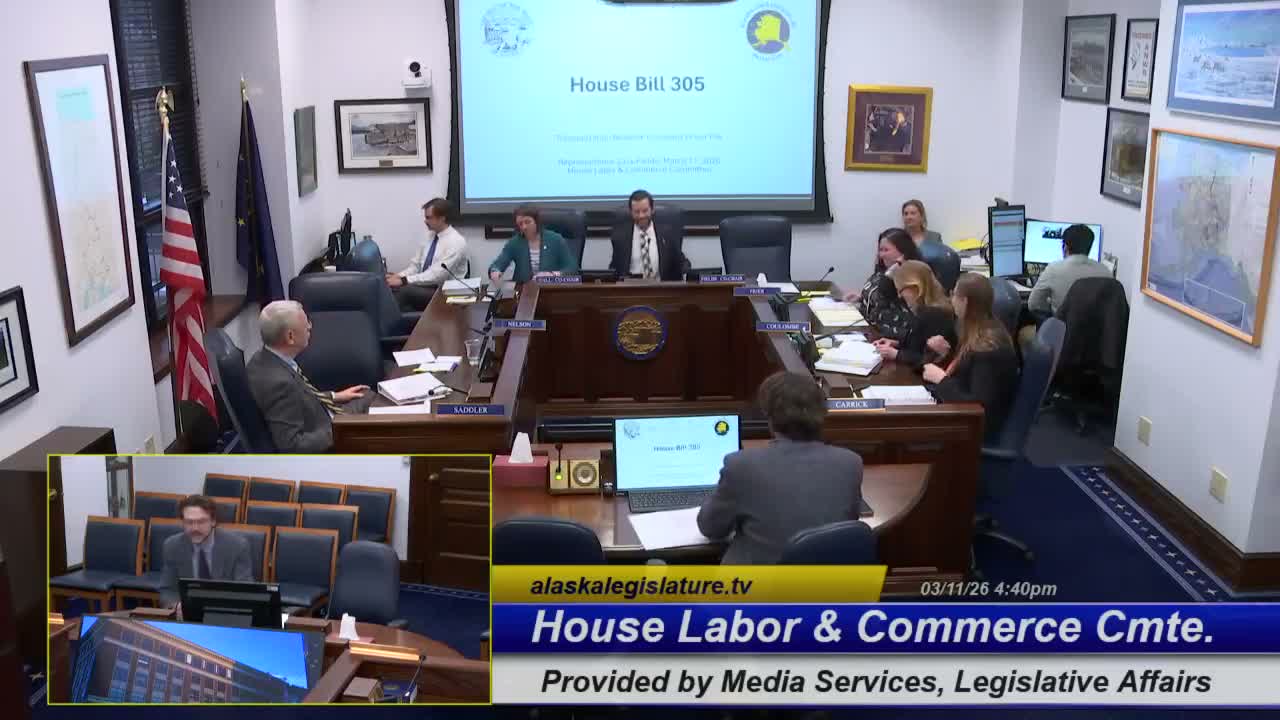
The committee heard initial presentation and invited testimony on House Bill 305, which would set pay protections for drivers who work for transportation network companies (TNCs).
Evan Anderson, staff to Representative Fields, walked the committee through the bill’s purpose and national context, citing research showing that algorithmic pricing and platform "take rates" have reduced drivers' take-home pay. Anderson said informal surveys in Southcentral Alaska indicate drivers keep around 55% of the posted fare (about a 45% take rate by the platform). He described examples where drivers’ take-home pay has dropped while rider prices and company profitability rose.
Emily Dot of SEIU 775 testified in favor of HB305 and described Seattle and Washington State policy efforts that set minimum pay and other protections for gig workers. "These laws really are life changing for workers and for their communities," Dot said, urging Alaska to adopt pay standards that account for mileage, time and unpaid deadhead travel.
Sponsor remarks emphasized geographic variation in driver payments — noting a recent Juneau airport trip that yielded roughly 72% of the fare to the driver while longer Anchorage trips can return as little as 40% — and requested committee members gather more data from local drivers. The committee did not vote on HB305 and left the measure for future consideration.
What happens next: Committee will gather additional data points from drivers and stakeholders and return to HB305 at a later date.
Evan Anderson, staff to Representative Fields, walked the committee through the bill’s purpose and national context, citing research showing that algorithmic pricing and platform "take rates" have reduced drivers' take-home pay. Anderson said informal surveys in Southcentral Alaska indicate drivers keep around 55% of the posted fare (about a 45% take rate by the platform). He described examples where drivers’ take-home pay has dropped while rider prices and company profitability rose.
Emily Dot of SEIU 775 testified in favor of HB305 and described Seattle and Washington State policy efforts that set minimum pay and other protections for gig workers. "These laws really are life changing for workers and for their communities," Dot said, urging Alaska to adopt pay standards that account for mileage, time and unpaid deadhead travel.
Sponsor remarks emphasized geographic variation in driver payments — noting a recent Juneau airport trip that yielded roughly 72% of the fare to the driver while longer Anchorage trips can return as little as 40% — and requested committee members gather more data from local drivers. The committee did not vote on HB305 and left the measure for future consideration.
What happens next: Committee will gather additional data points from drivers and stakeholders and return to HB305 at a later date.
Don't Miss a Word: See the Full Meeting!
Go beyond summaries. Unlock every video, transcript, and key insight with a Founder Membership.
✓
Get instant access to full meeting videos
✓
Search and clip any phrase from complete transcripts
✓
Receive AI-powered summaries & custom alerts
✓
Enjoy lifetime, unrestricted access to government data
30-day money-back guarantee
