City staff flags $495M 10‑year capital gap; council briefed on projects, funding choices and possible 2017 CIP renewal
March 25, 2024 | Edmond, Oklahoma County, Oklahoma
This article was created by AI summarizing key points discussed. AI makes mistakes, so for full details and context, please refer to the video of the full meeting. Please report any errors so we can fix them. Report an error »
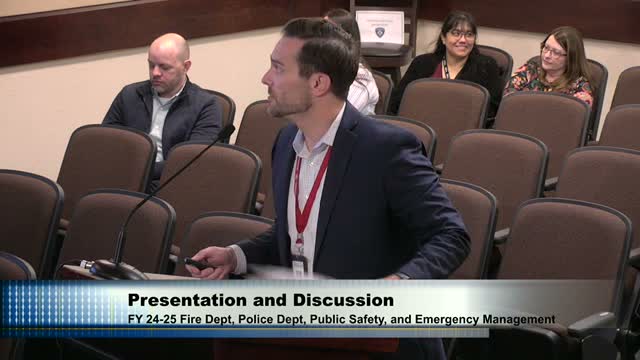
A city staff presenter reviewed the Capital Improvement Program (CIP) budgets and projects, telling council that projected non-utility capital needs total roughly $495,000,000 over 10 years against about $158,000,000 in available funds, creating a substantial funding gap.
Why it matters: The CIP funds pay for major infrastructure and quality-of-life projects (streets, trails, parks, intersections, fire and police facilities). Staff warned that without new funding the city must substitute projects rather than add them.
Staff reviewed major and current projects funded by the 2000 and 2017 CIP funds: the City Center Complex (on time and on budget, slab poured), the joint-use library and YMCA (a $30,000,000 project with a planned groundbreaking in July), Kickingbird and Sooner Road improvements (the Sooner project cost ~$3.3M), the Ted Anderson park splash pad (~$1.1M), and the AC Kaplinger Sports Complex (about $17.5M). Staff also described trail projects (Route 66 Connector, Spring Creek Park to Carl Remond Park) and noted grants secured to help pay for some trail phases.
Staff pointed to revenue assumptions: the adopted budget assumed 2% sales-tax growth but current projections are closer to 0.45%, a roughly $800,000 shortfall in the two CIP funds combined for the year. They also explained that the 2017 CIP sales tax currently sunsets March 31, 2027; renewing it would require an election. Other funding routes discussed included general-obligation bonds (permitted for projects but not operations under state law) and a development-impact-fee study the council commissioned to evaluate developers' contributions to infrastructure.
The presenter framed next steps: council strategic-plan priorities will guide project substitutions, staff will balance projects against available funds, and an election would be required to extend the 2017 CIP sales tax. Staff noted the budget adoption schedule with adoption currently scheduled for June 10 at the regular meeting.
What’s next: Staff will return with refined project lists and options for long-term funding, including public engagement and focused conversations about acceptable funding gaps and potential ballot measures.
Why it matters: The CIP funds pay for major infrastructure and quality-of-life projects (streets, trails, parks, intersections, fire and police facilities). Staff warned that without new funding the city must substitute projects rather than add them.
Staff reviewed major and current projects funded by the 2000 and 2017 CIP funds: the City Center Complex (on time and on budget, slab poured), the joint-use library and YMCA (a $30,000,000 project with a planned groundbreaking in July), Kickingbird and Sooner Road improvements (the Sooner project cost ~$3.3M), the Ted Anderson park splash pad (~$1.1M), and the AC Kaplinger Sports Complex (about $17.5M). Staff also described trail projects (Route 66 Connector, Spring Creek Park to Carl Remond Park) and noted grants secured to help pay for some trail phases.
Staff pointed to revenue assumptions: the adopted budget assumed 2% sales-tax growth but current projections are closer to 0.45%, a roughly $800,000 shortfall in the two CIP funds combined for the year. They also explained that the 2017 CIP sales tax currently sunsets March 31, 2027; renewing it would require an election. Other funding routes discussed included general-obligation bonds (permitted for projects but not operations under state law) and a development-impact-fee study the council commissioned to evaluate developers' contributions to infrastructure.
The presenter framed next steps: council strategic-plan priorities will guide project substitutions, staff will balance projects against available funds, and an election would be required to extend the 2017 CIP sales tax. Staff noted the budget adoption schedule with adoption currently scheduled for June 10 at the regular meeting.
What’s next: Staff will return with refined project lists and options for long-term funding, including public engagement and focused conversations about acceptable funding gaps and potential ballot measures.
View the Full Meeting & All Its Details
This article offers just a summary. Unlock complete video, transcripts, and insights as a Founder Member.
✓
Watch full, unedited meeting videos
✓
Search every word spoken in unlimited transcripts
✓
AI summaries & real-time alerts (all government levels)
✓
Permanent access to expanding government content
30-day money-back guarantee
