Actuaries and retirement division tell Senate Finance HB 78 would shift millions in pension costs to state
March 11, 2026 | 2026 Legislature Alaska, Alaska
This article was created by AI summarizing key points discussed. AI makes mistakes, so for full details and context, please refer to the video of the full meeting. Please report any errors so we can fix them. Report an error »
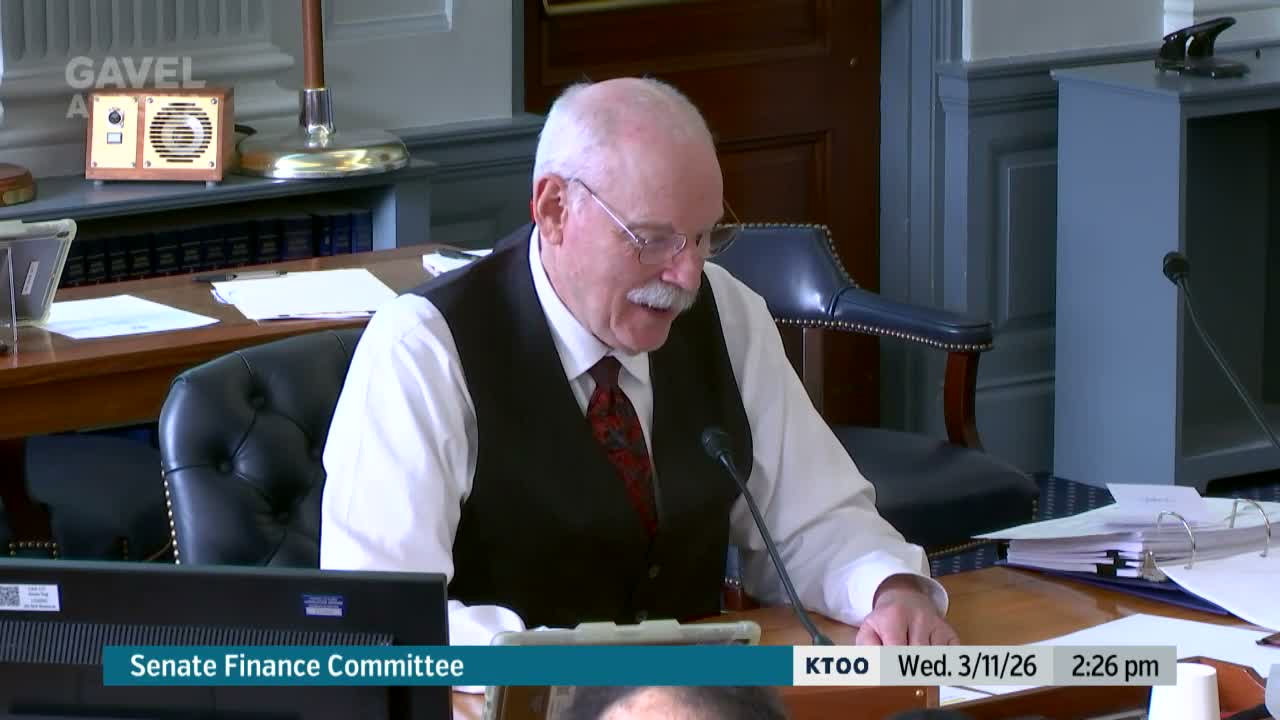
Division of Retirement and Benefits Director Kathy Lee and a Gallagher actuary told the Senate Finance Committee on March 11 that House Bill 78, which would create a new defined-benefit option, would raise projected state contributions and shift some employer-paid portions of unfunded liability to the state under current statutory caps.
Actuary David Kirschner walked the committee through FY2030 examples showing components of employer cost (normal cost, past‑service cost) and how HB 78’s higher defined‑benefit normal costs change the allocation of a capped employer contribution. In the example presented, the state-as-employer contribution was shown moving from about $415 million under current law to about $453 million under the HB 78 projection for FY2030; in the same set of slides, the additional state contribution for one group (CURS/PERS combined example) was projected to rise from about $99 million to $120 million.
Kathy Lee summarized the mechanism: because many non‑state employers pay a statutory capped rate (22% for PERS employers and 12.56% for TERS employers), an increase in per‑employee normal costs for HB 78 would leave fewer dollars from the capped employer payment available to pay down legacy unfunded liability, and that shortfall would then be covered by the state's additional contribution. ‘‘So this I think is kind of a hidden cost of the HB 78 bill because the contribution rate will be higher, less will be going from the employer to pay off the unfunded liability,’’ Lee said.
The actuary gave a concrete allocation example: in the presentation 22% of projected payroll (shown in bold on the slide) is allocated to normal cost, health care normal cost and defined contribution retirement costs; under the HB 78 projection the portion of the capped employer amount going toward legacy defined‑benefit past‑service costs decreased by $22,000,000 in the example, which correspondingly increased the state's required additional contribution by the same amount.
Panelists emphasized uncertainty. Kirschner noted actuarial projections depend on future experience and assumptions (for example assumed investment returns), and said projections assume assumptions hold; under those assumptions the actuaries projected the pension trusts to be fully funded by 2039 but warned that worse-than-expected experience could push that date out. Lee told the committee the division is neutral on the bill and will administer whatever the Legislature passes.
The committee took no formal vote and asked staff for more tailored dollar figures and further breakdowns; members said they would continue the discussion during subsequent sessions.
Actuary David Kirschner walked the committee through FY2030 examples showing components of employer cost (normal cost, past‑service cost) and how HB 78’s higher defined‑benefit normal costs change the allocation of a capped employer contribution. In the example presented, the state-as-employer contribution was shown moving from about $415 million under current law to about $453 million under the HB 78 projection for FY2030; in the same set of slides, the additional state contribution for one group (CURS/PERS combined example) was projected to rise from about $99 million to $120 million.
Kathy Lee summarized the mechanism: because many non‑state employers pay a statutory capped rate (22% for PERS employers and 12.56% for TERS employers), an increase in per‑employee normal costs for HB 78 would leave fewer dollars from the capped employer payment available to pay down legacy unfunded liability, and that shortfall would then be covered by the state's additional contribution. ‘‘So this I think is kind of a hidden cost of the HB 78 bill because the contribution rate will be higher, less will be going from the employer to pay off the unfunded liability,’’ Lee said.
The actuary gave a concrete allocation example: in the presentation 22% of projected payroll (shown in bold on the slide) is allocated to normal cost, health care normal cost and defined contribution retirement costs; under the HB 78 projection the portion of the capped employer amount going toward legacy defined‑benefit past‑service costs decreased by $22,000,000 in the example, which correspondingly increased the state's required additional contribution by the same amount.
Panelists emphasized uncertainty. Kirschner noted actuarial projections depend on future experience and assumptions (for example assumed investment returns), and said projections assume assumptions hold; under those assumptions the actuaries projected the pension trusts to be fully funded by 2039 but warned that worse-than-expected experience could push that date out. Lee told the committee the division is neutral on the bill and will administer whatever the Legislature passes.
The committee took no formal vote and asked staff for more tailored dollar figures and further breakdowns; members said they would continue the discussion during subsequent sessions.
Don't Miss a Word: See the Full Meeting!
Go beyond summaries. Unlock every video, transcript, and key insight with a Founder Membership.
✓
Get instant access to full meeting videos
✓
Search and clip any phrase from complete transcripts
✓
Receive AI-powered summaries & custom alerts
✓
Enjoy lifetime, unrestricted access to government data
30-day money-back guarantee
