Committee approves mine-subsidence bill after rejecting amendment that would have removed collateral-source offset
March 11, 2026 | 2026 Legislature WV, West Virginia
This article was created by AI summarizing key points discussed. AI makes mistakes, so for full details and context, please refer to the video of the full meeting. Please report any errors so we can fix them. Report an error »
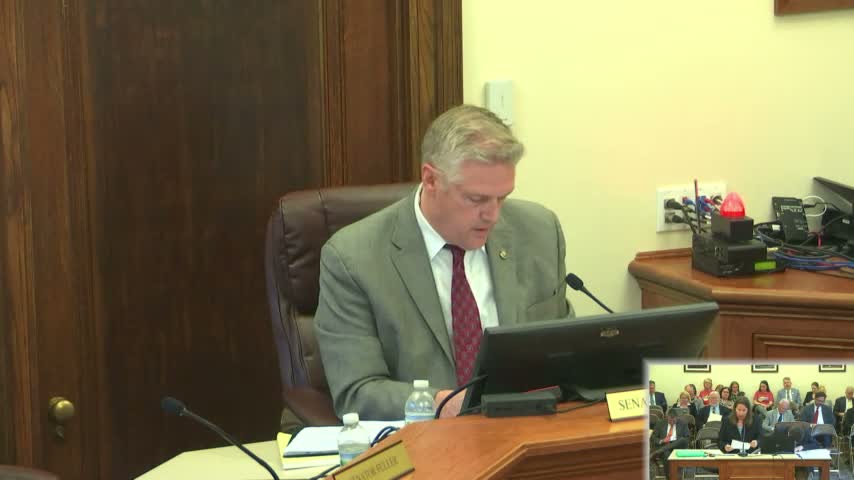
The Senate Banking and Insurance Committee on March 4 reported an engrossed committee substitute for House Bill 54 62, a measure affecting mine-subsidence insurance and the Mine Subsidence Fund administered by the Board of Risk and Insurance Management (BRIM).
Counsel explained the bill would allow the fund to reduce payments for mine-subsidence losses by amounts a policyholder has received from other sources (a collateral-source setoff). The proposed strike-and-insert included additional language requiring a policyholder to provide a 90-day pre-suit notice to both the insurer and BRIM, to allow an opportunity to remedy an alleged wrongful denial; it would also preclude recovery of extra-contractual damages, attorney's fees, and any damages exceeding the mine-subsidence coverage provided unless a clear violation were shown.
Committee members asked substantive questions about the difference between first-party and third-party bad-faith claims and how BRIM and insurers handle claims reporting and adjustment. Jeremy Wolf, BRIM's executive director, testified that BRIM had been pursuing double-dipping issues and that a recent review indicated payments already cost the fund over $1,400,000 in the last two years. Jill Rice, president of the West Virginia Insurance Federation, described concerns that the strike-and-insert language might complicate claims-handling and said the federation's members seek clarity about insurer obligations as point-of-sale remitters to BRIM.
Senator (speaker 4) offered an amendment to strike subsection c of section 33-30-6 (the collateral-source language); counsel and BRIM explained that removing the language would leave the double-dipping issue unresolved and that the original BRIM language addressed setoff concerns. The amendment was put to a division vote and was rejected. The committee then voted to report the engrossed committee substitute for House Bill 54 62 to the full Senate with the recommendation that it pass.
Why it mattered: The bill attempts to prevent duplicate recoveries from multiple sources and to limit certain extra-contractual recoveries in mine-subsidence cases while preserving a path to remedy when claims-handling is clearly wrongful.
What happens next: The bill is reported to the full Senate for further action.
Action: The committee rejected an amendment to remove the collateral-source setoff language by division vote, then moved to report the engrossed committee substitute for House Bill 54 62 to the full Senate with recommendation that it pass; the motion was adopted.
Counsel explained the bill would allow the fund to reduce payments for mine-subsidence losses by amounts a policyholder has received from other sources (a collateral-source setoff). The proposed strike-and-insert included additional language requiring a policyholder to provide a 90-day pre-suit notice to both the insurer and BRIM, to allow an opportunity to remedy an alleged wrongful denial; it would also preclude recovery of extra-contractual damages, attorney's fees, and any damages exceeding the mine-subsidence coverage provided unless a clear violation were shown.
Committee members asked substantive questions about the difference between first-party and third-party bad-faith claims and how BRIM and insurers handle claims reporting and adjustment. Jeremy Wolf, BRIM's executive director, testified that BRIM had been pursuing double-dipping issues and that a recent review indicated payments already cost the fund over $1,400,000 in the last two years. Jill Rice, president of the West Virginia Insurance Federation, described concerns that the strike-and-insert language might complicate claims-handling and said the federation's members seek clarity about insurer obligations as point-of-sale remitters to BRIM.
Senator (speaker 4) offered an amendment to strike subsection c of section 33-30-6 (the collateral-source language); counsel and BRIM explained that removing the language would leave the double-dipping issue unresolved and that the original BRIM language addressed setoff concerns. The amendment was put to a division vote and was rejected. The committee then voted to report the engrossed committee substitute for House Bill 54 62 to the full Senate with the recommendation that it pass.
Why it mattered: The bill attempts to prevent duplicate recoveries from multiple sources and to limit certain extra-contractual recoveries in mine-subsidence cases while preserving a path to remedy when claims-handling is clearly wrongful.
What happens next: The bill is reported to the full Senate for further action.
Action: The committee rejected an amendment to remove the collateral-source setoff language by division vote, then moved to report the engrossed committee substitute for House Bill 54 62 to the full Senate with recommendation that it pass; the motion was adopted.
Don't Miss a Word: See the Full Meeting!
Go beyond summaries. Unlock every video, transcript, and key insight with a Founder Membership.
✓
Get instant access to full meeting videos
✓
Search and clip any phrase from complete transcripts
✓
Receive AI-powered summaries & custom alerts
✓
Enjoy lifetime, unrestricted access to government data
30-day money-back guarantee
