Subcommittee pauses bill that would limit municipal alternative financing, adopts narrower misconduct language
March 11, 2026 | 2026 Legislative Meetings, South Carolina
This article was created by AI summarizing key points discussed. AI makes mistakes, so for full details and context, please refer to the video of the full meeting. Please report any errors so we can fix them. Report an error »
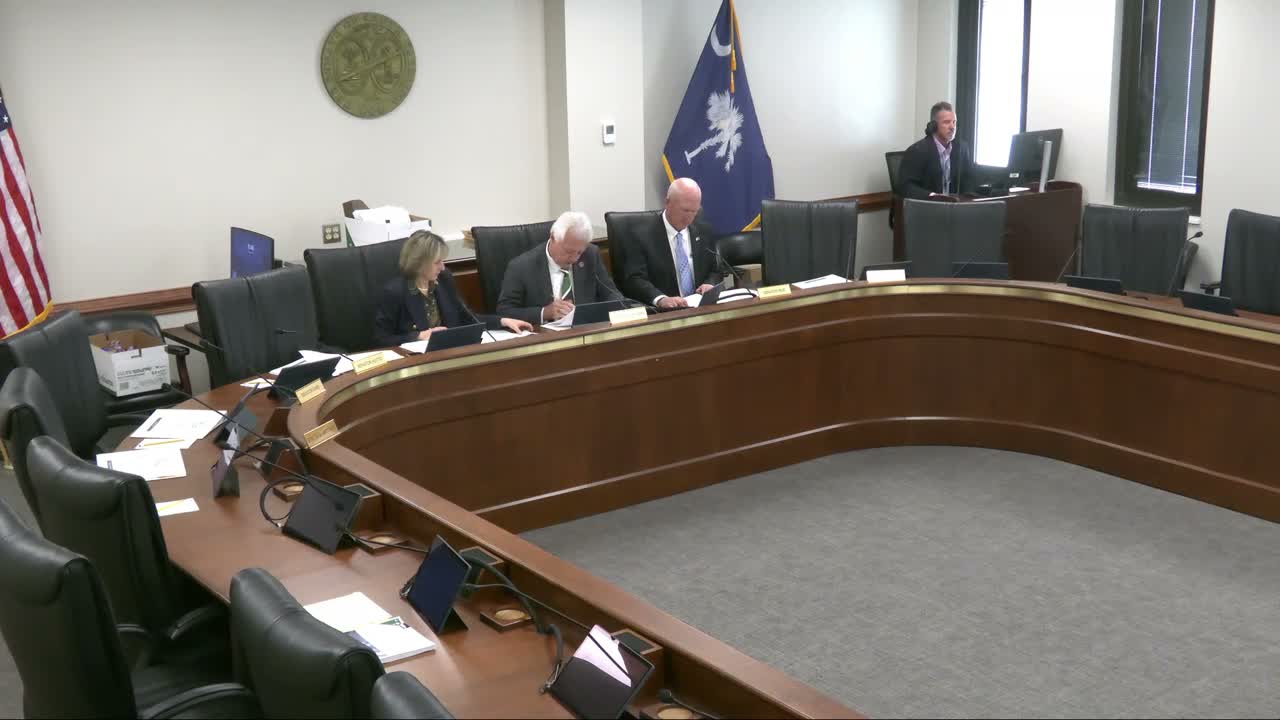
A constitutional subcommittee carried over House Bill 891 after extensive testimony from municipal officials, bond counsel and county representatives who warned the measure would substantially restrict municipalities’ access to installment purchase revenue bonds and similar alternative financing tools.
Staff told the committee the bill would broaden the statutory definition of "financing agreement" and add language to make it misconduct for a local official to knowingly vote to put local governments over the constitutional 8% property-tax debt limit. The bill’s sponsor, identified in the hearing as the senator from Greenville, said the measure responds to what he described as a long-standing workaround that allowed some local governments to effect large financings without putting the question to voters.
Todd Glover, executive director of the Municipal Association of South Carolina, urged the committee to preserve the financing tool known as installment purchase revenue bonds (IPRBs). "For decades, municipalities across South Carolina have relied on installment purchase revenue bonds as a prudent and flexible financing tool to construct and maintain public facilities," Glover said, arguing that IPRBs allow municipalities to use diverse revenue streams such as hospitality and accommodations taxes and therefore should not be treated the same as property-tax-backed debt.
Ray Jones, a bond lawyer with Parker Poe, told senators that many of these transactions do not pledge taxing power and so historically have not been included in constitutional debt-limit calculations. "When they look at this kind of debt, they immediately look to not only the nonprofit, but they look to the source of revenue to be received by the nonprofit," Jones said, describing market safeguards and why defaults have been rare in his experience.
Committee members pressed witnesses on whether those financings appear in public debt reports, the legal limits on using restricted revenue streams to repay debt, and whether alternative financing could raise long-term costs. Witnesses said reporting and accounting practices vary and cautioned that some restricted local revenue streams (for example, hospitality taxes) are limited to specific uses and could not be repurposed to pay unrelated general obligation debt.
The committee adopted, by unanimous consent, a change to the bill’s penalty language that replaced "knows or should have known" with the narrower term "knowingly." After additional discussion about growth, local capacity, and reporting, the committee voted to carry the bill over for further study rather than advance it to the full committee.
The subcommittee’s action leaves the underlying policy intact for further work: members asked staff to gather more detailed fiscal and legal information, including how such financings are reported and whether particular revenue streams can legally be used to pay specific obligations. The carryover gives legislators more time to reconcile concerns raised about taxpayer protections, transparency and local governments’ financing options.
Staff told the committee the bill would broaden the statutory definition of "financing agreement" and add language to make it misconduct for a local official to knowingly vote to put local governments over the constitutional 8% property-tax debt limit. The bill’s sponsor, identified in the hearing as the senator from Greenville, said the measure responds to what he described as a long-standing workaround that allowed some local governments to effect large financings without putting the question to voters.
Todd Glover, executive director of the Municipal Association of South Carolina, urged the committee to preserve the financing tool known as installment purchase revenue bonds (IPRBs). "For decades, municipalities across South Carolina have relied on installment purchase revenue bonds as a prudent and flexible financing tool to construct and maintain public facilities," Glover said, arguing that IPRBs allow municipalities to use diverse revenue streams such as hospitality and accommodations taxes and therefore should not be treated the same as property-tax-backed debt.
Ray Jones, a bond lawyer with Parker Poe, told senators that many of these transactions do not pledge taxing power and so historically have not been included in constitutional debt-limit calculations. "When they look at this kind of debt, they immediately look to not only the nonprofit, but they look to the source of revenue to be received by the nonprofit," Jones said, describing market safeguards and why defaults have been rare in his experience.
Committee members pressed witnesses on whether those financings appear in public debt reports, the legal limits on using restricted revenue streams to repay debt, and whether alternative financing could raise long-term costs. Witnesses said reporting and accounting practices vary and cautioned that some restricted local revenue streams (for example, hospitality taxes) are limited to specific uses and could not be repurposed to pay unrelated general obligation debt.
The committee adopted, by unanimous consent, a change to the bill’s penalty language that replaced "knows or should have known" with the narrower term "knowingly." After additional discussion about growth, local capacity, and reporting, the committee voted to carry the bill over for further study rather than advance it to the full committee.
The subcommittee’s action leaves the underlying policy intact for further work: members asked staff to gather more detailed fiscal and legal information, including how such financings are reported and whether particular revenue streams can legally be used to pay specific obligations. The carryover gives legislators more time to reconcile concerns raised about taxpayer protections, transparency and local governments’ financing options.
View the Full Meeting & All Its Details
This article offers just a summary. Unlock complete video, transcripts, and insights as a Founder Member.
✓
Watch full, unedited meeting videos
✓
Search every word spoken in unlimited transcripts
✓
AI summaries & real-time alerts (all government levels)
✓
Permanent access to expanding government content
30-day money-back guarantee
