Panel advances bill to bar use of ADS‑B surveillance data for landing‑fee billing amid safety and local‑control debate
March 10, 2026 | 2026 Legislature Arizona, Arizona
This article was created by AI summarizing key points discussed. AI makes mistakes, so for full details and context, please refer to the video of the full meeting. Please report any errors so we can fix them. Report an error »
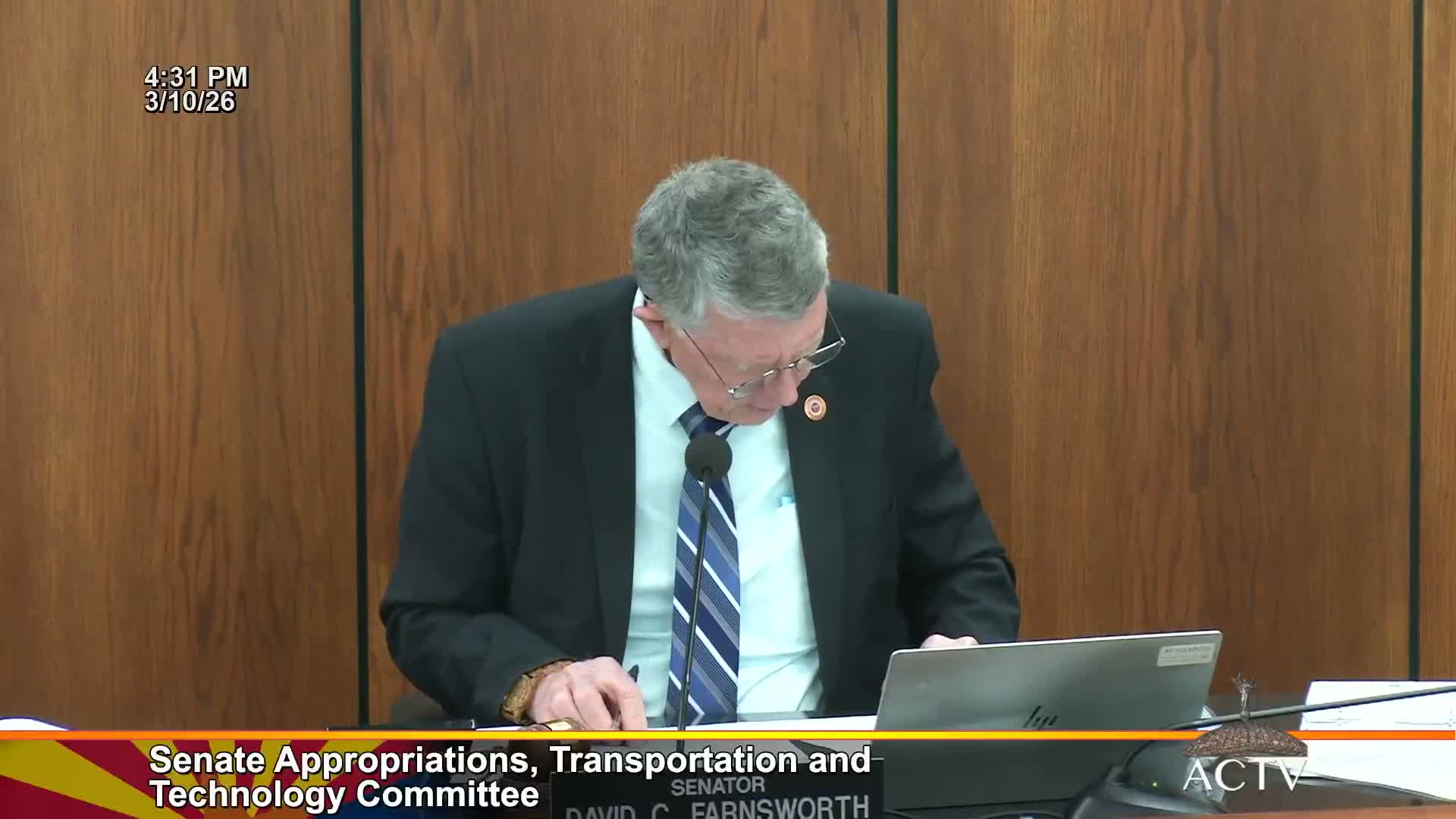
A Senate committee on March 3 narrowly advanced House Bill 22 10, a measure that would prohibit state actors, political subdivisions and private entities from using Automatic Dependent Surveillance–Broadcast (ADS‑B) data to calculate or collect aircraft landing fees.
Supporters told the committee the technology was designed for safety and for air‑traffic management, and they warned that using it for billing could erode trust in the system. Chris Nugent, president of the Arizona Pilots Association, said the original FAA mandate for ADS‑B was tied to safety and efficiency, and that third‑party use of ADS‑B data for billing undermines that trust. "We support the provisions of HB 22 10 to prevent third parties from using this technology and the data generated by it for other purposes," Nugent said.
An individual pilot who identified himself as a concerned citizen described a Virginia vendor packaging ADS‑B data into a product that some airports elsewhere are using to collect landing fees; he said pilots could be tempted to turn off safety equipment to avoid fees. "This bill will prevent that third party vendor only from using this safety technology from collecting the fees," he told the committee.
Airport representatives urged caution. John Kebrick of the Arizona Airports Association said AASA opposes the bill because local airport sponsors should retain authority to set rates and choose fee‑collection methods, consistent with federal grant assurances. Eric Emert, representing Phoenix Aviation, said Phoenix airports do not use ADS‑B in the manner the bill contemplates and would like the option to use the technology if appropriate.
Otto Schill and other aviation witnesses explained the FAA ADS‑B requirement (citing 14 CFR 91.225) for aircraft operating in certain congested airspace, and they described the safety benefits of ADS‑B for pilots and air‑traffic control.
Committee members debated two recurring themes: safety (would pilots be tempted to turn off ADS‑B if it were used for billing?) and local control (should the state preempt airport sponsors’ ability to choose fee methodologies?). Senators explained votes for and against the bill along those lines; some members said there was no evidence Arizona airports currently use ADS‑B for billing and wanted more staff research, while others said a preemptive statutory ban was warranted to protect safety and privacy.
The committee moved HB 22 10 and, after roll call, returned a do‑pass recommendation by a vote of 6 ayes and 4 noes.
What’s next: HB 22 10 advances to the floor with technical and jurisdictional questions outstanding, including whether any Arizona airports currently use ADS‑B for fee collection and whether federal aviation law affects the state’s ability to regulate this use.
Supporters told the committee the technology was designed for safety and for air‑traffic management, and they warned that using it for billing could erode trust in the system. Chris Nugent, president of the Arizona Pilots Association, said the original FAA mandate for ADS‑B was tied to safety and efficiency, and that third‑party use of ADS‑B data for billing undermines that trust. "We support the provisions of HB 22 10 to prevent third parties from using this technology and the data generated by it for other purposes," Nugent said.
An individual pilot who identified himself as a concerned citizen described a Virginia vendor packaging ADS‑B data into a product that some airports elsewhere are using to collect landing fees; he said pilots could be tempted to turn off safety equipment to avoid fees. "This bill will prevent that third party vendor only from using this safety technology from collecting the fees," he told the committee.
Airport representatives urged caution. John Kebrick of the Arizona Airports Association said AASA opposes the bill because local airport sponsors should retain authority to set rates and choose fee‑collection methods, consistent with federal grant assurances. Eric Emert, representing Phoenix Aviation, said Phoenix airports do not use ADS‑B in the manner the bill contemplates and would like the option to use the technology if appropriate.
Otto Schill and other aviation witnesses explained the FAA ADS‑B requirement (citing 14 CFR 91.225) for aircraft operating in certain congested airspace, and they described the safety benefits of ADS‑B for pilots and air‑traffic control.
Committee members debated two recurring themes: safety (would pilots be tempted to turn off ADS‑B if it were used for billing?) and local control (should the state preempt airport sponsors’ ability to choose fee methodologies?). Senators explained votes for and against the bill along those lines; some members said there was no evidence Arizona airports currently use ADS‑B for billing and wanted more staff research, while others said a preemptive statutory ban was warranted to protect safety and privacy.
The committee moved HB 22 10 and, after roll call, returned a do‑pass recommendation by a vote of 6 ayes and 4 noes.
What’s next: HB 22 10 advances to the floor with technical and jurisdictional questions outstanding, including whether any Arizona airports currently use ADS‑B for fee collection and whether federal aviation law affects the state’s ability to regulate this use.
Don't Miss a Word: See the Full Meeting!
Go beyond summaries. Unlock every video, transcript, and key insight with a Founder Membership.
✓
Get instant access to full meeting videos
✓
Search and clip any phrase from complete transcripts
✓
Receive AI-powered summaries & custom alerts
✓
Enjoy lifetime, unrestricted access to government data
30-day money-back guarantee
