Amador County approves short‑term funding to expand upcountry green‑waste cleanup after storms
March 11, 2026 | Amador County, California
This article was created by AI summarizing key points discussed. AI makes mistakes, so for full details and context, please refer to the video of the full meeting. Please report any errors so we can fix them. Report an error »
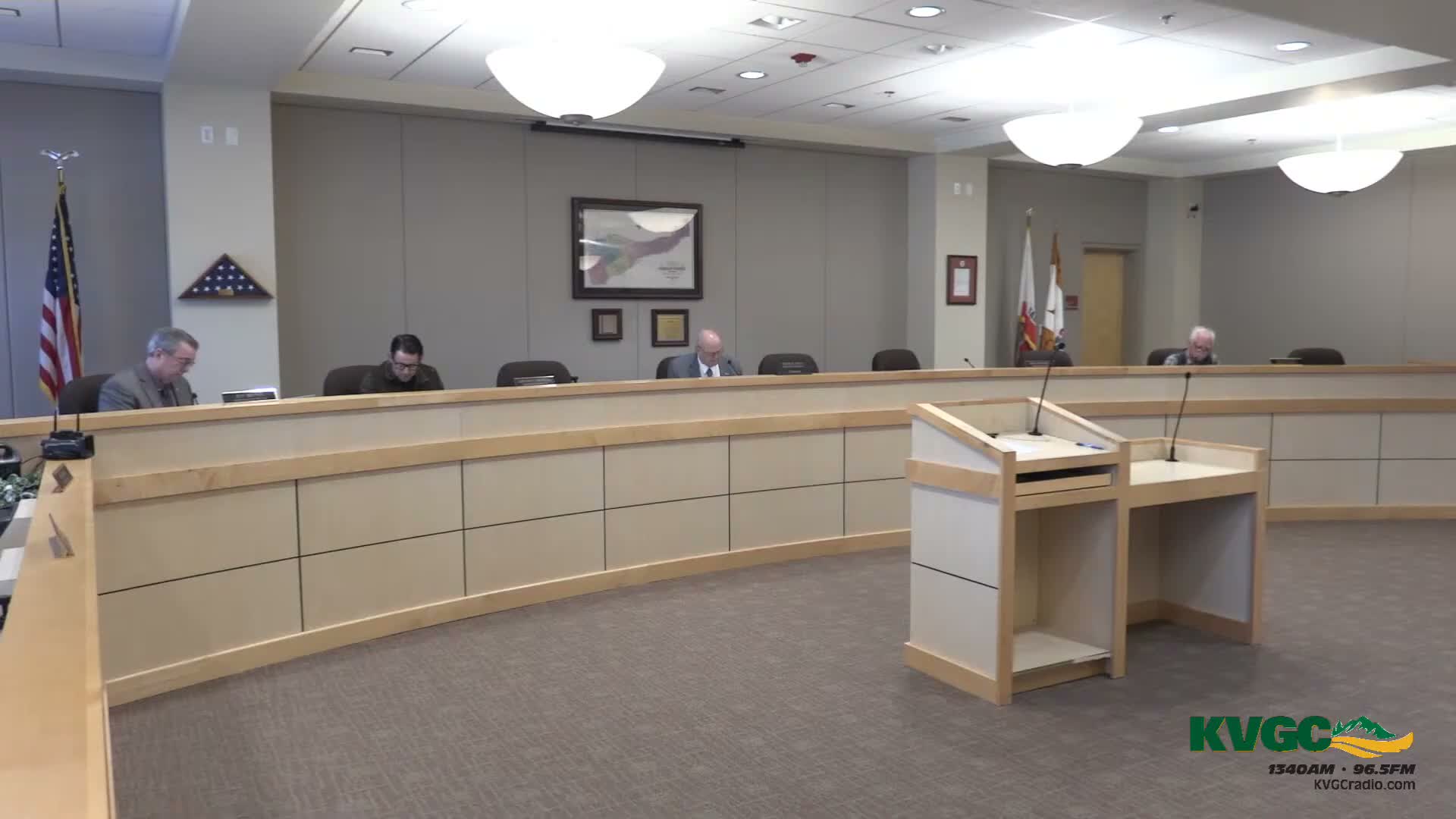
The Amador County Board of Supervisors on March 10 approved short‑term funding to support an upcountry green‑waste cleanup after storm damage left residents with fallen trees and debris.
Michelle, the county project lead, told the board the county has a $20,000 grant from Amador RCD and had secured Republic's donation of five 40‑yard dumpsters to start chipping and removal. Republic's contractor terms discussed at the meeting included a $2.50 transport charge per dumpster plus roughly $25 per ton of material.
"If we had a higher amount, then that means it's less likely for us to close early," Michelle told supervisors while explaining the request to draw on contingency funds to avoid turning away residents who traveled to the cleanup site.
Supervisor Brown moved to allocate $30,000 from contingency to match the $20,000 grant (bringing the program's immediate funding target to $50,000); Supervisor Logan seconded and the motion passed by voice vote. The short‑term appropriation is intended to cover hauling, chipping and related operational costs over an initial four‑day schedule spread across four weeks, with staff to report back on outcomes and potential longer‑term solutions.
Board members and residents discussed private alternatives for longer‑term solutions — including a private landowner who offered a burn/collection site and ideas to use local biomass processors — and cautioned about regulatory and cost tradeoffs. Supervisor Logan suggested the board pursue market and operational options that could reduce hauling costs and increase sustainability.
Next steps: staff will operate the initial cleanup using the grant plus contingency funds, track tonnage and costs, and return with options for scaling or alternative disposal and chipping strategies.
Michelle, the county project lead, told the board the county has a $20,000 grant from Amador RCD and had secured Republic's donation of five 40‑yard dumpsters to start chipping and removal. Republic's contractor terms discussed at the meeting included a $2.50 transport charge per dumpster plus roughly $25 per ton of material.
"If we had a higher amount, then that means it's less likely for us to close early," Michelle told supervisors while explaining the request to draw on contingency funds to avoid turning away residents who traveled to the cleanup site.
Supervisor Brown moved to allocate $30,000 from contingency to match the $20,000 grant (bringing the program's immediate funding target to $50,000); Supervisor Logan seconded and the motion passed by voice vote. The short‑term appropriation is intended to cover hauling, chipping and related operational costs over an initial four‑day schedule spread across four weeks, with staff to report back on outcomes and potential longer‑term solutions.
Board members and residents discussed private alternatives for longer‑term solutions — including a private landowner who offered a burn/collection site and ideas to use local biomass processors — and cautioned about regulatory and cost tradeoffs. Supervisor Logan suggested the board pursue market and operational options that could reduce hauling costs and increase sustainability.
Next steps: staff will operate the initial cleanup using the grant plus contingency funds, track tonnage and costs, and return with options for scaling or alternative disposal and chipping strategies.
Don't Miss a Word: See the Full Meeting!
Go beyond summaries. Unlock every video, transcript, and key insight with a Founder Membership.
✓
Get instant access to full meeting videos
✓
Search and clip any phrase from complete transcripts
✓
Receive AI-powered summaries & custom alerts
✓
Enjoy lifetime, unrestricted access to government data
30-day money-back guarantee
