Appropriations panel reviews house additions for shelters, child advocacy centers and expanded accountability courts
March 11, 2026 | Appropriations, SENATE, Committees, Legislative, Georgia
This article was created by AI summarizing key points discussed. AI makes mistakes, so for full details and context, please refer to the video of the full meeting. Please report any errors so we can fix them. Report an error »
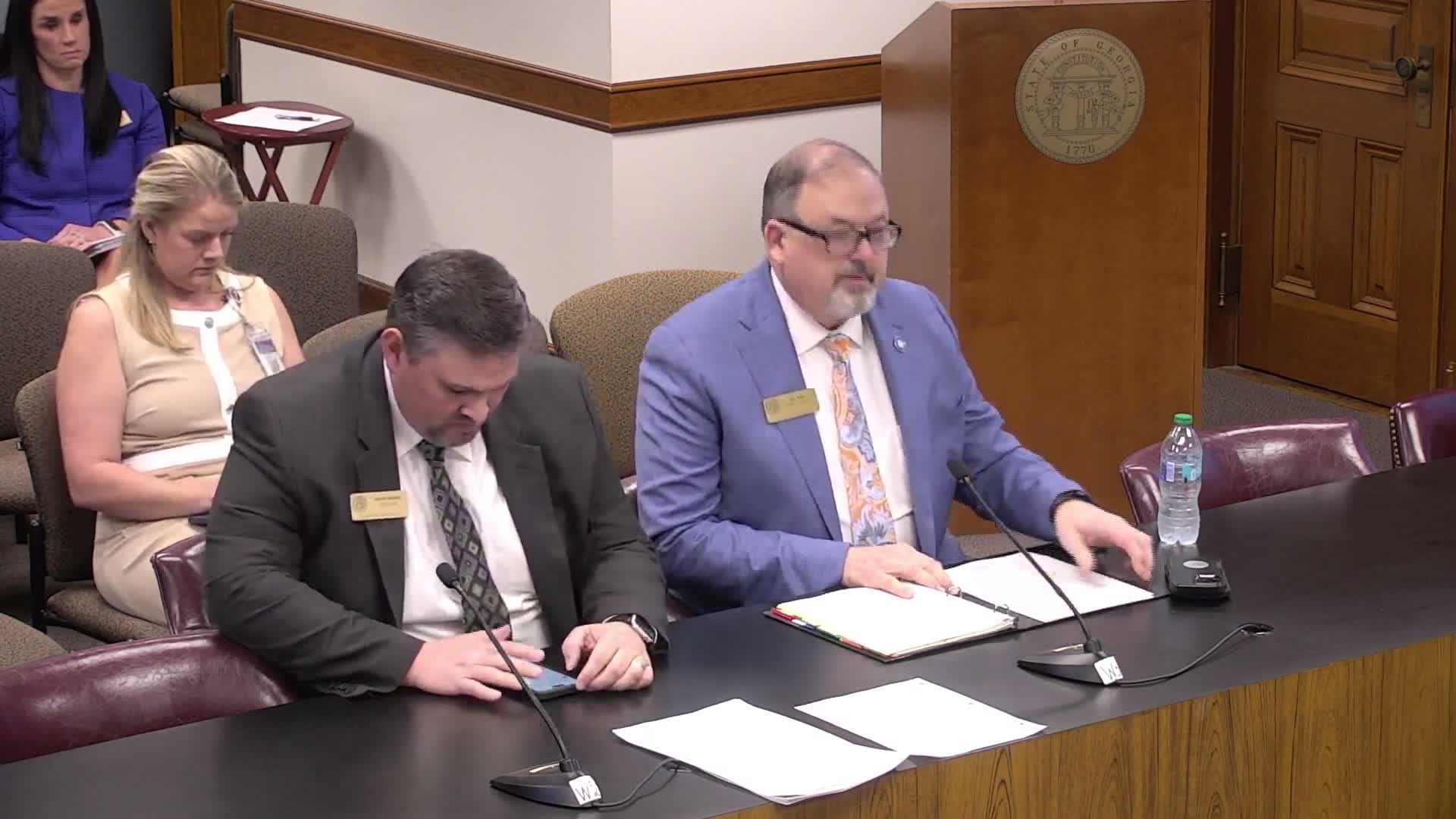
The appropriations committee examined several house-directed changes intended to shore up victim services and expand accountability courts.
CJCC staff explained the house proposed $9.4 million for domestic violence shelters; Christie Carter, victim assistance division director, said state funding is awarded through a competitive review of need, bed space, service counts and program innovations and that CJCC aims to award three-year continuations when possible. "We do have a pretty, intensive process that we go through with our partners," Carter said.
CJCC and CACJ representatives told lawmakers that many shelters rely heavily on federal funding and that recent federal fluctuations — plus the expiration of ARPA support — have created short-term gaps. CJCC said a recent partner survey showed 215 of 234 funded nonprofits replied and that dozens of providers reported an inability to maintain staff or client services past September without additional funds.
On sexual-assault services, CJCC noted state moves to make victim-centered care more uniformly available and said increased funds would help centers meet certification standards.
Judge Brenda Weaver, who presides over felony drug and veterans court programs, testified about accountability courts’ outcomes and local demand, citing cost savings and recidivism improvements. "For every dollar that you put in our budget, we save the state of Georgia $9.32," she said, and described programmatic successes including employment and reunification statistics.
CACJ and CJCC staff also discussed using opioid settlement (trust) funds for courts and treatment. Allison Lerner (general counsel, CACJ) said the settlement documents are complex and that CJCC has sought guidance from the Department of Law but had not yet received a definitive legal opinion; CACJ said it consulted an external researcher about who qualifies as "at risk" for opioid use disorder and that some staff interpret the settlement to allow funding for participants with other substance-use disorders who are at risk of developing an opioid use disorder.
Lawmakers pressed for precise eligibility guidance before committing settlement funds to court programs and asked for the notices of intent and local data supporting requests such as a veterans court in Rockdale County. CACJ cited Rockdale’s veteran population (6,287) during the exchange and asked the senate to match the house recommendation for a new veterans treatment court.
The committee requested additional documentation on distribution criteria, actuarial planning for federal funding volatility, and the Department of Law’s written advice on settlement-eligibility questions.
CJCC staff explained the house proposed $9.4 million for domestic violence shelters; Christie Carter, victim assistance division director, said state funding is awarded through a competitive review of need, bed space, service counts and program innovations and that CJCC aims to award three-year continuations when possible. "We do have a pretty, intensive process that we go through with our partners," Carter said.
CJCC and CACJ representatives told lawmakers that many shelters rely heavily on federal funding and that recent federal fluctuations — plus the expiration of ARPA support — have created short-term gaps. CJCC said a recent partner survey showed 215 of 234 funded nonprofits replied and that dozens of providers reported an inability to maintain staff or client services past September without additional funds.
On sexual-assault services, CJCC noted state moves to make victim-centered care more uniformly available and said increased funds would help centers meet certification standards.
Judge Brenda Weaver, who presides over felony drug and veterans court programs, testified about accountability courts’ outcomes and local demand, citing cost savings and recidivism improvements. "For every dollar that you put in our budget, we save the state of Georgia $9.32," she said, and described programmatic successes including employment and reunification statistics.
CACJ and CJCC staff also discussed using opioid settlement (trust) funds for courts and treatment. Allison Lerner (general counsel, CACJ) said the settlement documents are complex and that CJCC has sought guidance from the Department of Law but had not yet received a definitive legal opinion; CACJ said it consulted an external researcher about who qualifies as "at risk" for opioid use disorder and that some staff interpret the settlement to allow funding for participants with other substance-use disorders who are at risk of developing an opioid use disorder.
Lawmakers pressed for precise eligibility guidance before committing settlement funds to court programs and asked for the notices of intent and local data supporting requests such as a veterans court in Rockdale County. CACJ cited Rockdale’s veteran population (6,287) during the exchange and asked the senate to match the house recommendation for a new veterans treatment court.
The committee requested additional documentation on distribution criteria, actuarial planning for federal funding volatility, and the Department of Law’s written advice on settlement-eligibility questions.
View the Full Meeting & All Its Details
This article offers just a summary. Unlock complete video, transcripts, and insights as a Founder Member.
✓
Watch full, unedited meeting videos
✓
Search every word spoken in unlimited transcripts
✓
AI summaries & real-time alerts (all government levels)
✓
Permanent access to expanding government content
30-day money-back guarantee
