District says CIP can be funded within current bond structure; board hears $6M BDA security ask and proposed $33M fund transfer
March 11, 2026 | Greenville 01, School Districts, South Carolina
This article was created by AI summarizing key points discussed. AI makes mistakes, so for full details and context, please refer to the video of the full meeting. Please report any errors so we can fix them. Report an error »
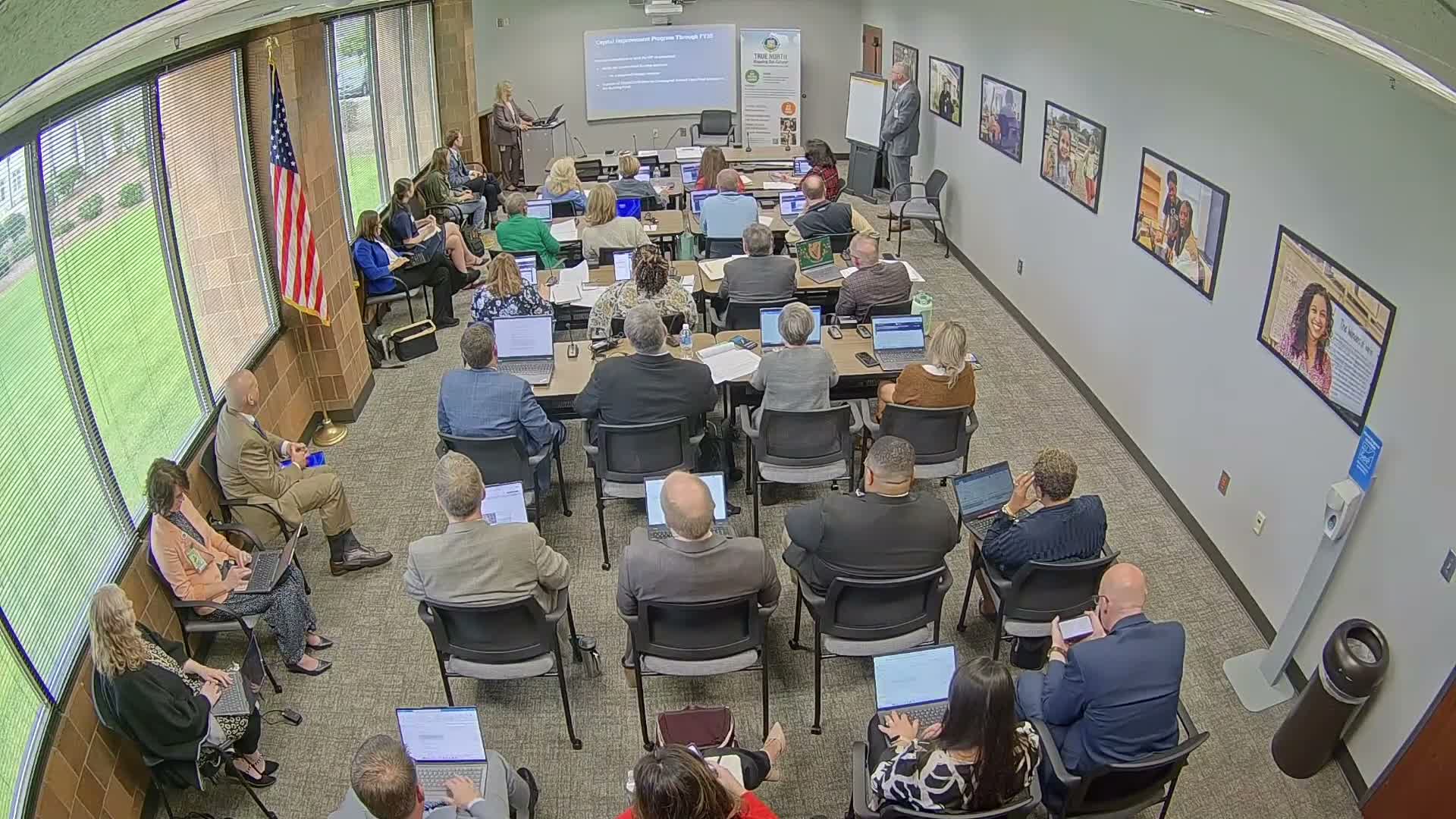
Finance staff presented the funding approach for the 2026 CIP and said the administration recommends financing the package within the district’s current bond structure and without a millage increase, while also asking for a one-time transfer from general-fund balance to cover accelerated work.
Robin (finance staff) told the board the recommendation would fit inside the district’s current debt-millage framework and explained the administration would ask the board to approve bond issuances “up to” a dollar amount to allow for market variability when the district sells bonds. Robin highlighted specific line-item requests: an increase for security enhancements (including a $6,000,000 ask to install BDA bidirectional amplifiers across schools to improve in-building radio coverage), a stadium LED lighting request of $5,700,000, an extended car-rider loop increase of $9,600,000, and capital equipment allocations tied to robotic sweepers and replacements.
Robin also said staff recommend a transfer of $33,000,847 from unassigned general fund balance into the building fund to execute the recommendations. Dr. Royster explained that the district aims to operate inside a 48.5 mills debt limit and that the administration models conservative escalation factors for projects years out; he noted the final bond sale amount depends on market timing and the district therefore requests authorization "up to" the estimated issue amount.
Board members asked whether first responders would share in BDA costs; staff said they asked but that so far no agency has offered to contribute and that district-funded BDAs risk becoming obsolete if agencies change radio platforms. “We’ve asked them. And so far, they’ve not been willing to,” Dr. Royster said when asked about cost-sharing.
What’s next: staff will return with packet data showing year-by-year bond and general-fund transfers and answer follow-up questions about which projects are under construction and the detailed bond authorization amount.
Robin (finance staff) told the board the recommendation would fit inside the district’s current debt-millage framework and explained the administration would ask the board to approve bond issuances “up to” a dollar amount to allow for market variability when the district sells bonds. Robin highlighted specific line-item requests: an increase for security enhancements (including a $6,000,000 ask to install BDA bidirectional amplifiers across schools to improve in-building radio coverage), a stadium LED lighting request of $5,700,000, an extended car-rider loop increase of $9,600,000, and capital equipment allocations tied to robotic sweepers and replacements.
Robin also said staff recommend a transfer of $33,000,847 from unassigned general fund balance into the building fund to execute the recommendations. Dr. Royster explained that the district aims to operate inside a 48.5 mills debt limit and that the administration models conservative escalation factors for projects years out; he noted the final bond sale amount depends on market timing and the district therefore requests authorization "up to" the estimated issue amount.
Board members asked whether first responders would share in BDA costs; staff said they asked but that so far no agency has offered to contribute and that district-funded BDAs risk becoming obsolete if agencies change radio platforms. “We’ve asked them. And so far, they’ve not been willing to,” Dr. Royster said when asked about cost-sharing.
What’s next: staff will return with packet data showing year-by-year bond and general-fund transfers and answer follow-up questions about which projects are under construction and the detailed bond authorization amount.
View the Full Meeting & All Its Details
This article offers just a summary. Unlock complete video, transcripts, and insights as a Founder Member.
✓
Watch full, unedited meeting videos
✓
Search every word spoken in unlimited transcripts
✓
AI summaries & real-time alerts (all government levels)
✓
Permanent access to expanding government content
30-day money-back guarantee
