Greenville County wins $35 million GEAR UP grant to expand college and career supports for middle and high school students
March 11, 2026 | Greenville 01, School Districts, South Carolina
This article was created by AI summarizing key points discussed. AI makes mistakes, so for full details and context, please refer to the video of the full meeting. Please report any errors so we can fix them. Report an error »
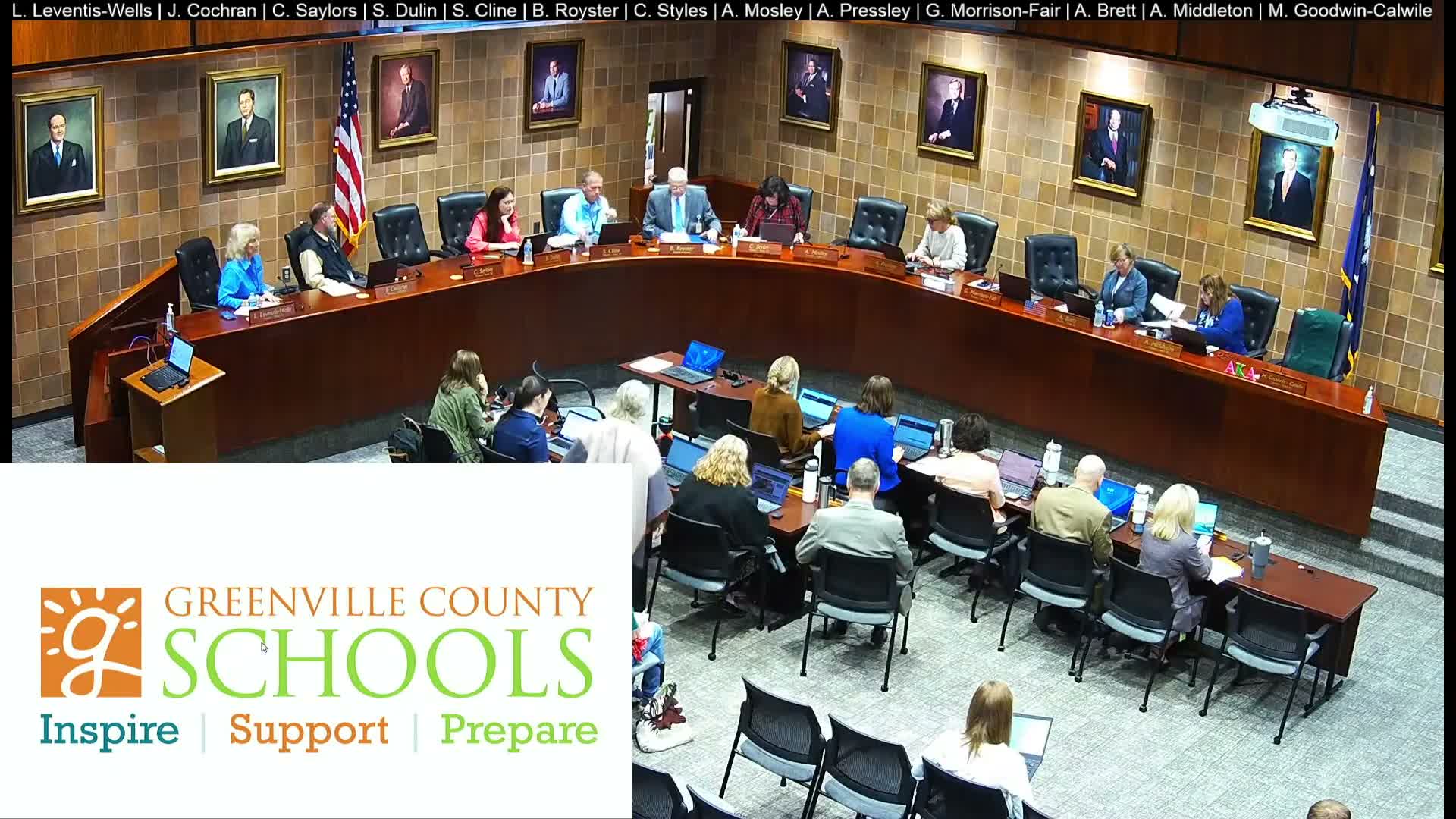
Greenville County Schools told its Committee of the Whole that the district has been identified as a GEAR UP (Gaining Early Awareness and Readiness for Undergraduate Programs) district, part of a seven‑year, $35,000,000 federally funded grant intended to expand college‑and‑career readiness services for students.
The presentation, delivered by Mr. Williams, said the grant combines a cohort model (targeting current sixth and seventh graders as they matriculate through middle and high school) with an annual priority group of graduating seniors. "We have a 7 years, $35,000,000 grant that is gonna support sixth and seventh graders for the next 6 years," Mr. Williams said, noting the district represents about 16,000 of the roughly 28,000 students in the statewide award.
District leaders said the grant is aimed at three primary goals: increase academic performance through tutoring and interventions; raise high‑school graduation and postsecondary participation rates; and build educator capacity so successful practices can persist after grant funding ends. "We want them to be prepared, for whatever it is they might want to do after high school," Williams said. The presentation described partners including the University of South Carolina, Greenville Technical College, Kaplan, Tutor.com, the National Math and Science Initiative and OnTrack Greenville.
Programming examples include expanded FAFSA and dual‑enrollment nights, college and company visits (the district reported 22 college tours by region and a large, recent event tied to an SEC women's basketball tournament that drew more than 1,000 students), site‑based coordinators who receive small stipends to organize school activities, and teacher professional development such as local Advanced Placement training. Mr. Williams noted the grant also supports a "year 13" service for recent graduates via the Commission on Higher Education and its college partners.
Board members asked how the district determined which schools and students qualify. In response, Williams said the federal eligibility metric is schools with at least 50% of students qualifying for free or reduced‑price lunch; 18 of the district's 20 middle schools met that threshold on their own and all 15 high schools qualified through feeder patterns. For the two middle schools that did not meet the threshold, district staff said they used above‑baseline allocations and pupil activity funds so no school would be excluded. "We didn't want any school to be left out of the program," a district official said.
Board members also asked about inclusion of historically Black colleges and universities. Mr. Williams said HBCU visits and fairs are being considered and that student requests often drive specific tour choices. On sustainability after the seven‑year cycle, district staff said continued activities would require a recommendation to fund those services from the general fund if the board chose to keep them; reapplication for the GEAR UP cycle, they said, is typically difficult and not automatic.
The district said it will participate in national evaluation and tracking through the Vela Institute to measure which interventions correlate with postsecondary participation, and that local tracking will monitor both student participation and teacher capacity gains.
The presentation concluded with an invitation for board questions; committee members praised the focus on early intervention and career pathways. This item was presented for information only and no formal action was required by the board during the Committee of the Whole.
The committee moved on to subsequent agenda items after the presentation.
The presentation, delivered by Mr. Williams, said the grant combines a cohort model (targeting current sixth and seventh graders as they matriculate through middle and high school) with an annual priority group of graduating seniors. "We have a 7 years, $35,000,000 grant that is gonna support sixth and seventh graders for the next 6 years," Mr. Williams said, noting the district represents about 16,000 of the roughly 28,000 students in the statewide award.
District leaders said the grant is aimed at three primary goals: increase academic performance through tutoring and interventions; raise high‑school graduation and postsecondary participation rates; and build educator capacity so successful practices can persist after grant funding ends. "We want them to be prepared, for whatever it is they might want to do after high school," Williams said. The presentation described partners including the University of South Carolina, Greenville Technical College, Kaplan, Tutor.com, the National Math and Science Initiative and OnTrack Greenville.
Programming examples include expanded FAFSA and dual‑enrollment nights, college and company visits (the district reported 22 college tours by region and a large, recent event tied to an SEC women's basketball tournament that drew more than 1,000 students), site‑based coordinators who receive small stipends to organize school activities, and teacher professional development such as local Advanced Placement training. Mr. Williams noted the grant also supports a "year 13" service for recent graduates via the Commission on Higher Education and its college partners.
Board members asked how the district determined which schools and students qualify. In response, Williams said the federal eligibility metric is schools with at least 50% of students qualifying for free or reduced‑price lunch; 18 of the district's 20 middle schools met that threshold on their own and all 15 high schools qualified through feeder patterns. For the two middle schools that did not meet the threshold, district staff said they used above‑baseline allocations and pupil activity funds so no school would be excluded. "We didn't want any school to be left out of the program," a district official said.
Board members also asked about inclusion of historically Black colleges and universities. Mr. Williams said HBCU visits and fairs are being considered and that student requests often drive specific tour choices. On sustainability after the seven‑year cycle, district staff said continued activities would require a recommendation to fund those services from the general fund if the board chose to keep them; reapplication for the GEAR UP cycle, they said, is typically difficult and not automatic.
The district said it will participate in national evaluation and tracking through the Vela Institute to measure which interventions correlate with postsecondary participation, and that local tracking will monitor both student participation and teacher capacity gains.
The presentation concluded with an invitation for board questions; committee members praised the focus on early intervention and career pathways. This item was presented for information only and no formal action was required by the board during the Committee of the Whole.
The committee moved on to subsequent agenda items after the presentation.
View the Full Meeting & All Its Details
This article offers just a summary. Unlock complete video, transcripts, and insights as a Founder Member.
✓
Watch full, unedited meeting videos
✓
Search every word spoken in unlimited transcripts
✓
AI summaries & real-time alerts (all government levels)
✓
Permanent access to expanding government content
30-day money-back guarantee
