Committee advances bill to set up state public‑private research framework for ibogaine despite funding concerns
March 11, 2026 | 2026 Legislature KY, Kentucky
This article was created by AI summarizing key points discussed. AI makes mistakes, so for full details and context, please refer to the video of the full meeting. Please report any errors so we can fix them. Report an error »
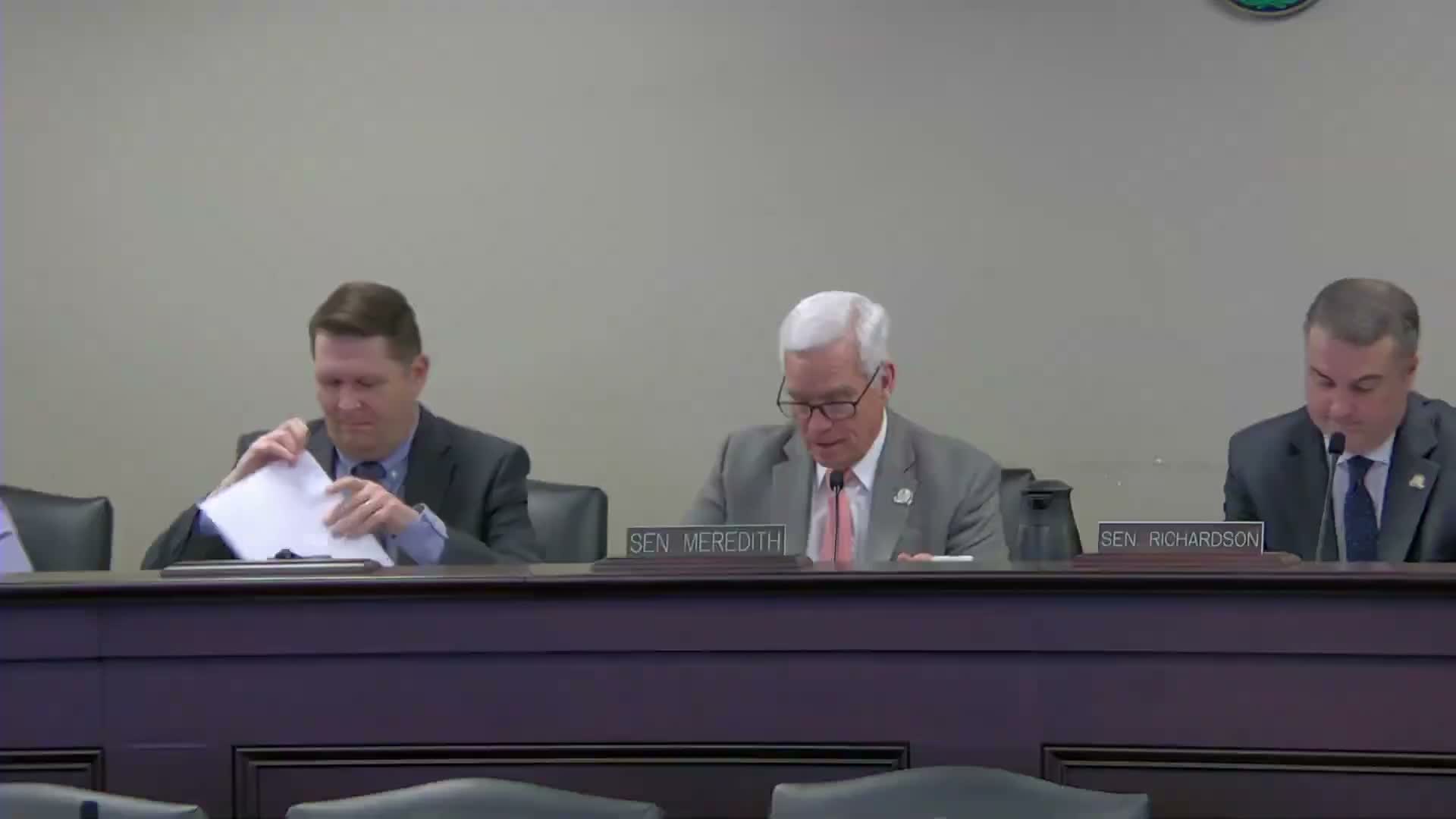
Senator Don Douglas introduced Senate Bill 77 and a substitute that removes initial appropriations and an emergency clause while establishing a public‑private research framework for ibogaine. "This bill may be one of the most consequential bills that we will see this session," Douglas told the committee, saying the measure could help address barriers to preventing and decreasing addiction across the Commonwealth.
Dr. Jean Loftus, a physician who said she has worked with the FDA, testified that ibogaine treats addictions (including opioids, cocaine, meth and nicotine) and may aid PTSD and treatment‑resistant depression. She characterized the treatment as an intensive, single 8–12 hour session taken in multiple doses and cited international usage and published studies. "Ibogaine treats all addictions including opioids, cocaine, meth, alcohol, post traumatic stress disorder, and I will use the term PTSD and depression," Dr. Loftus said, later asserting that some published work shows higher remission rates compared with traditional therapy.
Jessica Allen, a social worker who described traveling to Mexico for ibogaine treatment, gave a first‑person account: "Within 45 minutes, my withdrawal symptoms were completely gone," she said, and reported more than a decade of continuous recovery that she attributed to ibogaine.
Committee members pressed proponents on safety and funding. Senators asked whether PTSD is an addiction, whether ibogaine is a hallucinogen, and how many treatments are typical. Proponents acknowledged hallucinations can occur and said they are not recreational; they described a roughly one‑and‑done treatment model for most patients but noted relapse can occur. Dr. Loftus told members several drug developers are competing to produce FDA‑approvable formulations and that one developer had a molecule variant with reduced cardiac side effects.
A recurring concern among committee members and public commenters was funding. The sponsor and proponents said the substitute does not appropriate money and that appropriations would be considered later; several witnesses and legislators expressed unease about using opioid settlement (Opioid Abatement Trust Fund) dollars for the research. John Bowman of a recovery advocacy group and Becky Rose Bowen, a restorative justice organizer, both told the committee they support research but opposed using opioid settlement funds for this purpose.
After committee discussion and several members explaining their votes (saying they supported continuing the conversation while noting funding reservations), the committee passed the substitute and advanced Senate Bill 77 by voice vote; the transcript records the final vote as 10‑0.
The transcript records multiple claims about efficacy and safety from proponents and personal testimonials; committee members repeatedly requested guardrails, clarity about funding sources, and information on developer competition and safety data. The substitute establishes a framework for research and partnerships but does not commit state appropriations in committee.
Dr. Jean Loftus, a physician who said she has worked with the FDA, testified that ibogaine treats addictions (including opioids, cocaine, meth and nicotine) and may aid PTSD and treatment‑resistant depression. She characterized the treatment as an intensive, single 8–12 hour session taken in multiple doses and cited international usage and published studies. "Ibogaine treats all addictions including opioids, cocaine, meth, alcohol, post traumatic stress disorder, and I will use the term PTSD and depression," Dr. Loftus said, later asserting that some published work shows higher remission rates compared with traditional therapy.
Jessica Allen, a social worker who described traveling to Mexico for ibogaine treatment, gave a first‑person account: "Within 45 minutes, my withdrawal symptoms were completely gone," she said, and reported more than a decade of continuous recovery that she attributed to ibogaine.
Committee members pressed proponents on safety and funding. Senators asked whether PTSD is an addiction, whether ibogaine is a hallucinogen, and how many treatments are typical. Proponents acknowledged hallucinations can occur and said they are not recreational; they described a roughly one‑and‑done treatment model for most patients but noted relapse can occur. Dr. Loftus told members several drug developers are competing to produce FDA‑approvable formulations and that one developer had a molecule variant with reduced cardiac side effects.
A recurring concern among committee members and public commenters was funding. The sponsor and proponents said the substitute does not appropriate money and that appropriations would be considered later; several witnesses and legislators expressed unease about using opioid settlement (Opioid Abatement Trust Fund) dollars for the research. John Bowman of a recovery advocacy group and Becky Rose Bowen, a restorative justice organizer, both told the committee they support research but opposed using opioid settlement funds for this purpose.
After committee discussion and several members explaining their votes (saying they supported continuing the conversation while noting funding reservations), the committee passed the substitute and advanced Senate Bill 77 by voice vote; the transcript records the final vote as 10‑0.
The transcript records multiple claims about efficacy and safety from proponents and personal testimonials; committee members repeatedly requested guardrails, clarity about funding sources, and information on developer competition and safety data. The substitute establishes a framework for research and partnerships but does not commit state appropriations in committee.
Don't Miss a Word: See the Full Meeting!
Go beyond summaries. Unlock every video, transcript, and key insight with a Founder Membership.
✓
Get instant access to full meeting videos
✓
Search and clip any phrase from complete transcripts
✓
Receive AI-powered summaries & custom alerts
✓
Enjoy lifetime, unrestricted access to government data
30-day money-back guarantee
