House Bill 648 to strengthen heavy‑truck dealer warranty protections reported favorably by Senate committee
March 11, 2026 | 2026 Legislature KY, Kentucky
This article was created by AI summarizing key points discussed. AI makes mistakes, so for full details and context, please refer to the video of the full meeting. Please report any errors so we can fix them. Report an error »
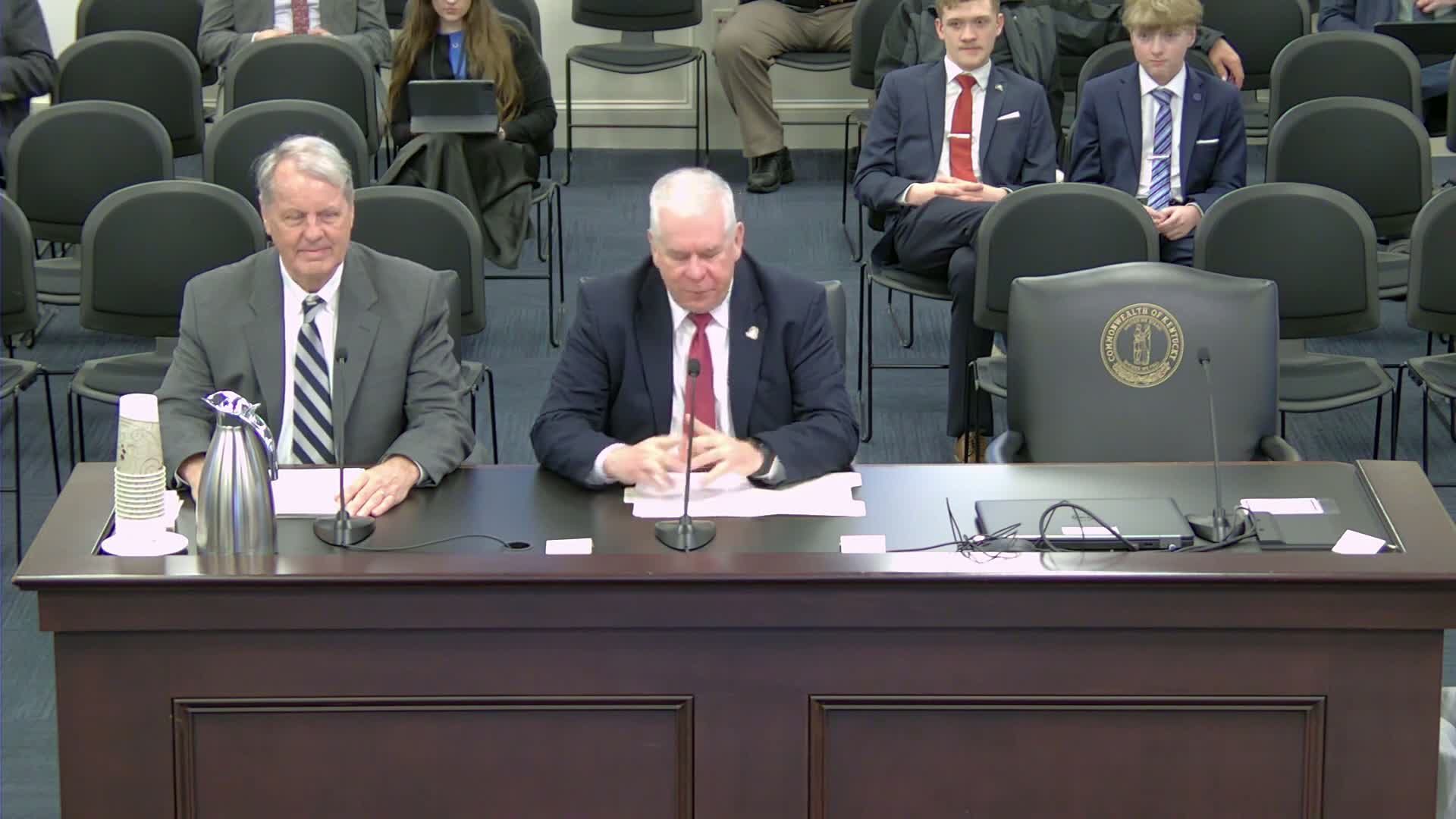
Representative John Blanton asked the Senate Transportation Committee to consider House Bill 648, a measure he said would strengthen warranty protections for Class 7 and 8 heavy‑duty truck dealers. The bill was presented to the committee by Tim Matthews of Worldwide Equipment, who described four principal changes the proposal would make to state law.
Matthews told the committee that the bill would close a loophole allowing component manufacturers to claim they are not subject to Kentucky law and thereby avoid state warranty obligations. "The manufacturers are able to warrant the truck, but the dealers have to do all the work," Matthews said, describing pass‑through warranties from companies such as Cummins and Eaton that accompany a truck sale but are not currently enforced under state processes.
Matthews said the bill would also require original equipment manufacturers to reimburse dealers for specialized diagnostic tools and the training required to use them. He argued that modern heavy‑duty trucks require complex diagnostic computers and other equipment that dealers must maintain to perform warranty and recall work.
On labor reimbursement, Matthews said the measure would require payment for the actual hours expended by technicians who are certified or trained by the manufacturer rather than the manufacturers' "book" hours. "If this work is being done by someone who's qualified, who's been certified by the manufacturer, or who has taken the manufacturer's training, then they would get the actual hours expended, not just the book hours that the manufacturer says that they should be entitled to," he said, citing examples in which actual repair labor far exceeded the hours manufacturers assign for reimbursement.
The bill would also extend the time dealers have to submit warranty claims from 30 days to 90 days, Matthews said, noting the electronic paperwork and cross‑system processes that can prevent timely filing under the current window. He referenced Ohio's six‑month allowance as an example of longer filing windows in other states.
Committee members expressed support and asked technical questions. Senator Wilson thanked the presenters and said the work was important to keeping commercial trucks operating. Senator Wheeler called the measure a needed companion to recent passenger‑vehicle legislation and asked whether the practices Matthews described were common; Matthews replied they are commonplace, saying many heavy trucks are assembled from multiple third‑party components. Senator Elkins, who said he has done business with Worldwide Equipment, praised the bill as closing loopholes and shifting costs away from purchasers.
Vice Chair Douglas asked how "actual hours" would be documented; Matthews answered that modern dealerships use electronic timekeeping systems (clock in/clock out and detailed logs) and said the administrative burden of following OEM procedures is itself time‑consuming.
A motion and second were taken to report HB 648. The clerk called the roll and multiple senators recorded "Aye;" the chair announced, "House bill 648 is reported favorably with the expression of opinion that same shall pass." No opposition was recorded in the transcript. The transcript does not specify a floor date or the next procedural step beyond the committee report.
The committee transcript includes examples and numeric details used by presenters: Matthews cited a recall repair that could involve about 120 steps for a technician, described typical engine rebuilds taking roughly 30 hours with manufacturers reimbursing far fewer "book" hours, and asked for a claims window extension from 30 to 90 days. Those figures were presented as examples in committee testimony.
Matthews told the committee that the bill would close a loophole allowing component manufacturers to claim they are not subject to Kentucky law and thereby avoid state warranty obligations. "The manufacturers are able to warrant the truck, but the dealers have to do all the work," Matthews said, describing pass‑through warranties from companies such as Cummins and Eaton that accompany a truck sale but are not currently enforced under state processes.
Matthews said the bill would also require original equipment manufacturers to reimburse dealers for specialized diagnostic tools and the training required to use them. He argued that modern heavy‑duty trucks require complex diagnostic computers and other equipment that dealers must maintain to perform warranty and recall work.
On labor reimbursement, Matthews said the measure would require payment for the actual hours expended by technicians who are certified or trained by the manufacturer rather than the manufacturers' "book" hours. "If this work is being done by someone who's qualified, who's been certified by the manufacturer, or who has taken the manufacturer's training, then they would get the actual hours expended, not just the book hours that the manufacturer says that they should be entitled to," he said, citing examples in which actual repair labor far exceeded the hours manufacturers assign for reimbursement.
The bill would also extend the time dealers have to submit warranty claims from 30 days to 90 days, Matthews said, noting the electronic paperwork and cross‑system processes that can prevent timely filing under the current window. He referenced Ohio's six‑month allowance as an example of longer filing windows in other states.
Committee members expressed support and asked technical questions. Senator Wilson thanked the presenters and said the work was important to keeping commercial trucks operating. Senator Wheeler called the measure a needed companion to recent passenger‑vehicle legislation and asked whether the practices Matthews described were common; Matthews replied they are commonplace, saying many heavy trucks are assembled from multiple third‑party components. Senator Elkins, who said he has done business with Worldwide Equipment, praised the bill as closing loopholes and shifting costs away from purchasers.
Vice Chair Douglas asked how "actual hours" would be documented; Matthews answered that modern dealerships use electronic timekeeping systems (clock in/clock out and detailed logs) and said the administrative burden of following OEM procedures is itself time‑consuming.
A motion and second were taken to report HB 648. The clerk called the roll and multiple senators recorded "Aye;" the chair announced, "House bill 648 is reported favorably with the expression of opinion that same shall pass." No opposition was recorded in the transcript. The transcript does not specify a floor date or the next procedural step beyond the committee report.
The committee transcript includes examples and numeric details used by presenters: Matthews cited a recall repair that could involve about 120 steps for a technician, described typical engine rebuilds taking roughly 30 hours with manufacturers reimbursing far fewer "book" hours, and asked for a claims window extension from 30 to 90 days. Those figures were presented as examples in committee testimony.
Don't Miss a Word: See the Full Meeting!
Go beyond summaries. Unlock every video, transcript, and key insight with a Founder Membership.
✓
Get instant access to full meeting videos
✓
Search and clip any phrase from complete transcripts
✓
Receive AI-powered summaries & custom alerts
✓
Enjoy lifetime, unrestricted access to government data
30-day money-back guarantee
