Livingston planning panel votes to prioritize housing programs, approves 2025 housing progress report
March 11, 2026 | Livingston City, Merced County, California
This article was created by AI summarizing key points discussed. AI makes mistakes, so for full details and context, please refer to the video of the full meeting. Please report any errors so we can fix them. Report an error »
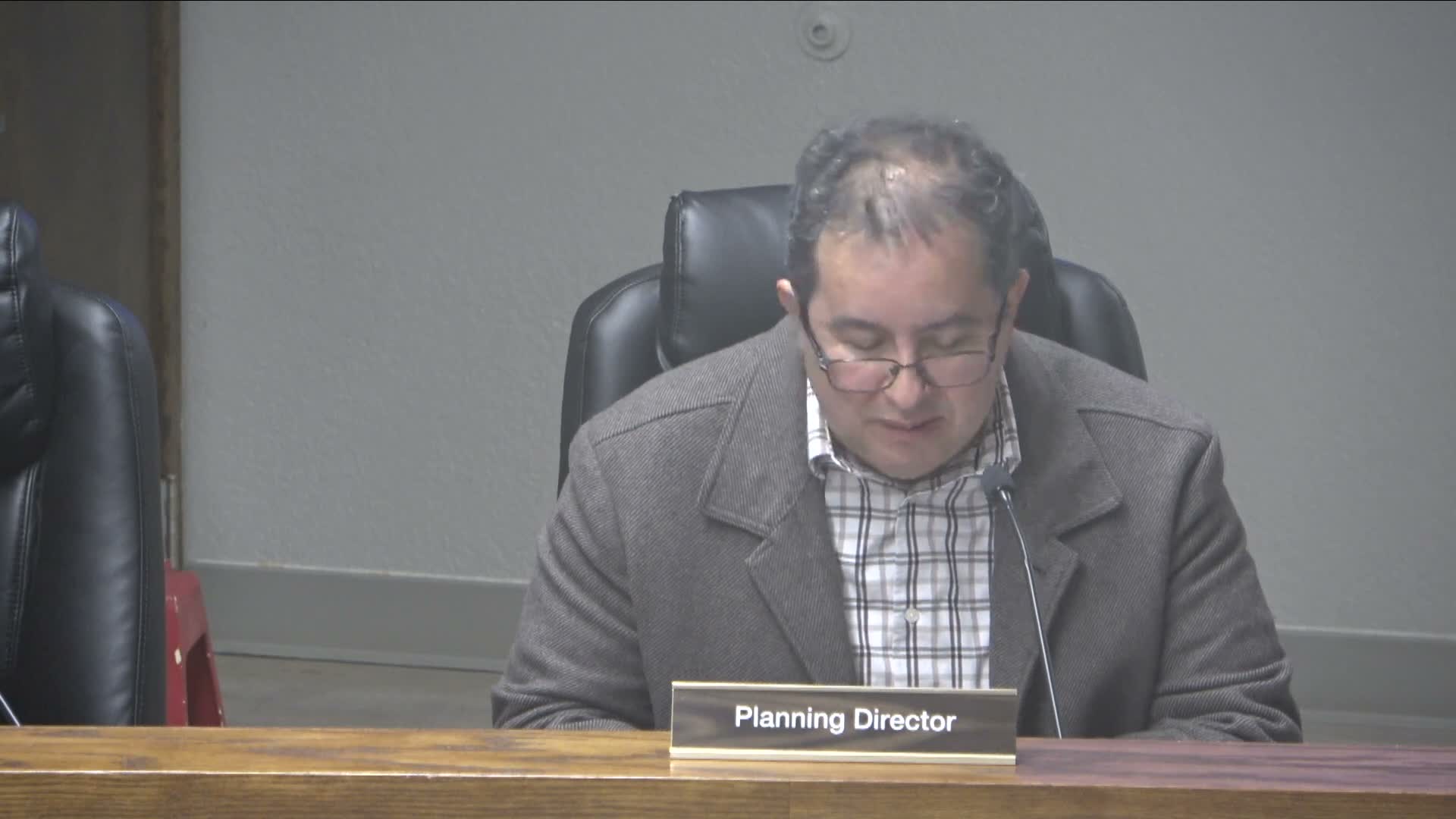
The City of Livingston Planning Commission on a 3-0 vote recommended that the City Council prioritize housing programs — specifically homeownership assistance, housing rehabilitation and housing counseling — and to consider microenterprise assistance as the secondary economic-development option.
Vice Chair Jose Flores moved the recommendation and Commissioner Steve Bassi seconded; the commission approved the motion by roll call (Mohinder Khanda, Steve Bassi, Jose Flores voting yes). Miguel, the community development director, framed the options and described how the programs could be structured and administered.
Why it matters: Commissioners and staff said housing programs are the most immediately implementable option because local partners exist to administer them and they meet federal program objectives. Miguel noted constraints on some activities, saying that certain rental-assistance payments are generally treated as transfer payments and may be ineligible, while other approaches — such as funding long-term-affordability multi-family projects or establishing revolving loan accounts for owner rehabilitation — are feasible under program rules.
The commission discussed concrete program ideas: staff gave the example of a down-payment-assistance loan (an illustrative $50,000 figure was mentioned), owner-occupied rehabilitation administered by a nonprofit such as a self-help enterprise, and housing counseling to help prospective buyers improve credit and navigate fair-housing issues. Commissioners also discussed microenterprise assistance — business planning, technical assistance and small grants — as an economic option if housing priorities are not used.
At the same meeting contract planner Jayla Smith (JB Anderson Land Use Planning) presented the City’s 2025 Housing Element annual progress report. Smith said the city processed one entitlement application for a project at 612 East Avenue (two single-family homes with attached accessory dwelling units), issued 90 building permits in 2025 — including about 80 tied to a multi-family River Glen project — seven ADU permits and one triplex permit. She told the commission the city was allocated 1,097 RHNA units for the cycle and currently has a remaining need of 999 units, noting that 98 units were reflected in recent building permits.
Smith recommended, and staff asked the commission to approve, a resolution to direct staff to submit the 2025 annual progress report to the California Department of Housing and Community Development and the governor’s office of Land Use and Climate Innovation. A commissioner moved to approve the planning commission resolution (referred to as “Resolution 2026” during discussion); the motion was seconded and approved by roll call 3-0. Staff noted the report must be transmitted to the state by April 1.
Public comment: An unnamed resident asked whether the Community Development Block Grant (CDBG) is flexible. The resident said the block grant “could be spent based on the community needs.” Miguel replied that CDBG-funded activities must follow federal guidelines even though the program can support a range of eligible activities that stimulate economic development and create jobs.
What’s next: The commission recommended the housing program priorities and planning/public-service priorities to the City Council for consideration; staff will transmit the 2025 housing element annual progress report to state agencies as directed. The commission also set priorities in the planning category — water, sewer and storm drainage master planning as the top planning priority — and public services priorities (crime prevention/public safety primary; recreation services secondary).
Vice Chair Jose Flores moved the recommendation and Commissioner Steve Bassi seconded; the commission approved the motion by roll call (Mohinder Khanda, Steve Bassi, Jose Flores voting yes). Miguel, the community development director, framed the options and described how the programs could be structured and administered.
Why it matters: Commissioners and staff said housing programs are the most immediately implementable option because local partners exist to administer them and they meet federal program objectives. Miguel noted constraints on some activities, saying that certain rental-assistance payments are generally treated as transfer payments and may be ineligible, while other approaches — such as funding long-term-affordability multi-family projects or establishing revolving loan accounts for owner rehabilitation — are feasible under program rules.
The commission discussed concrete program ideas: staff gave the example of a down-payment-assistance loan (an illustrative $50,000 figure was mentioned), owner-occupied rehabilitation administered by a nonprofit such as a self-help enterprise, and housing counseling to help prospective buyers improve credit and navigate fair-housing issues. Commissioners also discussed microenterprise assistance — business planning, technical assistance and small grants — as an economic option if housing priorities are not used.
At the same meeting contract planner Jayla Smith (JB Anderson Land Use Planning) presented the City’s 2025 Housing Element annual progress report. Smith said the city processed one entitlement application for a project at 612 East Avenue (two single-family homes with attached accessory dwelling units), issued 90 building permits in 2025 — including about 80 tied to a multi-family River Glen project — seven ADU permits and one triplex permit. She told the commission the city was allocated 1,097 RHNA units for the cycle and currently has a remaining need of 999 units, noting that 98 units were reflected in recent building permits.
Smith recommended, and staff asked the commission to approve, a resolution to direct staff to submit the 2025 annual progress report to the California Department of Housing and Community Development and the governor’s office of Land Use and Climate Innovation. A commissioner moved to approve the planning commission resolution (referred to as “Resolution 2026” during discussion); the motion was seconded and approved by roll call 3-0. Staff noted the report must be transmitted to the state by April 1.
Public comment: An unnamed resident asked whether the Community Development Block Grant (CDBG) is flexible. The resident said the block grant “could be spent based on the community needs.” Miguel replied that CDBG-funded activities must follow federal guidelines even though the program can support a range of eligible activities that stimulate economic development and create jobs.
What’s next: The commission recommended the housing program priorities and planning/public-service priorities to the City Council for consideration; staff will transmit the 2025 housing element annual progress report to state agencies as directed. The commission also set priorities in the planning category — water, sewer and storm drainage master planning as the top planning priority — and public services priorities (crime prevention/public safety primary; recreation services secondary).
View the Full Meeting & All Its Details
This article offers just a summary. Unlock complete video, transcripts, and insights as a Founder Member.
✓
Watch full, unedited meeting videos
✓
Search every word spoken in unlimited transcripts
✓
AI summaries & real-time alerts (all government levels)
✓
Permanent access to expanding government content
30-day money-back guarantee
