Minnesota Senate passes bill requiring drivers to stop when school-bus red lights flash
March 09, 2026 | 2026 Legislature MN, Minnesota
This article was created by AI summarizing key points discussed. AI makes mistakes, so for full details and context, please refer to the video of the full meeting. Please report any errors so we can fix them. Report an error »
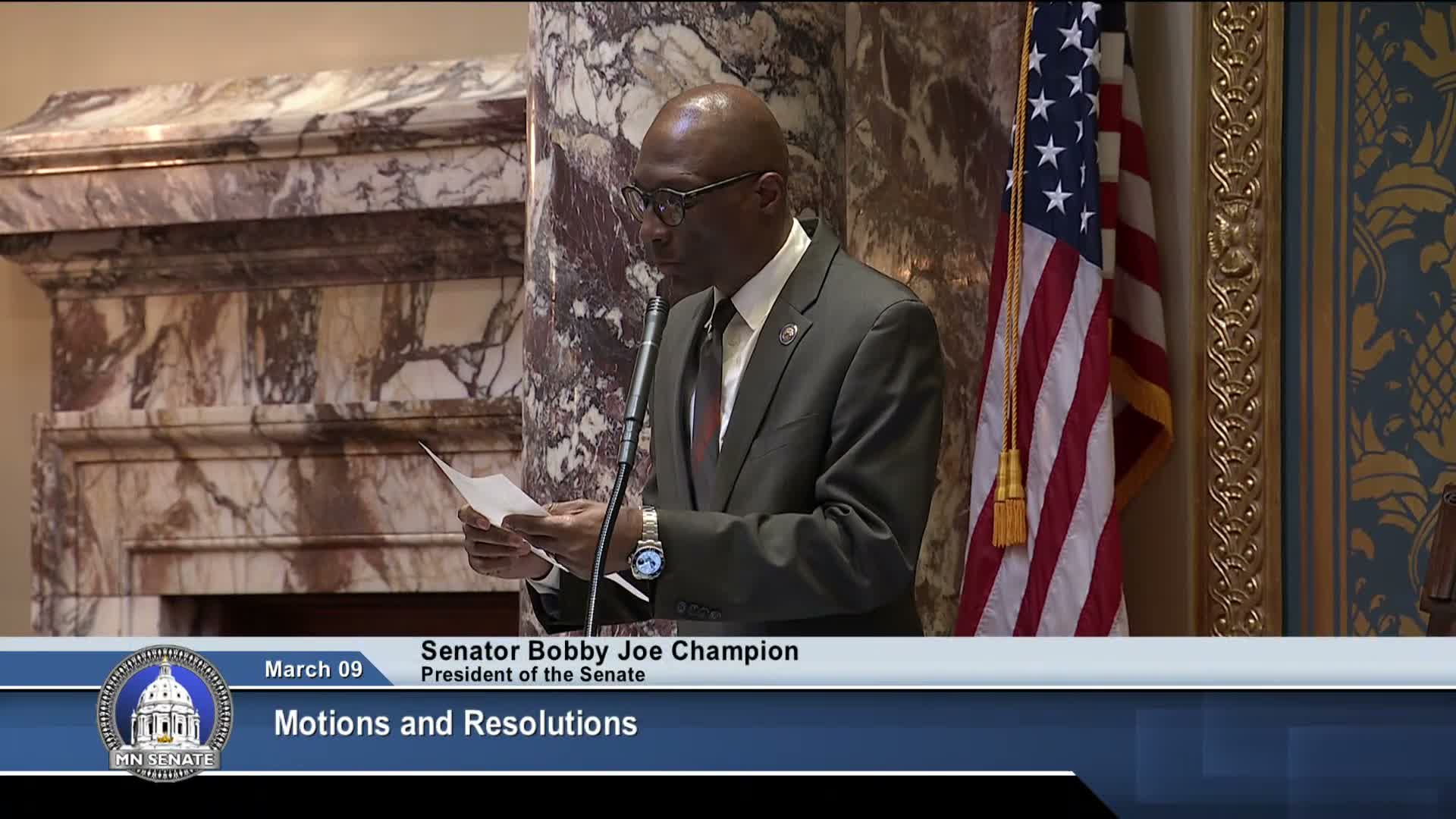
The Minnesota Senate passed Senate File 3623 on March 9, 2026, making it unlawful for drivers to proceed when a school bus's red warning lights are flashing. Senator Anne Johnson Stewart, the chief author, said the change fixes a gap left by a recent appellate decision that required the bus's stop arm be fully extended before motorists were required to stop.
Johnson Stewart told colleagues the bill is “so important to all of us” and prompted by a court ruling in which a driver’s conviction was overturned because the bus's stop arm had not reached full extension; the bill instead makes the activation of red flashing lights the operative trigger for the stop requirement. “So my bill simply states that when the red lights are flashing, drivers must stop for the bus,” Johnson Stewart said, urging a green vote and noting the measure had unanimous support in transportation committee and backing from school bus operators and the State Patrol.
The bill drew technical questions from colleagues about the draft language. Senator Lucero, identifying herself as a former school-bus driver, pressed the author on lines in the bill concerning pre-warning amber lights and whether those amber lights would require vehicles to stop in non-loading circumstances such as a railroad crossing. “Mister president, I'm talking about the chief author's provision on line 1.13 regarding amber lights,” Lucero said, seeking clarification about the bill's effect on adjacent lanes and multi-lane highways.
Senator Dibble answered Lucero's concern directly, saying opposite-direction traffic at a railroad crossing where only amber lights are flashing would not be required to stop: “No. That car does not need to stop.” Dibble and Johnson Stewart explained that the amber-light language is intended as a preparatory signal when a bus is about to stop to load or unload children, while the statutory duty to stop attaches when the red lights begin to flash.
Supporters framed the bill as a targeted "cleanup" to prevent the appellate outcome that let a motorist avoid charges when the stop arm was partially extended. Senator Nelson, a cosponsor, said the change will help ensure motorists are charged appropriately when they fail to stop near children getting on or off a bus and noted that many school buses now carry cameras funded by prior legislative grants.
The Senate conducted a roll call on the bill's third reading; the presiding officer announced a final tally of 67 ayes and 0 nays, and declared Senate File 3623 passed. Johnson Stewart said the bill includes an immediate effective date because school is in session. Colleagues urged the executive branch and public-safety partners to run public information campaigns so drivers understand the change.
Earlier in the session senators handled several brief procedural motions: Senator Putnam moved that Senate File 3599 be withdrawn from the Committee on Housing and Homelessness Prevention and re-referred to Judiciary and Public Safety; Senator Westlund moved that Senate File 3996 be withdrawn from Education Policy and re-referred to Education Finance; and Senator Fatai moved that Senate File 4176 be withdrawn from Judiciary and Public Safety and re-referred to State and Local Government. The body also referred Senate Resolution 67 to the Committee on Rules and Administration and approved a list of special orders for immediate consideration.
After the votes the chamber heard floor remarks and a tribute from Senator Gustafson to Sergeant Nicole Amour of White Bear Lake, and members were invited to a legislators' reception in Saint Paul that evening. The Senate then adjourned until Wednesday, March 11 at 11 a.m.
Johnson Stewart told colleagues the bill is “so important to all of us” and prompted by a court ruling in which a driver’s conviction was overturned because the bus's stop arm had not reached full extension; the bill instead makes the activation of red flashing lights the operative trigger for the stop requirement. “So my bill simply states that when the red lights are flashing, drivers must stop for the bus,” Johnson Stewart said, urging a green vote and noting the measure had unanimous support in transportation committee and backing from school bus operators and the State Patrol.
The bill drew technical questions from colleagues about the draft language. Senator Lucero, identifying herself as a former school-bus driver, pressed the author on lines in the bill concerning pre-warning amber lights and whether those amber lights would require vehicles to stop in non-loading circumstances such as a railroad crossing. “Mister president, I'm talking about the chief author's provision on line 1.13 regarding amber lights,” Lucero said, seeking clarification about the bill's effect on adjacent lanes and multi-lane highways.
Senator Dibble answered Lucero's concern directly, saying opposite-direction traffic at a railroad crossing where only amber lights are flashing would not be required to stop: “No. That car does not need to stop.” Dibble and Johnson Stewart explained that the amber-light language is intended as a preparatory signal when a bus is about to stop to load or unload children, while the statutory duty to stop attaches when the red lights begin to flash.
Supporters framed the bill as a targeted "cleanup" to prevent the appellate outcome that let a motorist avoid charges when the stop arm was partially extended. Senator Nelson, a cosponsor, said the change will help ensure motorists are charged appropriately when they fail to stop near children getting on or off a bus and noted that many school buses now carry cameras funded by prior legislative grants.
The Senate conducted a roll call on the bill's third reading; the presiding officer announced a final tally of 67 ayes and 0 nays, and declared Senate File 3623 passed. Johnson Stewart said the bill includes an immediate effective date because school is in session. Colleagues urged the executive branch and public-safety partners to run public information campaigns so drivers understand the change.
Earlier in the session senators handled several brief procedural motions: Senator Putnam moved that Senate File 3599 be withdrawn from the Committee on Housing and Homelessness Prevention and re-referred to Judiciary and Public Safety; Senator Westlund moved that Senate File 3996 be withdrawn from Education Policy and re-referred to Education Finance; and Senator Fatai moved that Senate File 4176 be withdrawn from Judiciary and Public Safety and re-referred to State and Local Government. The body also referred Senate Resolution 67 to the Committee on Rules and Administration and approved a list of special orders for immediate consideration.
After the votes the chamber heard floor remarks and a tribute from Senator Gustafson to Sergeant Nicole Amour of White Bear Lake, and members were invited to a legislators' reception in Saint Paul that evening. The Senate then adjourned until Wednesday, March 11 at 11 a.m.
Don't Miss a Word: See the Full Meeting!
Go beyond summaries. Unlock every video, transcript, and key insight with a Founder Membership.
✓
Get instant access to full meeting videos
✓
Search and clip any phrase from complete transcripts
✓
Receive AI-powered summaries & custom alerts
✓
Enjoy lifetime, unrestricted access to government data
30-day money-back guarantee
