Bill to let districts choose student‑count method aims to provide funding certainty
March 09, 2026 | 2026 Legislature Alaska, Alaska
This article was created by AI summarizing key points discussed. AI makes mistakes, so for full details and context, please refer to the video of the full meeting. Please report any errors so we can fix them. Report an error »
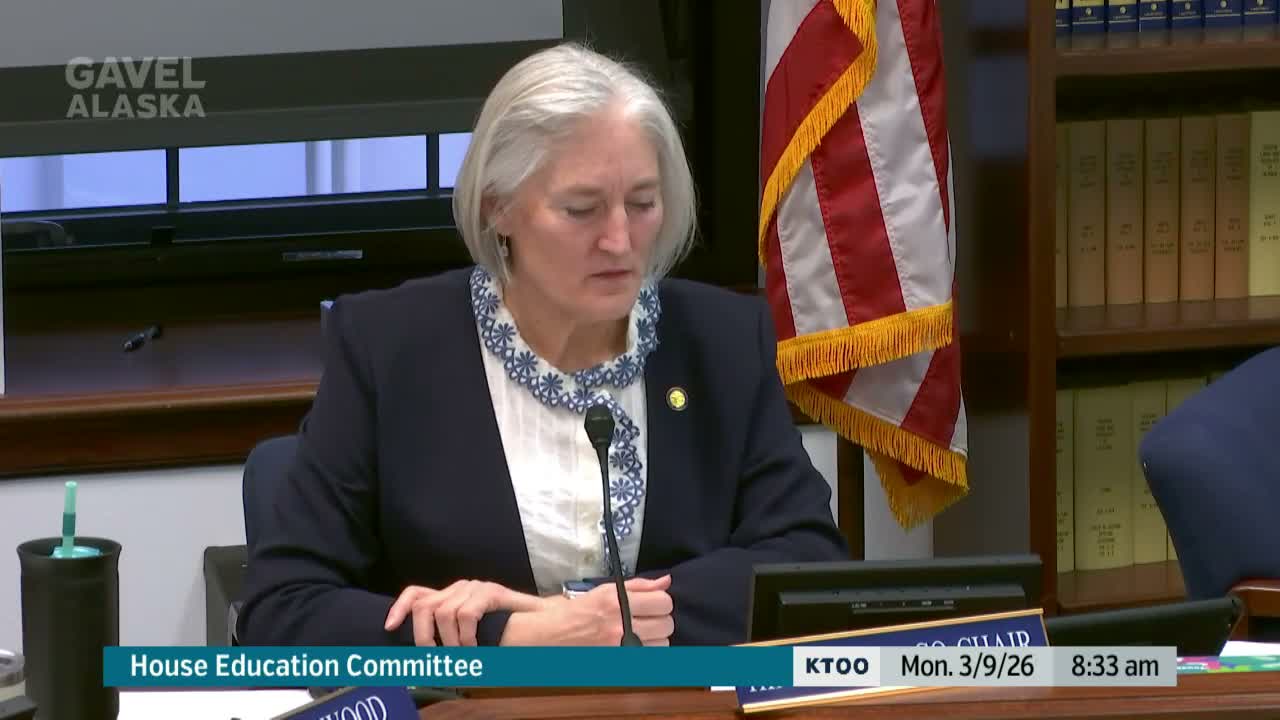
Representative Andy Story, sponsor of House Bill 261, presented the bill March 9 as a targeted change to how districts calculate student counts for funding. HB261 would allow districts to choose, for funding purposes, either the prior year’s October student count or a three‑year average of previously known October counts (the example used was 2022–2024 for a July 1, 2026 start).
Story said the measure aims to give districts greater certainty for staffing and budget decisions, helping districts finalize contracts and retain teachers. He emphasized the choice is intended to be district‑driven: a district on sustained growth could elect to use last year’s count, while a stable or declining district might elect three‑year averaging.
Committee members raised concerns about how averaging would affect rapidly growing districts and new schools. Story acknowledged that rapid growth could disadvantage a district that selected averaging; he described proposed triggers that would allow the department to fund an uptick if enrollment rose above a set percentage. He also said the CS (committee substitute) would include language addressing new schools and charter startups.
Story flagged several technical and fiscal issues. One section of the bill provides a special adjustment for alternative schools (which are currently funded at the size factor of the largest school in a district); Story said that adjustment likely will be removed from the CS and considered separately because of its sizable fiscal cost (he cited figures in the millions). He also discussed 'cliff points' and school‑size mechanics that preserve existing thresholds for splitting campuses or maintaining school‑size adjustments.
On intensely supported special‑education students ('intensives'), Story said including intensives in a three‑year average could double‑count funding and inflate the fiscal note. He corrected an initial estimate and said the fiscal note for extra intensives was $43,000,000 (he had first said $47M), and proposed using previous‑year counts for intensives with a February true‑up to allow districts to hire staff in fall and be trued up later.
Story said he will draft a committee substitute that incorporates feedback (grandfathering hold‑harmless districts, creating triggers for growth, clarifying new school language and intensive‑student treatment) and return for amendment and further committee review.
Story said the measure aims to give districts greater certainty for staffing and budget decisions, helping districts finalize contracts and retain teachers. He emphasized the choice is intended to be district‑driven: a district on sustained growth could elect to use last year’s count, while a stable or declining district might elect three‑year averaging.
Committee members raised concerns about how averaging would affect rapidly growing districts and new schools. Story acknowledged that rapid growth could disadvantage a district that selected averaging; he described proposed triggers that would allow the department to fund an uptick if enrollment rose above a set percentage. He also said the CS (committee substitute) would include language addressing new schools and charter startups.
Story flagged several technical and fiscal issues. One section of the bill provides a special adjustment for alternative schools (which are currently funded at the size factor of the largest school in a district); Story said that adjustment likely will be removed from the CS and considered separately because of its sizable fiscal cost (he cited figures in the millions). He also discussed 'cliff points' and school‑size mechanics that preserve existing thresholds for splitting campuses or maintaining school‑size adjustments.
On intensely supported special‑education students ('intensives'), Story said including intensives in a three‑year average could double‑count funding and inflate the fiscal note. He corrected an initial estimate and said the fiscal note for extra intensives was $43,000,000 (he had first said $47M), and proposed using previous‑year counts for intensives with a February true‑up to allow districts to hire staff in fall and be trued up later.
Story said he will draft a committee substitute that incorporates feedback (grandfathering hold‑harmless districts, creating triggers for growth, clarifying new school language and intensive‑student treatment) and return for amendment and further committee review.
View the Full Meeting & All Its Details
This article offers just a summary. Unlock complete video, transcripts, and insights as a Founder Member.
✓
Watch full, unedited meeting videos
✓
Search every word spoken in unlimited transcripts
✓
AI summaries & real-time alerts (all government levels)
✓
Permanent access to expanding government content
30-day money-back guarantee
