Committee narrows contractor disclosure rules, rejects five‑year wage‑theft affidavit
March 09, 2026 | 2026 Legislature Alaska, Alaska
This article was created by AI summarizing key points discussed. AI makes mistakes, so for full details and context, please refer to the video of the full meeting. Please report any errors so we can fix them. Report an error »
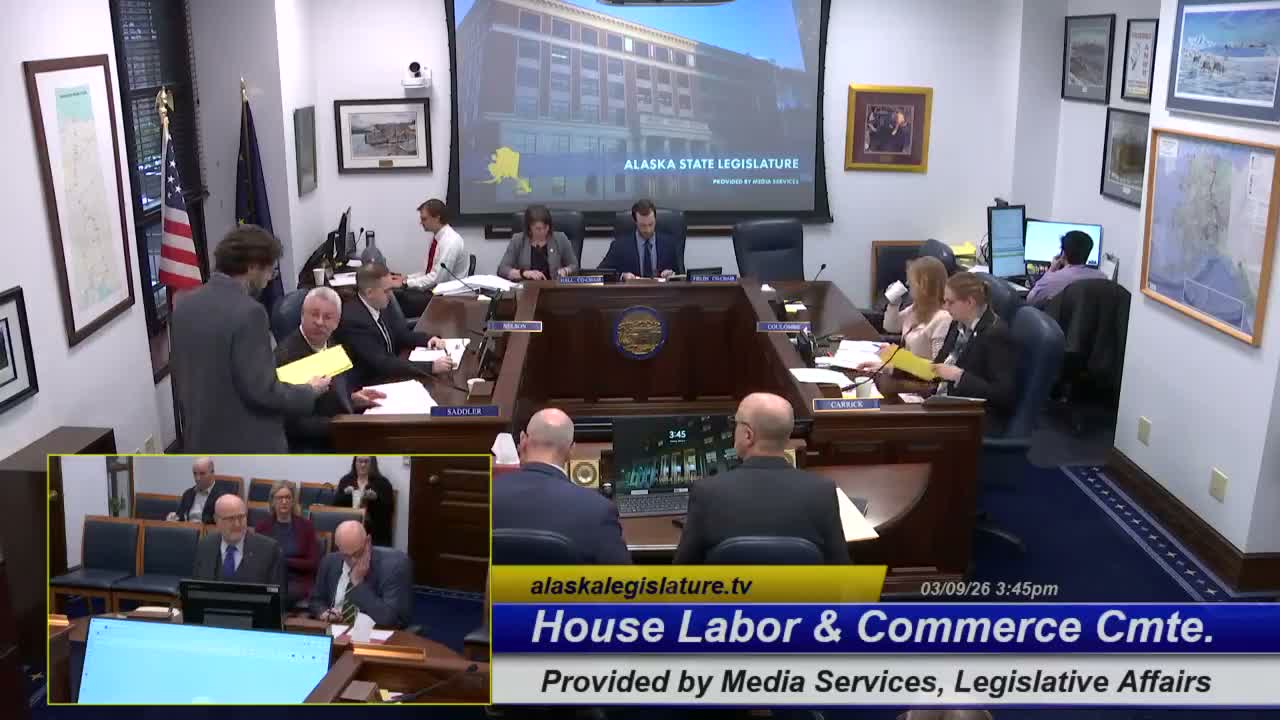
The House Labor and Commerce Committee on March 11 considered five amendments to HB260, a bill that would require contractors and subcontractors to share records in certain wage‑enforcement contexts and change contractor accountability provisions.
The committee adopted Amendment 1 (deleting the word "employee" in a specified line) and Amendment 2, which clarifies when subcontractors must provide records to an authorized representative of an employee in wage‑claim scenarios. Ken Alper, staff to sponsor Representative Andy Josephson, told the panel the language was modeled on an Oregon statute and that an "authorized representative" could include an attorney or a Wage and Hour Division employee handling a claim. "If you're giving the stuff to the general contractor, let me know what you're giving them," Alper said, adding the intent is to allow contractors to validate payroll compliance while limiting disclosure to information lawfully required to be disclosed.
Representative Sadler pressed for limits and confidentiality safeguards, asking whether the proposed disclosure would expose personal identifying information. Committee members and staff pointed to existing procedures used for certified‑payroll reviews and said line 20–21 of the draft narrows disclosure to records "otherwise lawfully required to be disclosed."
Amendment 3, offered by Representative Sadler to reduce what he called a "two‑strikes and you're out" penalty regime, passed after the sponsor indicated no opposition. Amendment 4 was identical to Amendment 1 and treated as adopted.
Representative Sadler then moved Amendment 5, which would have required subcontractors to provide an affidavit disclosing whether they had been involved in wage‑theft enforcement in the prior five years. The sponsor and other members called a five‑year lookback potentially punitive and burdensome. After debate, the committee held a roll‑call vote: Nelson, Colom and Sadler voted yes; Kerrick, Co‑chair Fields, Co‑chair Hall and Freer voted no. The amendment failed 3–4.
The committee did not complete final passage of HB260 at this meeting; members said they would return to the bill later. Staff and the sponsor emphasized the bill's purpose is to reduce wage theft and improve self‑policing by contractors, while members raised practical concerns about privacy and the administrative burden of affidavits.
The committee adopted Amendment 1 (deleting the word "employee" in a specified line) and Amendment 2, which clarifies when subcontractors must provide records to an authorized representative of an employee in wage‑claim scenarios. Ken Alper, staff to sponsor Representative Andy Josephson, told the panel the language was modeled on an Oregon statute and that an "authorized representative" could include an attorney or a Wage and Hour Division employee handling a claim. "If you're giving the stuff to the general contractor, let me know what you're giving them," Alper said, adding the intent is to allow contractors to validate payroll compliance while limiting disclosure to information lawfully required to be disclosed.
Representative Sadler pressed for limits and confidentiality safeguards, asking whether the proposed disclosure would expose personal identifying information. Committee members and staff pointed to existing procedures used for certified‑payroll reviews and said line 20–21 of the draft narrows disclosure to records "otherwise lawfully required to be disclosed."
Amendment 3, offered by Representative Sadler to reduce what he called a "two‑strikes and you're out" penalty regime, passed after the sponsor indicated no opposition. Amendment 4 was identical to Amendment 1 and treated as adopted.
Representative Sadler then moved Amendment 5, which would have required subcontractors to provide an affidavit disclosing whether they had been involved in wage‑theft enforcement in the prior five years. The sponsor and other members called a five‑year lookback potentially punitive and burdensome. After debate, the committee held a roll‑call vote: Nelson, Colom and Sadler voted yes; Kerrick, Co‑chair Fields, Co‑chair Hall and Freer voted no. The amendment failed 3–4.
The committee did not complete final passage of HB260 at this meeting; members said they would return to the bill later. Staff and the sponsor emphasized the bill's purpose is to reduce wage theft and improve self‑policing by contractors, while members raised practical concerns about privacy and the administrative burden of affidavits.
View the Full Meeting & All Its Details
This article offers just a summary. Unlock complete video, transcripts, and insights as a Founder Member.
✓
Watch full, unedited meeting videos
✓
Search every word spoken in unlimited transcripts
✓
AI summaries & real-time alerts (all government levels)
✓
Permanent access to expanding government content
30-day money-back guarantee
