State workforce officials tout training investments, cite DUA improvements amid rising unemployment concerns
March 09, 2026 | 2026 Legislature MA, Massachusetts
This article was created by AI summarizing key points discussed. AI makes mistakes, so for full details and context, please refer to the video of the full meeting. Please report any errors so we can fix them. Report an error »
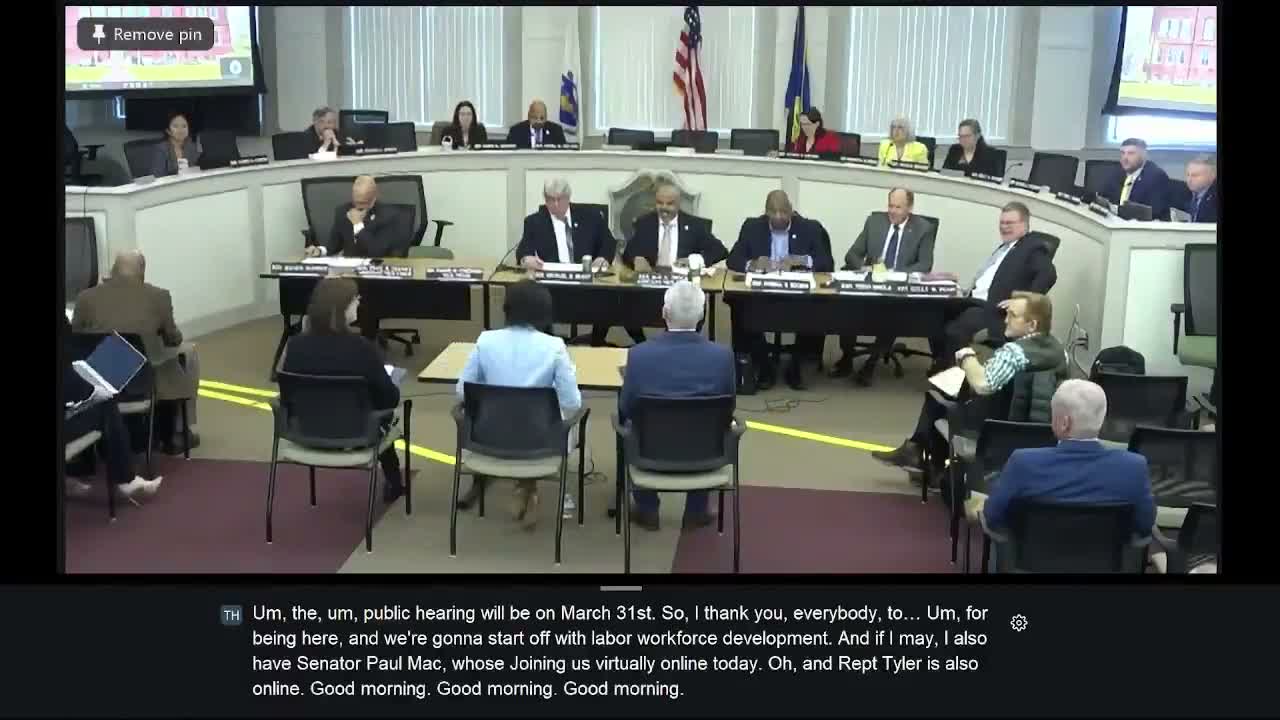
The administration said its House 2 budget sustains sector-based job training and steps to modernize unemployment assistance as lawmakers pressed officials on business costs and regional labor shortages. Secretary Jones, testifying in Barnstable, identified several line items in the FY27 House 2 proposal intended to strengthen hiring pipelines and reduce barriers to work.
"H2 recommends WCTF funding at $8,000,000," Jones said, referring to the Workforce Competitiveness Trust Fund, and she highlighted support for the Career Technical Initiative, registered apprenticeship expansions, and a $15.4 million YouthWorks proposal to place roughly 3,500 young people in paid work by summer 2027. The testimony emphasized sector-focused grants and partnerships among MassHire boards, training providers and employers.
Jones also described operational gains at the Department of Unemployment Assistance after last year's system upgrades. "In January 2025, call wait times exceeded 2 hours. Today, the average call wait time is 11 minutes," she said, adding that nearly 85 percent of claims are now paid within 35 days. The administration said it is hiring seasonal staff to handle peak periods and has reduced the backlog of manual items from roughly 80,000 to the low 30,000s.
Legislators probed the financial pressures employers face. Representative X asked whether the taxable wage base or the lingering COVID assessment remained a burden on businesses. Undersecretary Josh Cutler explained that the Commonwealth's taxable wage base is currently capped at $15,000 and described the continuing COVID assessment and the administration's work to scale it down by the end of the decade.
Members also pressed Jones on the state's unemployment trigger. Cutler explained that Massachusetts's unique regional trigger raises maximum benefit weeks from 26 to 30 when a 12-month unemployment average in any region exceeds 5.2 percent; once triggered, the longer benefit period remains statewide until all areas fall below that threshold.
Lawmakers flagged longer-term concerns: Representative Small and others urged further detail about regional MassHire funding disparities and the impacts of federal grant declines on local career-center capacity. Jones said the administration is working with MassHire, the Workforce Skills Cabinet and the Executive Office of Economic Development to coordinate workforce and housing investments intended to improve retention of young residents and to support reentry and disability employment programs. She noted an outside section in House 2 proposing a Workforce Productivity Fund pilot and underlined goals to expand apprenticeships and pre-apprenticeship pathways.
The committee did not take any votes during the Barnstable hearing. Officials said they would provide follow-up figures on trust-fund projections, and pledged continued briefings as the FY27 process continues.
"H2 recommends WCTF funding at $8,000,000," Jones said, referring to the Workforce Competitiveness Trust Fund, and she highlighted support for the Career Technical Initiative, registered apprenticeship expansions, and a $15.4 million YouthWorks proposal to place roughly 3,500 young people in paid work by summer 2027. The testimony emphasized sector-focused grants and partnerships among MassHire boards, training providers and employers.
Jones also described operational gains at the Department of Unemployment Assistance after last year's system upgrades. "In January 2025, call wait times exceeded 2 hours. Today, the average call wait time is 11 minutes," she said, adding that nearly 85 percent of claims are now paid within 35 days. The administration said it is hiring seasonal staff to handle peak periods and has reduced the backlog of manual items from roughly 80,000 to the low 30,000s.
Legislators probed the financial pressures employers face. Representative X asked whether the taxable wage base or the lingering COVID assessment remained a burden on businesses. Undersecretary Josh Cutler explained that the Commonwealth's taxable wage base is currently capped at $15,000 and described the continuing COVID assessment and the administration's work to scale it down by the end of the decade.
Members also pressed Jones on the state's unemployment trigger. Cutler explained that Massachusetts's unique regional trigger raises maximum benefit weeks from 26 to 30 when a 12-month unemployment average in any region exceeds 5.2 percent; once triggered, the longer benefit period remains statewide until all areas fall below that threshold.
Lawmakers flagged longer-term concerns: Representative Small and others urged further detail about regional MassHire funding disparities and the impacts of federal grant declines on local career-center capacity. Jones said the administration is working with MassHire, the Workforce Skills Cabinet and the Executive Office of Economic Development to coordinate workforce and housing investments intended to improve retention of young residents and to support reentry and disability employment programs. She noted an outside section in House 2 proposing a Workforce Productivity Fund pilot and underlined goals to expand apprenticeships and pre-apprenticeship pathways.
The committee did not take any votes during the Barnstable hearing. Officials said they would provide follow-up figures on trust-fund projections, and pledged continued briefings as the FY27 process continues.
Don't Miss a Word: See the Full Meeting!
Go beyond summaries. Unlock every video, transcript, and key insight with a Founder Membership.
✓
Get instant access to full meeting videos
✓
Search and clip any phrase from complete transcripts
✓
Receive AI-powered summaries & custom alerts
✓
Enjoy lifetime, unrestricted access to government data
30-day money-back guarantee
