Joint committee recommends calendar B, asks LRC to study call thresholds, excused absences and reconsideration rules
March 11, 2026 | 2026 Legislature SD, South Dakota
This article was created by AI summarizing key points discussed. AI makes mistakes, so for full details and context, please refer to the video of the full meeting. Please report any errors so we can fix them. Report an error »
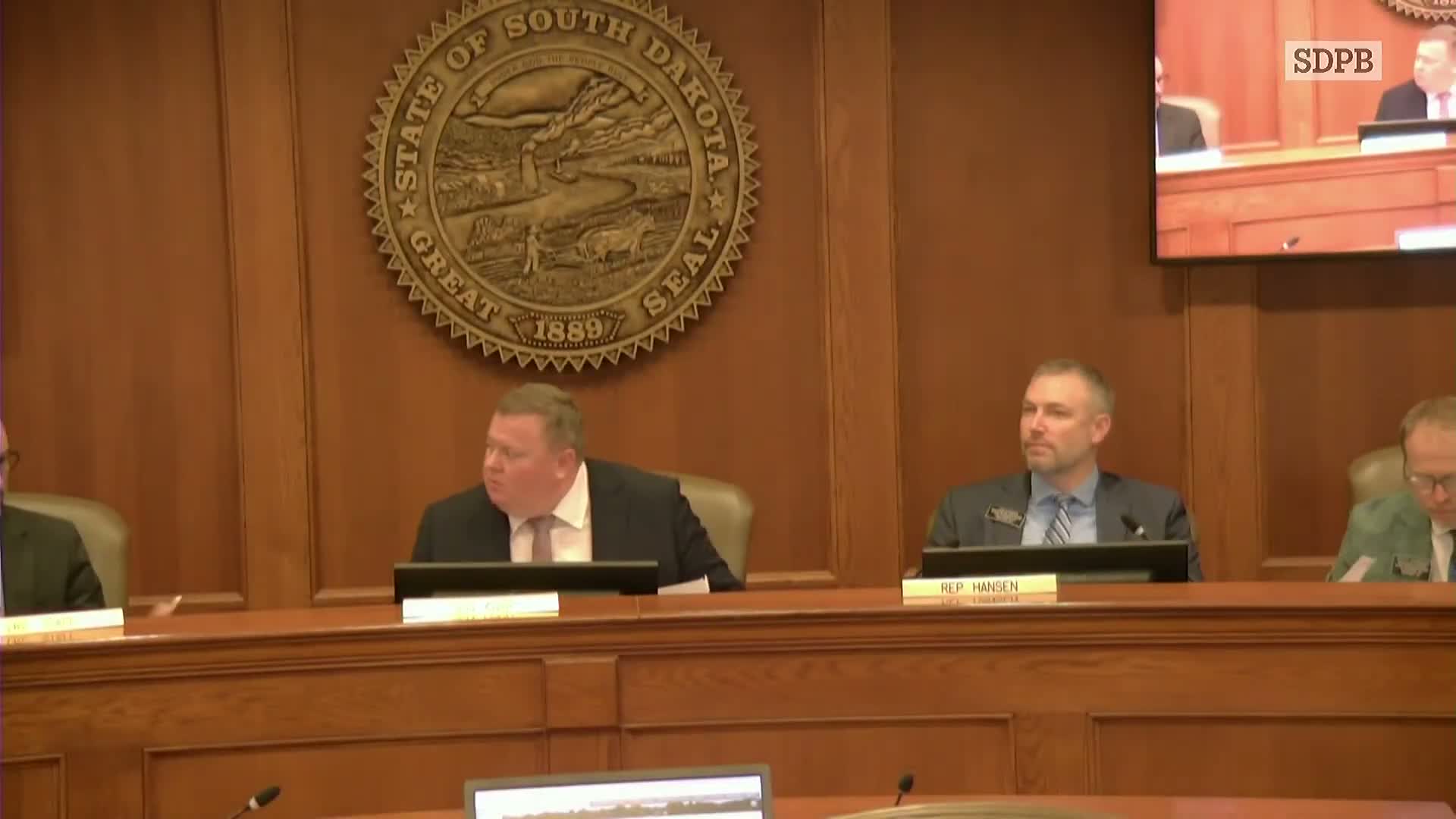
The Joint Legislative Procedure Committee on Jan. 14 debated three draft calendars and voted to recommend calendar B to their respective chambers, then directed staff to research several joint rule issues.
Rachel Pearson, chief of legislative operations for the Legislative Research Council, presented three draft calendars: A and B mirrored the current schedule with minor veto‑day differences; C was a proposed four‑day week calendar that would reduce the session to 37 days. Supporters of option C argued it would ease weekend turnarounds and improve member work‑life balance; opponents warned cutting committee days would squeeze hearings and public testimony.
After floor discussion and public testimony, Senator Melhoff moved a substitute motion to adopt calendar B; the secretary recorded 10 yays, 3 nays and 1 excused, and the substitute motion passed. The committee agreed to recommend calendar B to the chambers.
Committee members then focused on joint rules and directed the LRC to research several items. Senator Perry moved (and the committee approved by voice vote) that LRC staff review rules in surrounding states and Mason’s Manual to assess thresholds for a 'call of the house' and report back with findings. Representative Hansen moved (approved by voice vote) that LRC provide options on processes for excused absences specifically tied to call‑of‑the‑house situations; committee members said the current rules are silent and emphasized fairness and transparency.
Finally, the committee asked LRC to draft a rule clarifying that an amendment to a bill does not automatically create a new question for reconsideration; that motion also passed by voice vote. John McCullough, LRC director, noted the research requests would give future leadership concrete options when drafting or changing joint rules.
What happens next: the committee’s calendar recommendation (calendar B) goes to the full chambers for adoption; the LRC will research the requested topics and report back to the committee or next leadership group.
Rachel Pearson, chief of legislative operations for the Legislative Research Council, presented three draft calendars: A and B mirrored the current schedule with minor veto‑day differences; C was a proposed four‑day week calendar that would reduce the session to 37 days. Supporters of option C argued it would ease weekend turnarounds and improve member work‑life balance; opponents warned cutting committee days would squeeze hearings and public testimony.
After floor discussion and public testimony, Senator Melhoff moved a substitute motion to adopt calendar B; the secretary recorded 10 yays, 3 nays and 1 excused, and the substitute motion passed. The committee agreed to recommend calendar B to the chambers.
Committee members then focused on joint rules and directed the LRC to research several items. Senator Perry moved (and the committee approved by voice vote) that LRC staff review rules in surrounding states and Mason’s Manual to assess thresholds for a 'call of the house' and report back with findings. Representative Hansen moved (approved by voice vote) that LRC provide options on processes for excused absences specifically tied to call‑of‑the‑house situations; committee members said the current rules are silent and emphasized fairness and transparency.
Finally, the committee asked LRC to draft a rule clarifying that an amendment to a bill does not automatically create a new question for reconsideration; that motion also passed by voice vote. John McCullough, LRC director, noted the research requests would give future leadership concrete options when drafting or changing joint rules.
What happens next: the committee’s calendar recommendation (calendar B) goes to the full chambers for adoption; the LRC will research the requested topics and report back to the committee or next leadership group.
View the Full Meeting & All Its Details
This article offers just a summary. Unlock complete video, transcripts, and insights as a Founder Member.
✓
Watch full, unedited meeting videos
✓
Search every word spoken in unlimited transcripts
✓
AI summaries & real-time alerts (all government levels)
✓
Permanent access to expanding government content
30-day money-back guarantee
