EGLE outlines remediation priorities, funding sources and workload to Michigan House subcommittee
March 09, 2026 | 2025-2026 House Legislature MI, Michigan
This article was created by AI summarizing key points discussed. AI makes mistakes, so for full details and context, please refer to the video of the full meeting. Please report any errors so we can fix them. Report an error »
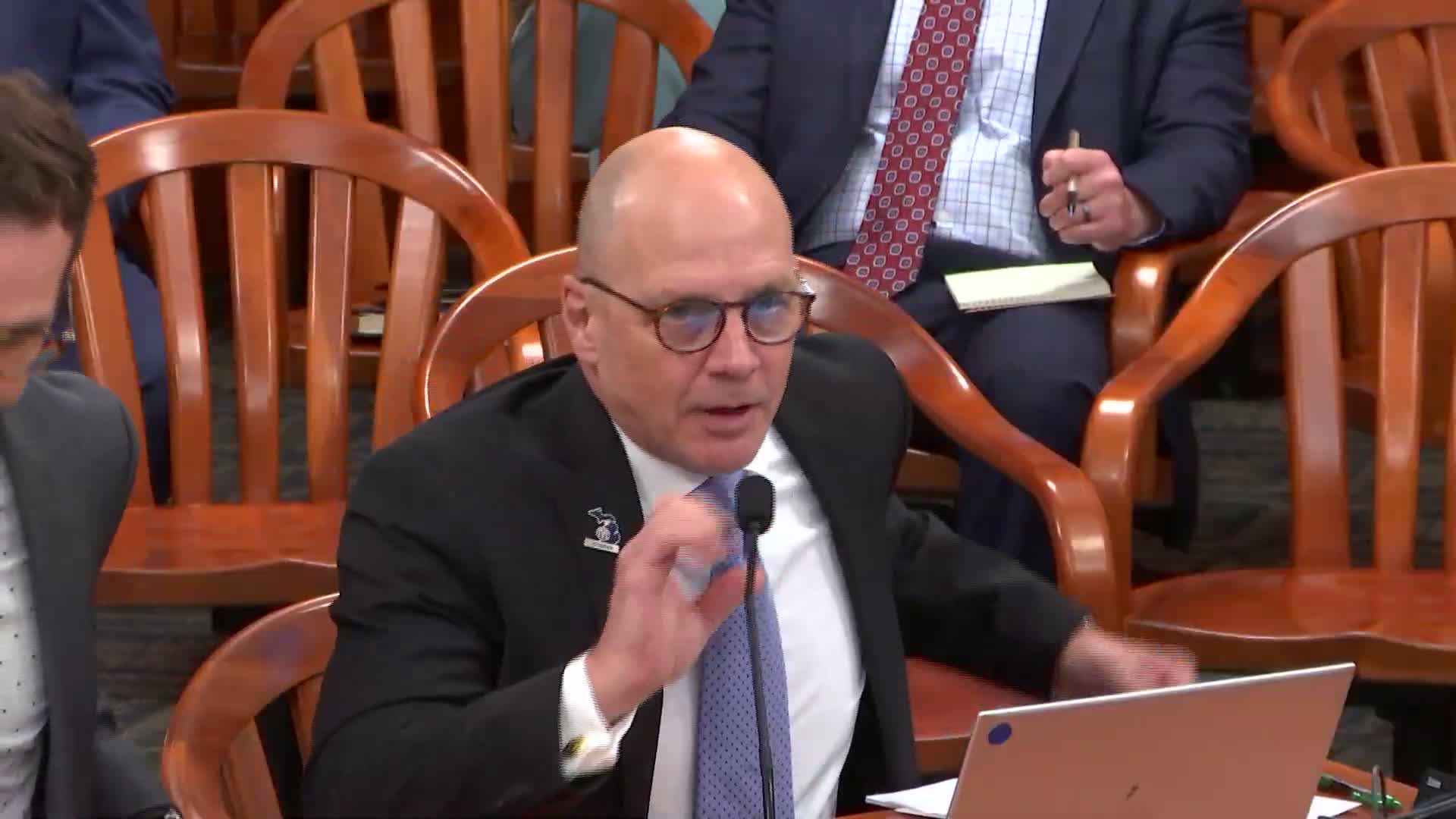
Mike Neller, director of the Remediation and Redevelopment Division at the Michigan Department of Environment, Great Lakes and Energy, told the House Committee on Great Lakes and Energy that the division now manages four core programs and uses a risk‑based approach to prioritize contaminated sites.
"Our statutory mandate is to protect public health and the environment under part 201," Neller said, outlining the division's work on Part 201 environmental remediation, Part 213 leaking underground storage tanks, the Brownfield Redevelopment program and coordination with federal Superfund (CERCLA) sites.
Neller said the agency's inventory includes about 18,000 Part 201 sites and roughly 7,000 Part 213 sites, and that the state receives about 1,200 Baseline Environmental Assessments (BEAs) a year, roughly half for sites the state had no prior information about. He told the committee the division completed a three‑year project to assign risk categories so staff can prioritize "risk present – immediate" sites, of which a little over 1,000 were identified.
Explaining how remediation gets paid for, Travis Bosco of EGLE told members that much of the programs' funding is not general fund. "Mike's program is primarily funded; Renew Michigan is a big component of that, in particular, Brownfield grants and loans," Bosco said, adding that the cleanup and redevelopment fund is supported by unclaimed bottle deposits and that past one‑time appropriations required legislative authority to spend.
Neller and Bosco said consistent funding since about 2016 — and a large one‑time spike in 2024 — allowed the division to expand the number of orphan sites it works on (sites with no viable liable party) from under 200 in 2016 to a much larger caseload today, and to plan longer‑term remediation work without stop‑start interruptions.
On leaking underground storage tanks (LUST), Neller said the program had about 7,500 open releases at roughly 6,000 locations in the inventory and that policy changes and a risk‑based corrective action approach led the state to close a large number of releases in 2025. "We closed 5,196," he said, describing that total as the most closures of any state running a LUST program and saying Michigan was on pace to close 800 releases this year.
Members asked about the impact of funding reductions on constituents. Neller warned that cutting ongoing program funding would slow or stop active work—groundwater sampling, vapor extraction systems and other mitigation—and risk losing progress so sites would have to be reassessed later. "Any reduction in funds is gonna mean we're not gonna be able to continue the work that we're currently doing," he said.
On staffing, Neller said vacancy rates vary by district and time: many retirements occurred around 2020, but recent hiring, a 12‑week project manager training course and peer mentoring have helped. He reported his division's vacancy rate was about 1.1% the prior week.
The committee did not take formal votes beyond approving minutes at the start of the meeting. The committee heard EGLE ask for continued legislative support for stable funding to maintain remediation progress and to avoid losing multi‑year efforts when funding lapses.
The committee moved on to an Air Quality Division presentation after the remediation briefing; no additional formal actions on remediation were taken at this session.
"Our statutory mandate is to protect public health and the environment under part 201," Neller said, outlining the division's work on Part 201 environmental remediation, Part 213 leaking underground storage tanks, the Brownfield Redevelopment program and coordination with federal Superfund (CERCLA) sites.
Neller said the agency's inventory includes about 18,000 Part 201 sites and roughly 7,000 Part 213 sites, and that the state receives about 1,200 Baseline Environmental Assessments (BEAs) a year, roughly half for sites the state had no prior information about. He told the committee the division completed a three‑year project to assign risk categories so staff can prioritize "risk present – immediate" sites, of which a little over 1,000 were identified.
Explaining how remediation gets paid for, Travis Bosco of EGLE told members that much of the programs' funding is not general fund. "Mike's program is primarily funded; Renew Michigan is a big component of that, in particular, Brownfield grants and loans," Bosco said, adding that the cleanup and redevelopment fund is supported by unclaimed bottle deposits and that past one‑time appropriations required legislative authority to spend.
Neller and Bosco said consistent funding since about 2016 — and a large one‑time spike in 2024 — allowed the division to expand the number of orphan sites it works on (sites with no viable liable party) from under 200 in 2016 to a much larger caseload today, and to plan longer‑term remediation work without stop‑start interruptions.
On leaking underground storage tanks (LUST), Neller said the program had about 7,500 open releases at roughly 6,000 locations in the inventory and that policy changes and a risk‑based corrective action approach led the state to close a large number of releases in 2025. "We closed 5,196," he said, describing that total as the most closures of any state running a LUST program and saying Michigan was on pace to close 800 releases this year.
Members asked about the impact of funding reductions on constituents. Neller warned that cutting ongoing program funding would slow or stop active work—groundwater sampling, vapor extraction systems and other mitigation—and risk losing progress so sites would have to be reassessed later. "Any reduction in funds is gonna mean we're not gonna be able to continue the work that we're currently doing," he said.
On staffing, Neller said vacancy rates vary by district and time: many retirements occurred around 2020, but recent hiring, a 12‑week project manager training course and peer mentoring have helped. He reported his division's vacancy rate was about 1.1% the prior week.
The committee did not take formal votes beyond approving minutes at the start of the meeting. The committee heard EGLE ask for continued legislative support for stable funding to maintain remediation progress and to avoid losing multi‑year efforts when funding lapses.
The committee moved on to an Air Quality Division presentation after the remediation briefing; no additional formal actions on remediation were taken at this session.
Don't Miss a Word: See the Full Meeting!
Go beyond summaries. Unlock every video, transcript, and key insight with a Founder Membership.
✓
Get instant access to full meeting videos
✓
Search and clip any phrase from complete transcripts
✓
Receive AI-powered summaries & custom alerts
✓
Enjoy lifetime, unrestricted access to government data
30-day money-back guarantee
