Rep. Ballard seeks to extend Georgia's teacher return-to-work program and give districts more flexibility
March 10, 2026 | Retirement, SENATE, Committees, Legislative, Georgia
This article was created by AI summarizing key points discussed. AI makes mistakes, so for full details and context, please refer to the video of the full meeting. Please report any errors so we can fix them. Report an error »
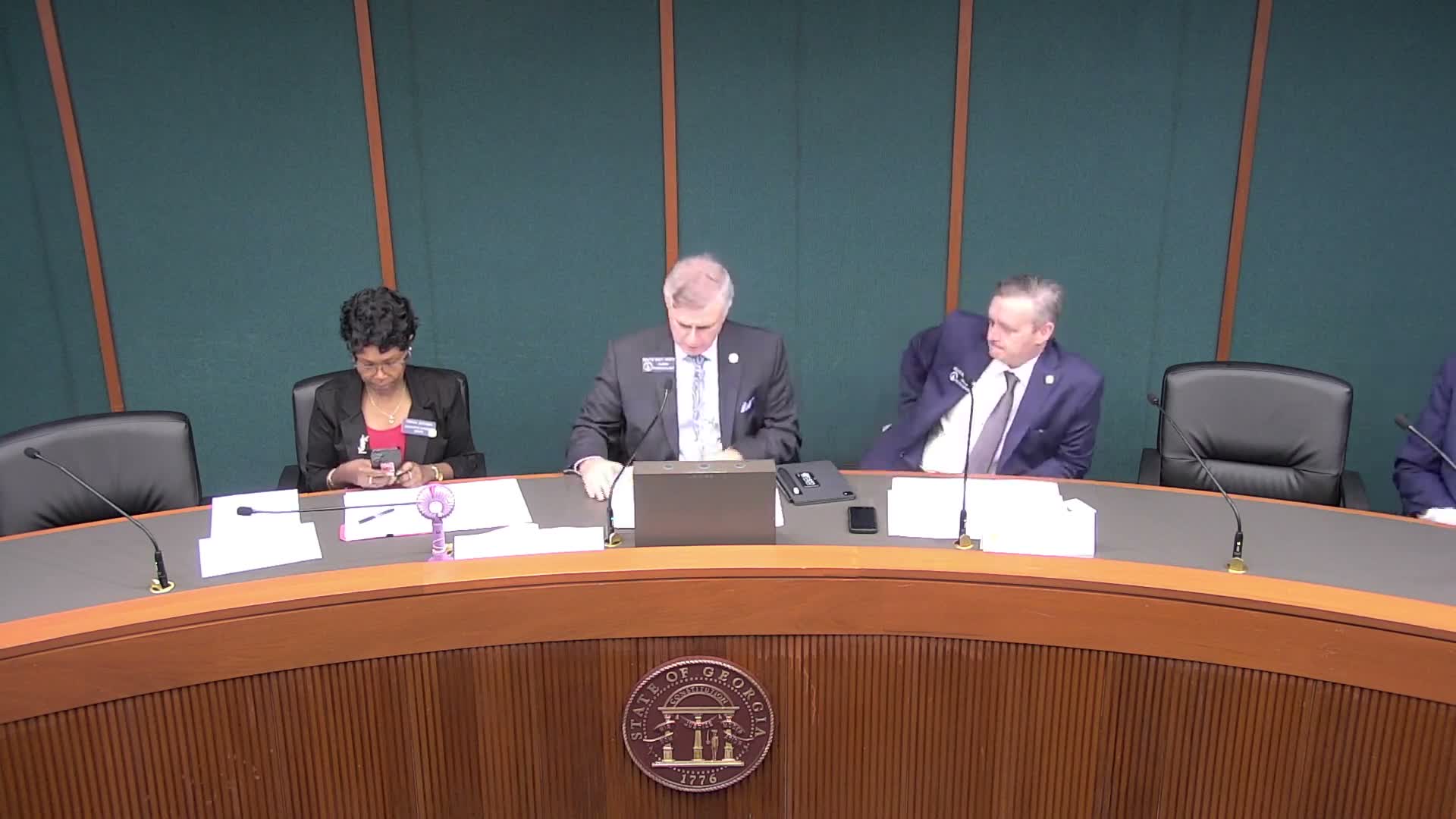
Representative Ballard told the Retirement Committee that House Bill 372 would move the program'sunset to 2030 and preserve the requirement that returning teachers must have 30 years of creditable service and sit out one year before rehiring. "So what House Bill 372 does, it moves out the sunset of the program to 2030," Ballard said, and described changes to give school districts more local control over which subject areas are designated high-need.
Ballard said the bill also protects rehired teachers if a district later removes their subject from a high-need list: districts could retain a teacher they had rehired rather than being required to let that teacher'go. "They can retain you as a teacher because we wanna keep those good teachers in the classroom," Ballard said, describing the change as a way to keep class sizes down and preserve experienced instructors.
Committee members questioned how the program affects retirement credit and benefits. Ballard and committee staff said returning teachers do not earn additional creditable service while rehired, and health coverage would be provided in the same manner as other teachers. Committee staff explained plan mechanics: employees contribute 6 percent; employers contribute about 22.32 percent. When a retiree returns, the employer remains responsible for both portions, so districts do not reduce their retirement payments but can fill vacancies with an experienced teacher.
Ballard and others pointed to the magnitude of staffing gaps as a rationale for the program: he noted that the state currently has about 5,300 teacher vacancies that the program helps address. Advocates from education groups urged a swift resolution because the current authorization expires this year. "There are over 500 educators currently filling hard-to-fill positions," said Margaret Ciccarelli of the Professional Association of Georgia Educators, adding that science, math and special education are most often listed as hard-to-fill.
Committee members pressed on differences with a related Senate bill that would allow return at 25 years and on the penalty structure for earlier retirement. Staff described the retirement penalty as roughly 7 percent per year for years retired earlier than the 30-year benchmark and reiterated that the existing law requires a one-year waiting period before a retiree may return to public-school employment under the program.
The bill was the subject of extended committee questions and testimony; no final action on HB 372 was recorded in the hearing (the measure was described as "hearing only" at this meeting).
Ballard said the bill also protects rehired teachers if a district later removes their subject from a high-need list: districts could retain a teacher they had rehired rather than being required to let that teacher'go. "They can retain you as a teacher because we wanna keep those good teachers in the classroom," Ballard said, describing the change as a way to keep class sizes down and preserve experienced instructors.
Committee members questioned how the program affects retirement credit and benefits. Ballard and committee staff said returning teachers do not earn additional creditable service while rehired, and health coverage would be provided in the same manner as other teachers. Committee staff explained plan mechanics: employees contribute 6 percent; employers contribute about 22.32 percent. When a retiree returns, the employer remains responsible for both portions, so districts do not reduce their retirement payments but can fill vacancies with an experienced teacher.
Ballard and others pointed to the magnitude of staffing gaps as a rationale for the program: he noted that the state currently has about 5,300 teacher vacancies that the program helps address. Advocates from education groups urged a swift resolution because the current authorization expires this year. "There are over 500 educators currently filling hard-to-fill positions," said Margaret Ciccarelli of the Professional Association of Georgia Educators, adding that science, math and special education are most often listed as hard-to-fill.
Committee members pressed on differences with a related Senate bill that would allow return at 25 years and on the penalty structure for earlier retirement. Staff described the retirement penalty as roughly 7 percent per year for years retired earlier than the 30-year benchmark and reiterated that the existing law requires a one-year waiting period before a retiree may return to public-school employment under the program.
The bill was the subject of extended committee questions and testimony; no final action on HB 372 was recorded in the hearing (the measure was described as "hearing only" at this meeting).
View the Full Meeting & All Its Details
This article offers just a summary. Unlock complete video, transcripts, and insights as a Founder Member.
✓
Watch full, unedited meeting videos
✓
Search every word spoken in unlimited transcripts
✓
AI summaries & real-time alerts (all government levels)
✓
Permanent access to expanding government content
30-day money-back guarantee
