Bipartisan call for dedicated water infrastructure revenue provokes debate over a plastic beverage excise
March 10, 2026 | 2026 Legislature MN, Minnesota
This article was created by AI summarizing key points discussed. AI makes mistakes, so for full details and context, please refer to the video of the full meeting. Please report any errors so we can fix them. Report an error »
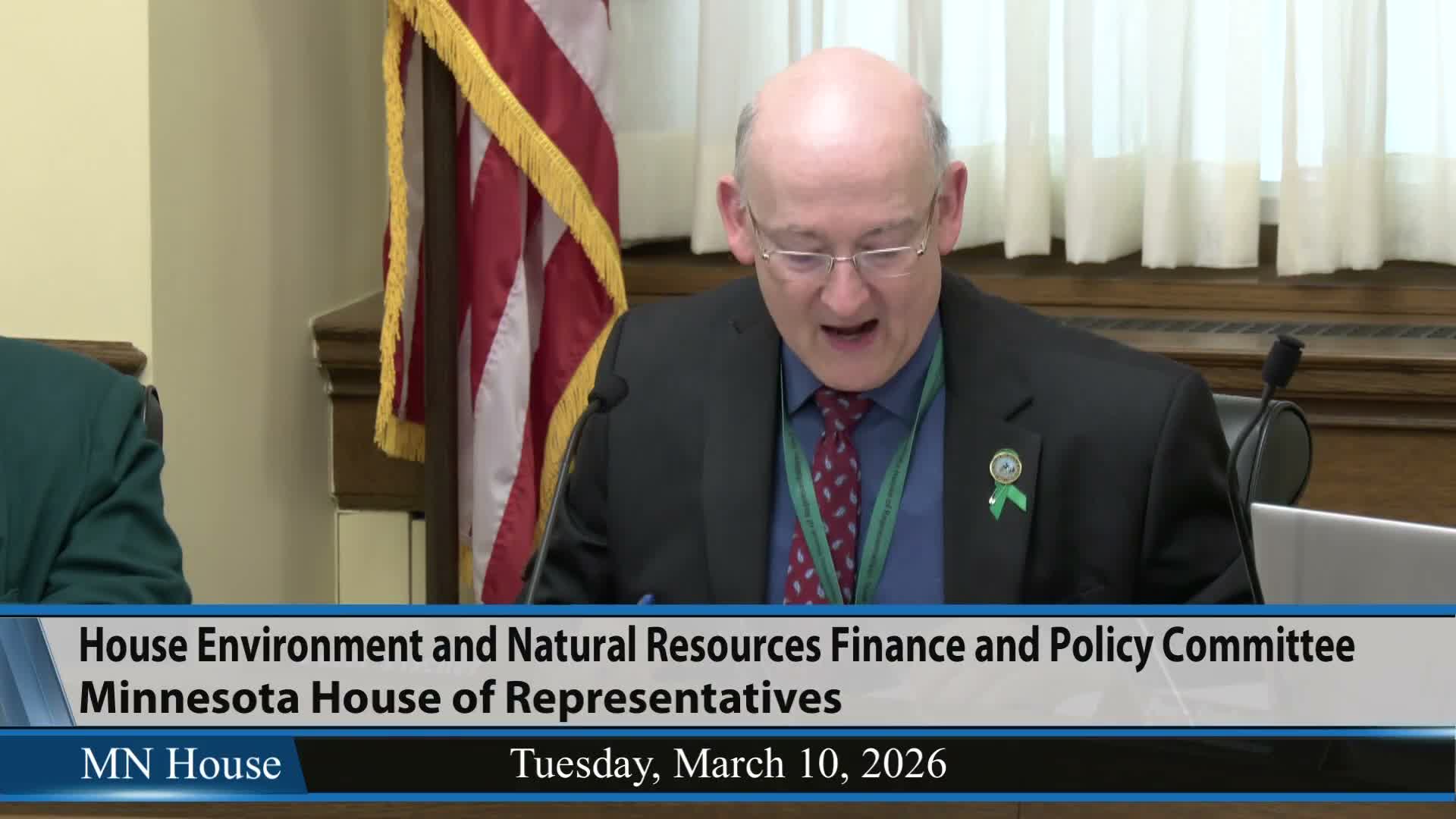
Rep. Franson and Rep. Hansen presented House File 3322 as a proposal to create a dedicated revenue stream for water infrastructure and PFA programs to address an estimated multibillion‑dollar backlog.
"Minnesota faces an estimated $12,000,000,000 in water infrastructure needs over the next 20 years to replace aging ... systems," Rep. Franson said, framing the bill as a conversation starter about new, predictable funding beyond bonding.
Chad Kolstad of the Public Facilities Authority told the committee that Clean Water and Drinking Water State Revolving Fund project lists show multi‑billion‑dollar need increases since 2021 and called for a reliable, consistent funding source. Daniel Locke, finance manager for Brainerd Public Utilities, and Richard Rowland of St. Paul Regional Water Services detailed local project estimates and lead‑service line replacement numbers.
Industry witnesses opposed the proposed distributor‑level plastic beverage excise included in the DE draft. Tim Wilken of the Minnesota Beverage Association called it a double tax that would unfairly burden family‑owned bottlers and consumers and argued polluters who released PFAS should be held accountable instead. "We strongly oppose this tax," Wilken said.
Will Hagen of Minnesota Retailers warned the excise would be passed down to consumers: "That means the tax will ultimately show up in the price consumers pay at the shelf." Committee members asked for revenue estimates and alternatives; Rep. Franson said informal modeling at a 10¢ rate shows roughly $215 million annually but acknowledged the figure is approximate and that more work is needed. The committee laid HF 3322 over for additional drafting and stakeholder outreach.
"Minnesota faces an estimated $12,000,000,000 in water infrastructure needs over the next 20 years to replace aging ... systems," Rep. Franson said, framing the bill as a conversation starter about new, predictable funding beyond bonding.
Chad Kolstad of the Public Facilities Authority told the committee that Clean Water and Drinking Water State Revolving Fund project lists show multi‑billion‑dollar need increases since 2021 and called for a reliable, consistent funding source. Daniel Locke, finance manager for Brainerd Public Utilities, and Richard Rowland of St. Paul Regional Water Services detailed local project estimates and lead‑service line replacement numbers.
Industry witnesses opposed the proposed distributor‑level plastic beverage excise included in the DE draft. Tim Wilken of the Minnesota Beverage Association called it a double tax that would unfairly burden family‑owned bottlers and consumers and argued polluters who released PFAS should be held accountable instead. "We strongly oppose this tax," Wilken said.
Will Hagen of Minnesota Retailers warned the excise would be passed down to consumers: "That means the tax will ultimately show up in the price consumers pay at the shelf." Committee members asked for revenue estimates and alternatives; Rep. Franson said informal modeling at a 10¢ rate shows roughly $215 million annually but acknowledged the figure is approximate and that more work is needed. The committee laid HF 3322 over for additional drafting and stakeholder outreach.
View the Full Meeting & All Its Details
This article offers just a summary. Unlock complete video, transcripts, and insights as a Founder Member.
✓
Watch full, unedited meeting videos
✓
Search every word spoken in unlimited transcripts
✓
AI summaries & real-time alerts (all government levels)
✓
Permanent access to expanding government content
30-day money-back guarantee
