McIntyre highlights literacy pilots, special-education audits and teacher supports as priorities
March 09, 2026 | Wayzata Public School District, School Boards, Minnesota
This article was created by AI summarizing key points discussed. AI makes mistakes, so for full details and context, please refer to the video of the full meeting. Please report any errors so we can fix them. Report an error »
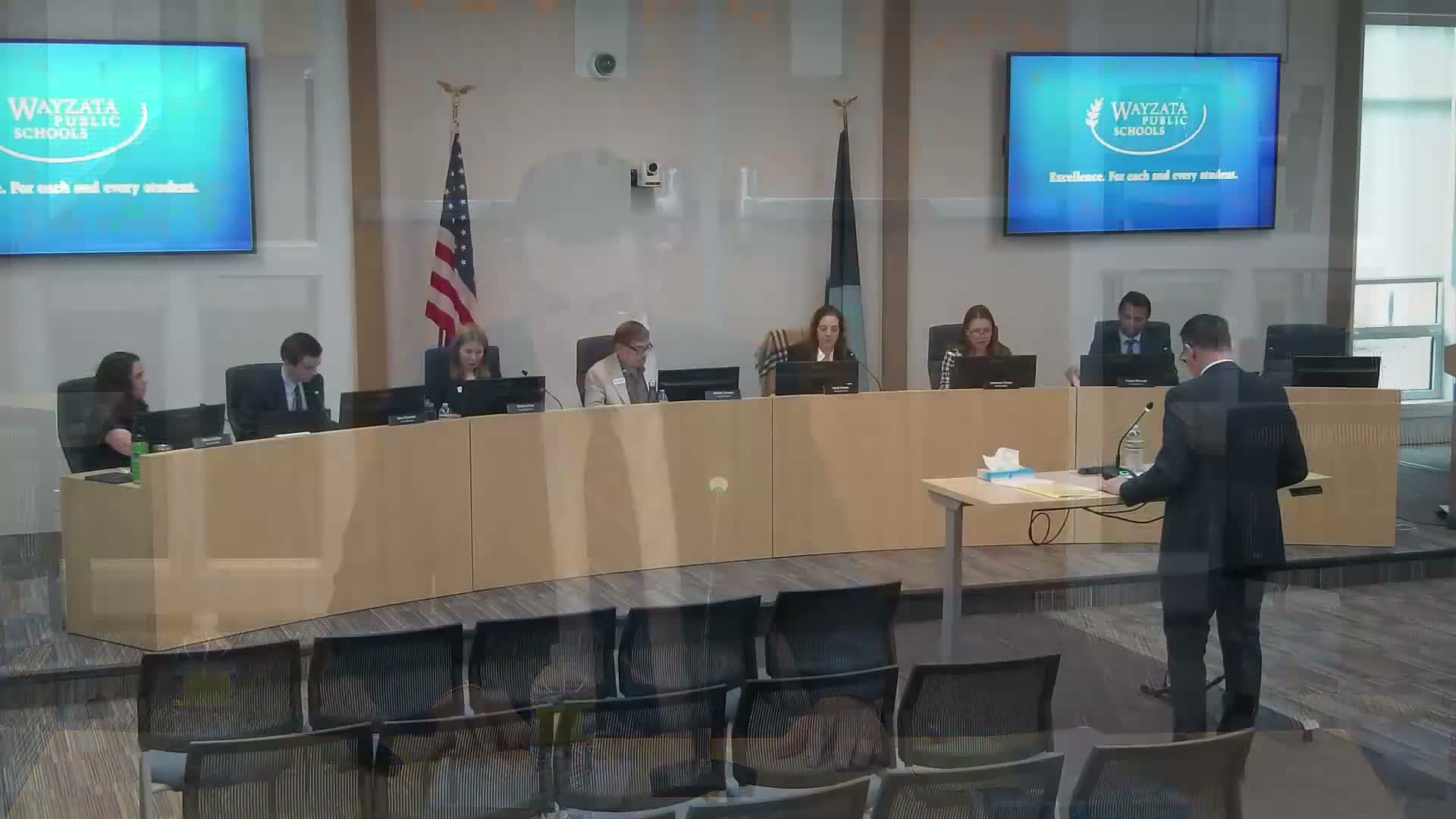
In questioning on instruction and support for students with complex needs, Corey McIntyre emphasized piloting instructional approaches, rigorous measurement and investing in teachers and principals to sustain growth.
On literacy, McIntyre described piloting an instructional program at Monroe Elementary that he said raised performance "by 20% that first year." He distinguished assessment from instruction: FastBridge was named as the assessment tool while Bridge to Read (instruction) and CKLA (Core Knowledge Language Arts) were discussed as parts of an adopted approach. McIntyre said the district used pilots and data (FastBridge and CAPTEE) to evaluate early results before broader adoption: "When you know better, you do better."
Regarding special education, McIntyre highlighted extensive audits and service-delivery redesigns in previous districts, including moving to center-based programs and creating consistent protocols to align services with research and law. He warned that proposed statewide funding changes could force districts to "reimagine what service needs to look like."
On teacher supports, McIntyre advocated tailored professional development rather than one-size-fits-all offerings, partnering with teacher representatives and strengthening principals as instructional leaders to maximize time teachers spend with students.
On literacy, McIntyre described piloting an instructional program at Monroe Elementary that he said raised performance "by 20% that first year." He distinguished assessment from instruction: FastBridge was named as the assessment tool while Bridge to Read (instruction) and CKLA (Core Knowledge Language Arts) were discussed as parts of an adopted approach. McIntyre said the district used pilots and data (FastBridge and CAPTEE) to evaluate early results before broader adoption: "When you know better, you do better."
Regarding special education, McIntyre highlighted extensive audits and service-delivery redesigns in previous districts, including moving to center-based programs and creating consistent protocols to align services with research and law. He warned that proposed statewide funding changes could force districts to "reimagine what service needs to look like."
On teacher supports, McIntyre advocated tailored professional development rather than one-size-fits-all offerings, partnering with teacher representatives and strengthening principals as instructional leaders to maximize time teachers spend with students.
Don't Miss a Word: See the Full Meeting!
Go beyond summaries. Unlock every video, transcript, and key insight with a Founder Membership.
✓
Get instant access to full meeting videos
✓
Search and clip any phrase from complete transcripts
✓
Receive AI-powered summaries & custom alerts
✓
Enjoy lifetime, unrestricted access to government data
30-day money-back guarantee
