Partnership Health Center outlines expanded services, mobile response and school-based care in Missoula forum
March 10, 2026 | Missoula, Missoula County, Montana
This article was created by AI summarizing key points discussed. AI makes mistakes, so for full details and context, please refer to the video of the full meeting. Please report any errors so we can fix them. Report an error »
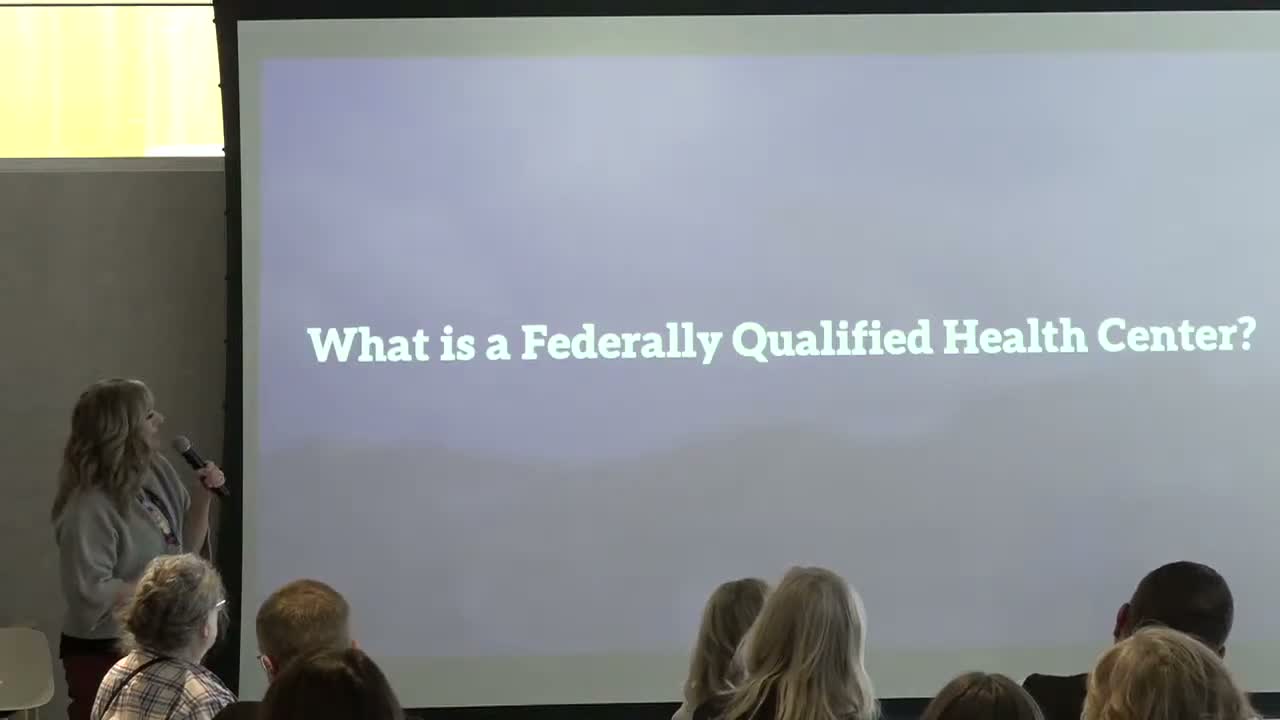
At a City Club Missoula forum, Lara Salazar, chief executive officer of Partnership Health Center, described the center’s mission to provide "whole person" care in Missoula and surrounding communities and said the center accepts patients regardless of ability to pay.
"We accept everyone regardless of ability to pay," Salazar said, explaining the federal FQHC model and the Section 330 grant that helps centers serve patients with no ability to pay.
Marge Bach, Partnership's chief operating officer, outlined local services including medical care across the life span, dental services, an on-site 340B pharmacy and an in-person insurance enrollment program. Bach said PHC served "over 18,000 patients in this community" and employs roughly 55 providers.
Dr. James Quirk, PHC’s chief medical officer, described several community-facing programs: school-based behavioral health that delivers care where students are, a mobile support team developed in partnership with the fire department to de-escalate 911 calls and reduce time police and emergency departments spend on-site, a Watershed navigation center co-located with permanent supportive housing, and street-medicine community care teams.
Quirk said the mobile support team aims to provide alternatives to emergency transport or arrest and has reduced on-scene time for public-safety responders in pilot work. "These guys will respond, and they do it in a way that is really good at deescalating what's actually happening in that moment," Quirk said.
Panelists also discussed workforce training: PHC partners with the Western Montana family medicine residency, and Bach said 60 to 70 percent of those residents remain in Montana after training.
On technology, Quirk said new tools built into the Epic electronic medical record can generate concise summaries for clinicians, reducing time spent on documentation. He warned, however, that the same AI tools could be used by insurers in ways that complicate care and denials.
Panelists took audience questions about how services reach rural areas, telehealth and mobile options, and emphasized that PHC’s model combines clinical care with social supports such as tenancy assistance and enrollment support to address social determinants of health.
The forum was recorded by MCAT and the panelists encouraged collaboration with local partners, including the library and other community organizations, to help residents navigate eligibility and access programs. The session closed with an announcement of the next City Club event and registration details.
"We accept everyone regardless of ability to pay," Salazar said, explaining the federal FQHC model and the Section 330 grant that helps centers serve patients with no ability to pay.
Marge Bach, Partnership's chief operating officer, outlined local services including medical care across the life span, dental services, an on-site 340B pharmacy and an in-person insurance enrollment program. Bach said PHC served "over 18,000 patients in this community" and employs roughly 55 providers.
Dr. James Quirk, PHC’s chief medical officer, described several community-facing programs: school-based behavioral health that delivers care where students are, a mobile support team developed in partnership with the fire department to de-escalate 911 calls and reduce time police and emergency departments spend on-site, a Watershed navigation center co-located with permanent supportive housing, and street-medicine community care teams.
Quirk said the mobile support team aims to provide alternatives to emergency transport or arrest and has reduced on-scene time for public-safety responders in pilot work. "These guys will respond, and they do it in a way that is really good at deescalating what's actually happening in that moment," Quirk said.
Panelists also discussed workforce training: PHC partners with the Western Montana family medicine residency, and Bach said 60 to 70 percent of those residents remain in Montana after training.
On technology, Quirk said new tools built into the Epic electronic medical record can generate concise summaries for clinicians, reducing time spent on documentation. He warned, however, that the same AI tools could be used by insurers in ways that complicate care and denials.
Panelists took audience questions about how services reach rural areas, telehealth and mobile options, and emphasized that PHC’s model combines clinical care with social supports such as tenancy assistance and enrollment support to address social determinants of health.
The forum was recorded by MCAT and the panelists encouraged collaboration with local partners, including the library and other community organizations, to help residents navigate eligibility and access programs. The session closed with an announcement of the next City Club event and registration details.
Don't Miss a Word: See the Full Meeting!
Go beyond summaries. Unlock every video, transcript, and key insight with a Founder Membership.
✓
Get instant access to full meeting videos
✓
Search and clip any phrase from complete transcripts
✓
Receive AI-powered summaries & custom alerts
✓
Enjoy lifetime, unrestricted access to government data
30-day money-back guarantee
