Committee approves doubling annual cap for historic rehabilitation tax credit with drafting fixes
March 10, 2026 | Economic Development and Tourism, SENATE, Committees, Legislative, Georgia
This article was created by AI summarizing key points discussed. AI makes mistakes, so for full details and context, please refer to the video of the full meeting. Please report any errors so we can fix them. Report an error »
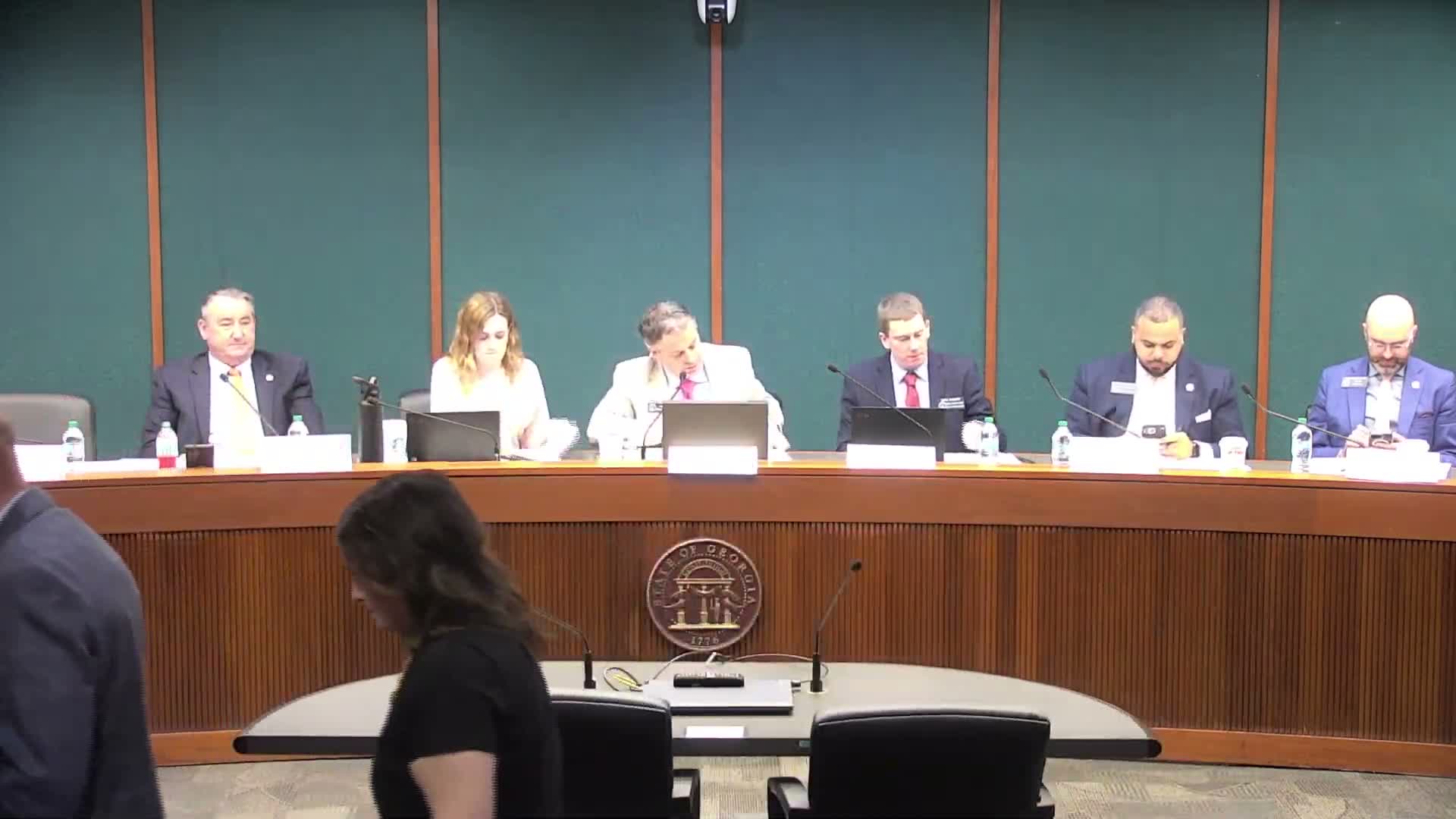
Representative Hilton presented House Bill 376 to raise the annual cap for Georgia's historic rehabilitation tax credit from $30 million to $60 million and to adjust credit percentages: preserve 25% for previously issued credits, increase incentives for qualifying rural structures to 30%, and set a 20% figure for denser areas. The sponsor framed the change as a tool to spur downtown revitalization and rural investment.
Wright Mitchell, president and CEO of the Georgia Trust for Historic Preservation, testified the existing program is effectively unusable because the cap has been reached, and supported doubling the cap and adding the rural incentive to reactivate dormant projects. Committee members questioned how demand would be allocated, noting the program operates on a largely first-come, first-served basis; the sponsor pointed to statutory caps on individual projects (up to $15,000,000 under the bill) and eligibility criteria tied to job or payroll thresholds for larger allocations.
The Department of Revenue's government affairs director, Joe Snald, asked for two administrative edits for clarity and administration: change the word 'issued' on certain lines to 'approved' (because credits are preapproved by the Department of Community Affairs) and align several dates so tax-year applicability is clear (proposed change to make the act apply to tax years beginning on or after July 1, 2026, or alternatively change specific dates to 2027). Sponsor counsel and the committee worked to a compromise, and the Johns Creek omnibus amendment (as offered in committee) made the requested edits.
After adopting the drafting amendment on a voice vote, a member moved and the committee passed HB 376 as amended. Members asked staff for additional data on recent claims and project sizes; the transcript shows committee support and a vote to advance the bill but does not include a roll-call tally of member names in the record.
Next steps for the bill include incorporation of the committee amendment language and continued procedural consideration in the General Assembly.
Wright Mitchell, president and CEO of the Georgia Trust for Historic Preservation, testified the existing program is effectively unusable because the cap has been reached, and supported doubling the cap and adding the rural incentive to reactivate dormant projects. Committee members questioned how demand would be allocated, noting the program operates on a largely first-come, first-served basis; the sponsor pointed to statutory caps on individual projects (up to $15,000,000 under the bill) and eligibility criteria tied to job or payroll thresholds for larger allocations.
The Department of Revenue's government affairs director, Joe Snald, asked for two administrative edits for clarity and administration: change the word 'issued' on certain lines to 'approved' (because credits are preapproved by the Department of Community Affairs) and align several dates so tax-year applicability is clear (proposed change to make the act apply to tax years beginning on or after July 1, 2026, or alternatively change specific dates to 2027). Sponsor counsel and the committee worked to a compromise, and the Johns Creek omnibus amendment (as offered in committee) made the requested edits.
After adopting the drafting amendment on a voice vote, a member moved and the committee passed HB 376 as amended. Members asked staff for additional data on recent claims and project sizes; the transcript shows committee support and a vote to advance the bill but does not include a roll-call tally of member names in the record.
Next steps for the bill include incorporation of the committee amendment language and continued procedural consideration in the General Assembly.
View the Full Meeting & All Its Details
This article offers just a summary. Unlock complete video, transcripts, and insights as a Founder Member.
✓
Watch full, unedited meeting videos
✓
Search every word spoken in unlimited transcripts
✓
AI summaries & real-time alerts (all government levels)
✓
Permanent access to expanding government content
30-day money-back guarantee
