Committee advances proposals to strengthen firearm surrender and compliance hearings in domestic-abuse cases
March 10, 2026 | 2026 Legislature MN, Minnesota
This article was created by AI summarizing key points discussed. AI makes mistakes, so for full details and context, please refer to the video of the full meeting. Please report any errors so we can fix them. Report an error »
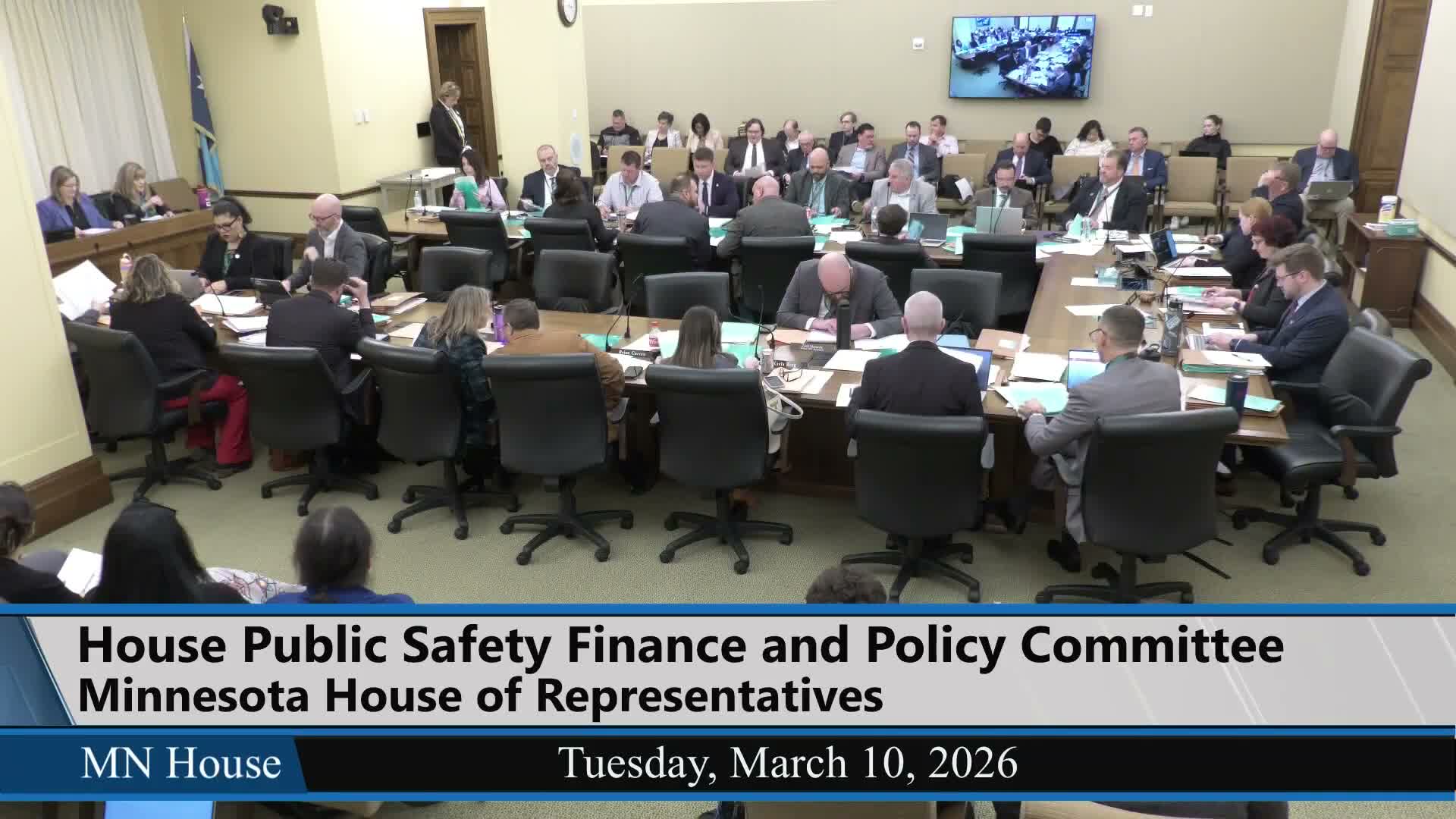
Committee members heard two related bills aimed at ensuring firearms are actually removed from people subject to domestic‑abuse orders and at clarifying the processes law enforcement and courts should follow.
Chair Scott told the committee her bill would create a follow‑up compliance hearing so courts can verify that firearms ordered to be surrendered have actually been transferred or otherwise disposed of. She cited data from materials in the members’ packet indicating a disparity between orders and recorded transfers: "Our analysis revealed that there were 94,598 cases in Hennepin County... there were 2,937 OFP cases statewide automatically requiring gun transfers. Only 119 of them had a firearm transfer affidavit in with the court," she said as she presented the need for compliance hearings to ensure surrender actually occurs.
Chair Mueller and others described complementary changes, including required proof of transfer within a shortened timeframe (24 hours for transfers to law enforcement or a federally licensed dealer in the sponsor’s version), elimination of some loopholes that limited the scope of prohibited firearms, and a process for search warrants if firearms are not surrendered.
Jeff Potts, executive director of the Minnesota Chiefs of Police Association, supported the objective but cautioned that dispossessing and storing tens of thousands of firearms would impose substantial local costs. He urged legislative consideration of a statewide firearms‑surrender fund to reimburse agencies for processing, storing and securing weapons, echoing task‑force recommendations cited in the packet.
Committee action: the committee adopted author’s amendments and re‑referred both House File 4075 (as amended) and House File 391 (as amended) to the judiciary, finance and civil law committee for further work.
Chair Scott told the committee her bill would create a follow‑up compliance hearing so courts can verify that firearms ordered to be surrendered have actually been transferred or otherwise disposed of. She cited data from materials in the members’ packet indicating a disparity between orders and recorded transfers: "Our analysis revealed that there were 94,598 cases in Hennepin County... there were 2,937 OFP cases statewide automatically requiring gun transfers. Only 119 of them had a firearm transfer affidavit in with the court," she said as she presented the need for compliance hearings to ensure surrender actually occurs.
Chair Mueller and others described complementary changes, including required proof of transfer within a shortened timeframe (24 hours for transfers to law enforcement or a federally licensed dealer in the sponsor’s version), elimination of some loopholes that limited the scope of prohibited firearms, and a process for search warrants if firearms are not surrendered.
Jeff Potts, executive director of the Minnesota Chiefs of Police Association, supported the objective but cautioned that dispossessing and storing tens of thousands of firearms would impose substantial local costs. He urged legislative consideration of a statewide firearms‑surrender fund to reimburse agencies for processing, storing and securing weapons, echoing task‑force recommendations cited in the packet.
Committee action: the committee adopted author’s amendments and re‑referred both House File 4075 (as amended) and House File 391 (as amended) to the judiciary, finance and civil law committee for further work.
Don't Miss a Word: See the Full Meeting!
Go beyond summaries. Unlock every video, transcript, and key insight with a Founder Membership.
✓
Get instant access to full meeting videos
✓
Search and clip any phrase from complete transcripts
✓
Receive AI-powered summaries & custom alerts
✓
Enjoy lifetime, unrestricted access to government data
30-day money-back guarantee
