Land conservation in Montana: Bruce Bugbee on easements, local action and permanence
March 09, 2026 | Missoula, Missoula County, Montana
This article was created by AI summarizing key points discussed. AI makes mistakes, so for full details and context, please refer to the video of the full meeting. Please report any errors so we can fix them. Report an error »
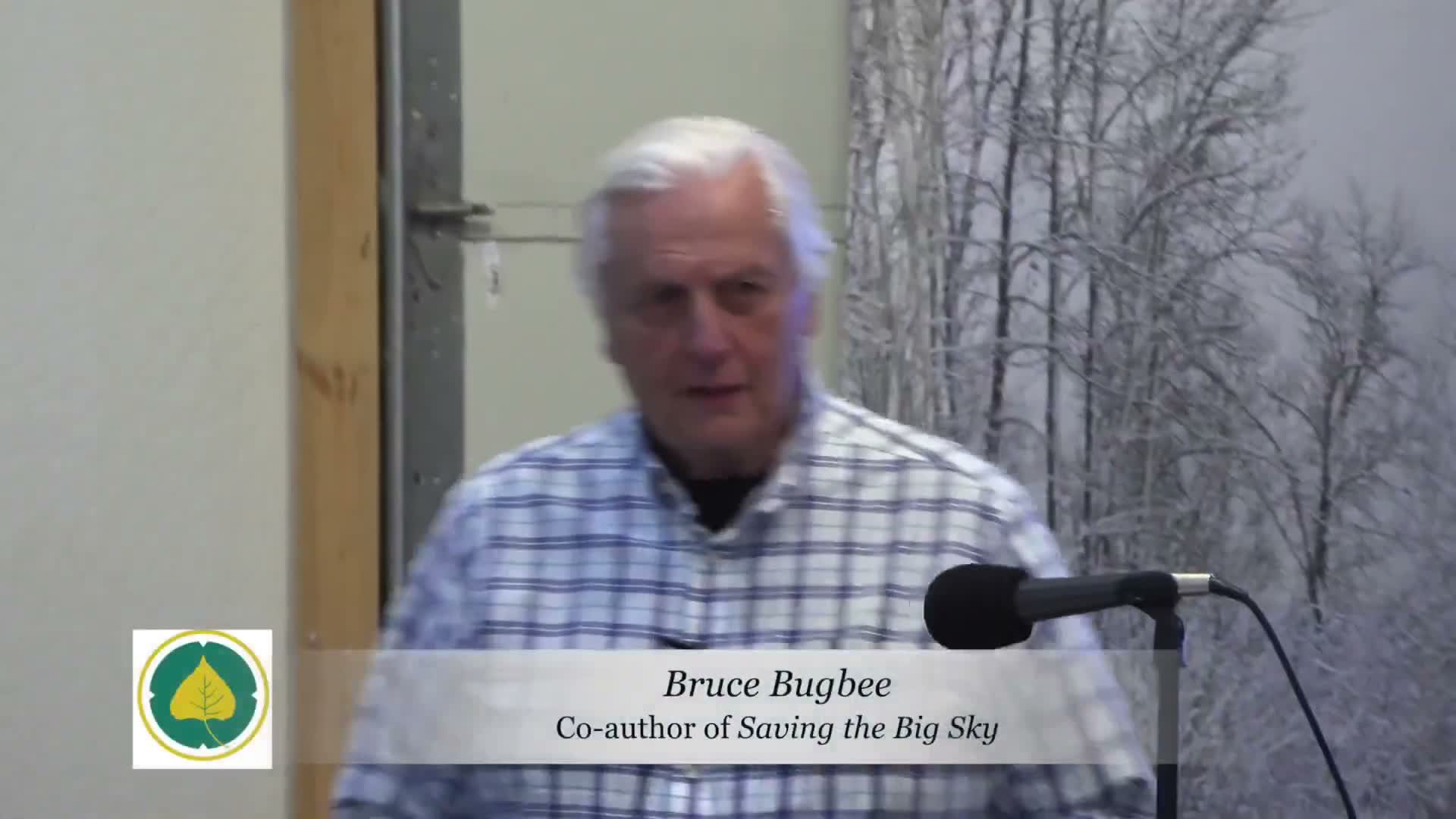
Bruce Bugbee, a land conservation consultant and founder of American Public Land Exchange, told a Travelers' Rest audience in Missoula that Montana's conservation story rests largely on voluntary private transactions and sustained local partnerships. "In 1975, the Montana legislature passed an enabling act for conservation easements," he said, and those legal tools helped expand protection of ranches, river corridors and wildlife habitat across the state.
Bugbee framed the work as both a legal and cultural practice: conservation easements are negotiated agreements that limit development while letting landowners retain ownership and many uses. "The landowner still owns the land," he said. "It runs with the land and is intended to run forever." He emphasized that public access is not automatic; easement terms and public-access requirements are defined in each agreement and, in many Fish, Wildlife and Parks easements, hunting and fishing access reflect the program's funding sources.
Putting numbers to his account, Bugbee said roughly "3 and a half million acres under conservation easement, that's probably closer to 4,000,000 now," plus about 2.5 million acres purchased outright, giving Montana a large share of U.S. private-land conservation. He cited regional examples from his slides: Missoula-area river corridors, the Rattlesnake Valley (93% conserved, much of it in public ownership) and new easements in the Blackfoot, including a recent roughly 1,800-acre addition.
Bugbee described how conservation works in practice: many landowners decide to sign easements for reasons ranging from legacy to economic planning. He outlined financing mechanisms, including conservation payments and tax-deferred exchanges that let ranchers reinvest proceeds in remaining deeded land. He also credited national organizations'including The Nature Conservancy, Trust for Public Land and the Rocky Mountain Elk Foundation'for fundraising that created incentives for private owners to conserve.
He urged early engagement: easements are most successful when landowners and land trusts plan ahead of intense development pressure. "They work best when thought through well ahead of those things," he said, noting subdivision pressure and demographic shifts (new residents and retirees) have driven recent demand for development in valley floors.
Bugbee also addressed political and funding limits. He said some funding streams that previously supported easement purchases have been reduced, citing offshore drilling revenues as one source that has been redirected and has made acquisitions more difficult. He said public-land designations and Forest Service management have been effective conservation tools, but that federal wilderness and similar processes often produce long, polarized public debates that can stall action.
During a question-and-answer period, audience members pressed on federal policy and legal durability. Asked about efforts to change wilderness protections, Bugbee said the most visible proposals had arisen in Utah and described the idea of transferring protected lands for housing as "sort of nonsensical," while acknowledging such proposals could still generate lengthy controversy. On permanence, Bugbee explained what keeps easements in force: accredited land trusts monitor easements annually, easements appear in title reports and are meant to run with the land, and there are legal procedures to assign stewardship if a land trust dissolves.
Bugbee closed by urging the audience to share stories with landowners, support local open-space bonds and, if interested, consider buying the book he co-authored, which documents regional conservation history and contributors. The session concluded with housekeeping announcements about upcoming Travelers' Rest presentations and book sales in the lobby.
Bugbee framed the work as both a legal and cultural practice: conservation easements are negotiated agreements that limit development while letting landowners retain ownership and many uses. "The landowner still owns the land," he said. "It runs with the land and is intended to run forever." He emphasized that public access is not automatic; easement terms and public-access requirements are defined in each agreement and, in many Fish, Wildlife and Parks easements, hunting and fishing access reflect the program's funding sources.
Putting numbers to his account, Bugbee said roughly "3 and a half million acres under conservation easement, that's probably closer to 4,000,000 now," plus about 2.5 million acres purchased outright, giving Montana a large share of U.S. private-land conservation. He cited regional examples from his slides: Missoula-area river corridors, the Rattlesnake Valley (93% conserved, much of it in public ownership) and new easements in the Blackfoot, including a recent roughly 1,800-acre addition.
Bugbee described how conservation works in practice: many landowners decide to sign easements for reasons ranging from legacy to economic planning. He outlined financing mechanisms, including conservation payments and tax-deferred exchanges that let ranchers reinvest proceeds in remaining deeded land. He also credited national organizations'including The Nature Conservancy, Trust for Public Land and the Rocky Mountain Elk Foundation'for fundraising that created incentives for private owners to conserve.
He urged early engagement: easements are most successful when landowners and land trusts plan ahead of intense development pressure. "They work best when thought through well ahead of those things," he said, noting subdivision pressure and demographic shifts (new residents and retirees) have driven recent demand for development in valley floors.
Bugbee also addressed political and funding limits. He said some funding streams that previously supported easement purchases have been reduced, citing offshore drilling revenues as one source that has been redirected and has made acquisitions more difficult. He said public-land designations and Forest Service management have been effective conservation tools, but that federal wilderness and similar processes often produce long, polarized public debates that can stall action.
During a question-and-answer period, audience members pressed on federal policy and legal durability. Asked about efforts to change wilderness protections, Bugbee said the most visible proposals had arisen in Utah and described the idea of transferring protected lands for housing as "sort of nonsensical," while acknowledging such proposals could still generate lengthy controversy. On permanence, Bugbee explained what keeps easements in force: accredited land trusts monitor easements annually, easements appear in title reports and are meant to run with the land, and there are legal procedures to assign stewardship if a land trust dissolves.
Bugbee closed by urging the audience to share stories with landowners, support local open-space bonds and, if interested, consider buying the book he co-authored, which documents regional conservation history and contributors. The session concluded with housekeeping announcements about upcoming Travelers' Rest presentations and book sales in the lobby.
View the Full Meeting & All Its Details
This article offers just a summary. Unlock complete video, transcripts, and insights as a Founder Member.
✓
Watch full, unedited meeting videos
✓
Search every word spoken in unlimited transcripts
✓
AI summaries & real-time alerts (all government levels)
✓
Permanent access to expanding government content
30-day money-back guarantee
