Former speaker Kurt Dowd says periodic data‑matching program was not reinstated after COVID; lawmakers plan to press for reporting
March 09, 2026 | 2026 Legislature MN, Minnesota
This article was created by AI summarizing key points discussed. AI makes mistakes, so for full details and context, please refer to the video of the full meeting. Please report any errors so we can fix them. Report an error »
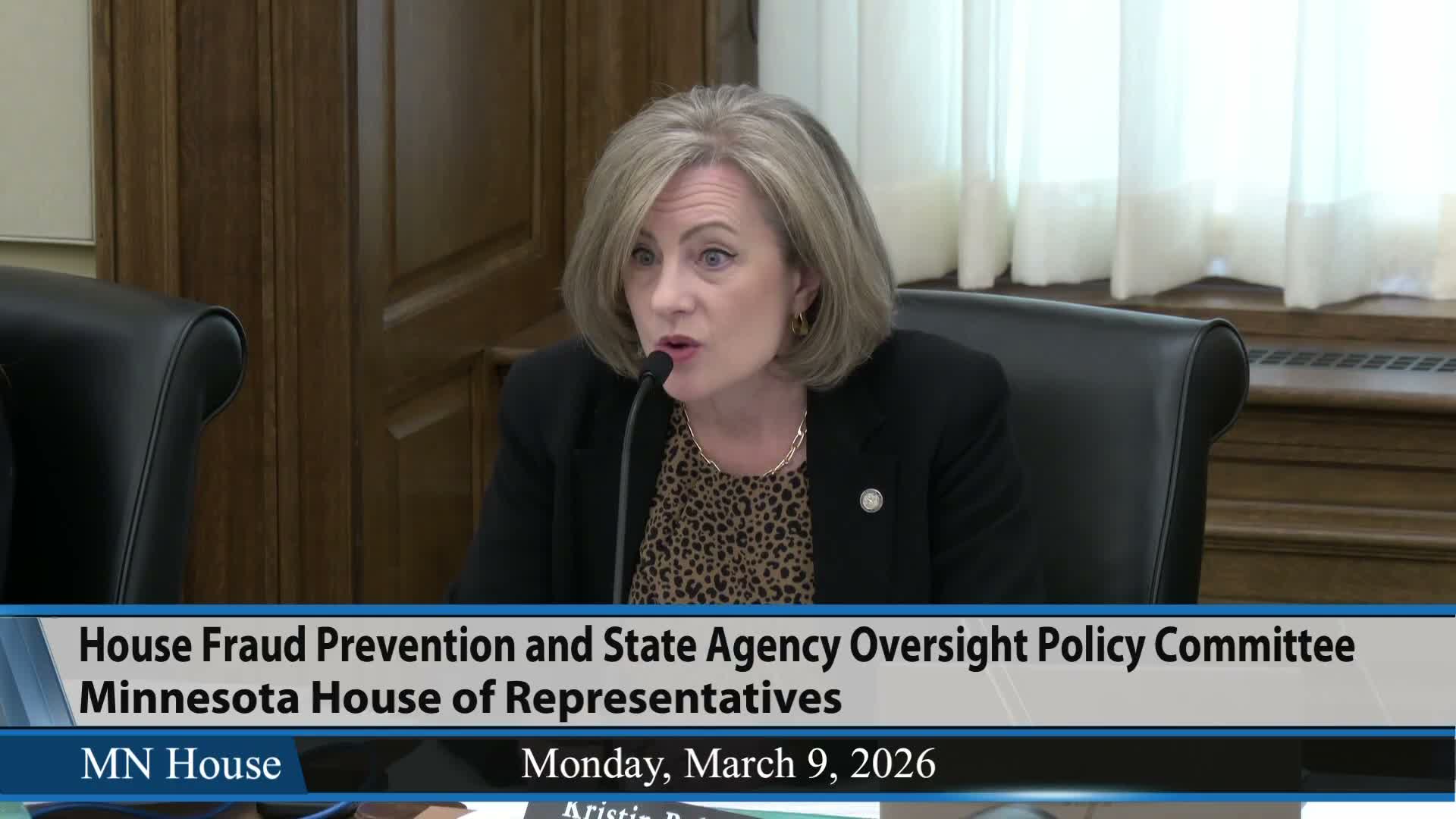
Former speaker Kurt Dowd told the House Prevention and State Agency Oversight Committee that the periodic data‑matching program enacted in 2015 was implemented in 2018–2019, produced statutory reports in 2019 and 2020, and was not reinstated after the COVID‑19 emergency despite the statute remaining in force.
Dowd summarized the program's published results: the first report selected about 580,000 enrollees for checks, identified "a little over 68,000 individuals" as possibly ineligible and resulted in 22,990 terminations after the 30‑day verification window. He said that across the program's operational period roughly 37,552 ineligible people were permanently removed from public programs and called those removals a success for protecting program dollars.
"This program was never reinstated after COVID," Dowd said, urging the legislature to remove a statutory sunset and to add enforcement mechanisms so the administration cannot fail to run mandated checks. He urged lawmakers to use appropriation levers and reporting requirements to compel compliance.
Representative Lee Pinto and others noted that many of those flagged by the checks were later found to be eligible after follow‑up and that a large share did not respond to notices; lawmakers discussed the program's tradeoffs between catching ineligible recipients and the effects on low‑income people who may have difficulty responding to notices.
Representative Elkins raised a technical point that the 2019–2020 reports covered populations administered through the METS eligibility system and did not include programs still on the older MAXIS system, which limits the program's reach until legacy systems are modernized.
Committee members said a bill to repeal the sunset and add "teeth" to the reporting requirement would be introduced and pursued in the coming days; DHS did not appear at the hearing to explain why the program was not restarted.
Dowd summarized the program's published results: the first report selected about 580,000 enrollees for checks, identified "a little over 68,000 individuals" as possibly ineligible and resulted in 22,990 terminations after the 30‑day verification window. He said that across the program's operational period roughly 37,552 ineligible people were permanently removed from public programs and called those removals a success for protecting program dollars.
"This program was never reinstated after COVID," Dowd said, urging the legislature to remove a statutory sunset and to add enforcement mechanisms so the administration cannot fail to run mandated checks. He urged lawmakers to use appropriation levers and reporting requirements to compel compliance.
Representative Lee Pinto and others noted that many of those flagged by the checks were later found to be eligible after follow‑up and that a large share did not respond to notices; lawmakers discussed the program's tradeoffs between catching ineligible recipients and the effects on low‑income people who may have difficulty responding to notices.
Representative Elkins raised a technical point that the 2019–2020 reports covered populations administered through the METS eligibility system and did not include programs still on the older MAXIS system, which limits the program's reach until legacy systems are modernized.
Committee members said a bill to repeal the sunset and add "teeth" to the reporting requirement would be introduced and pursued in the coming days; DHS did not appear at the hearing to explain why the program was not restarted.
View the Full Meeting & All Its Details
This article offers just a summary. Unlock complete video, transcripts, and insights as a Founder Member.
✓
Watch full, unedited meeting videos
✓
Search every word spoken in unlimited transcripts
✓
AI summaries & real-time alerts (all government levels)
✓
Permanent access to expanding government content
30-day money-back guarantee
