Appropriations Committee reviews H.632 environmental amendments; staff warn of delayed permit fees and CAFO deadline push
March 10, 2026 | Appropriations, HOUSE OF REPRESENTATIVES, Committees, Legislative , Vermont
This article was created by AI summarizing key points discussed. AI makes mistakes, so for full details and context, please refer to the video of the full meeting. Please report any errors so we can fix them. Report an error »
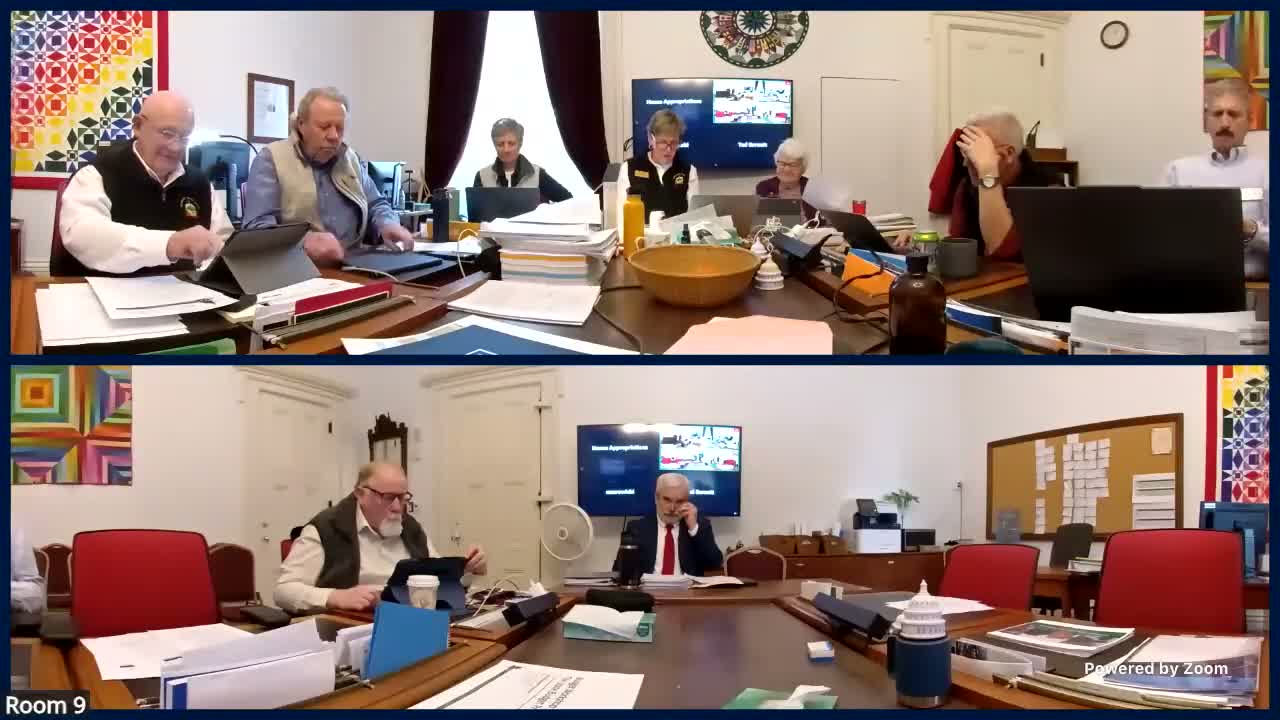
The Appropriations Committee on March 9 heard a detailed walkthrough of H.632, a miscellaneous environmental bill that would shift responsibilities and extend multiple regulatory deadlines, potentially delaying permit-fee revenue to later fiscal years.
Legislative Council analyst Michael Grady reviewed the bill section by section. He said Section 1 transfers responsibility for a difficult-to-recycle battery report from ANR to the product stewardship organization that runs the battery extended producer responsibility program and gives that organization an extra year to complete the report. "They want an extra year in which to do it," Grady said.
The committee was told Section 2 changes inspection standards for Category 1 underground storage (motor fuel) tanks to make routine inspections easier for ANR. Section 3 clarifies that personal applicant information provided under the ARPA-funded Healthy Homes Initiative is confidential and exempt from public-records disclosure, aligning state practice with federal privacy requirements.
Sections 4–7 would postpone multiple permitting deadlines tied to the 2024 flood-safety law — particularly those for river-corridor protections — by roughly a year, delaying realization of related permit fees. Grady said the state has not yet set the permit fees, so the committee does not know the magnitude of lost revenue. "You don't know what you would be losing," he said, noting fee revenues would not be realized for an additional year.
Sections 10–15 implement adjustments requested by the U.S. Environmental Protection Agency concerning concentrated animal feeding operations. Grady said ANR and the Agency of Agriculture asked to move the date for CAFO discharge permits to 09/01/2027 to allow more time for public participation and stakeholder consensus. Grady described the delay as tied to the public process rather than staffing shortages.
Section 16 would require notice to applicants when dam removal is an appropriate alternative during dam permitting. Sections 17–18 amend the Administrative Procedure Act to add a third category of emergency rulemaking so agencies can temporarily preserve state rules that cross-reference federal rules if the federal rules are rapidly repealed or changed; that authority would sunset on 07/01/2028 unless extended. Grady framed the change as a "bridge and a safety net" to prevent state programs that rely on federal cross references from "falling apart" if federal rules change.
On waste tires, Sections 19–20 authorize municipal enforcement against unauthorized waste-tire haulers and create a stakeholder process to consider producer-responsibility approaches or per-tire fees. Grady noted past dealer concerns about competitive disadvantages with neighboring states.
Section 21 addresses an emissions-inspection repair assistance program. Grady said the proposal moves eligibility from LIHEAP-based criteria to explicit monetary thresholds to simplify administrative determinations as DMV waiver authority expires. Members noted the program has had very low take-up; Grady and others said three repair-voucher awards have been made since the program began in 2021. "There have been 3 that have been given out, thus far since 2021," Ted Barnett of the Joint Fiscal Office said.
Barnett summarized the fiscal note: postponing river-corridor permit implementation would shift fee-revenue realization into later fiscal years (a cited example moved realization from fiscal year 2029 to fiscal year 2030), and the CAFO permit extension would move the discharge-permit date to 09/01/2027; overall projected fiscal impacts were uncertain because fees have not been set and it is unclear which farms would require federal discharge permits. On the emissions-repair assistance program, Barnett said administrative simplification could broaden access but that so far the program’s fiscal footprint has been minor.
Committee members pressed staff on who sets fees (DEC recommends but the general assembly approves), whether DEC has begun rule and fee work (staff said rule work has started), and whether river-corridor development would generate substantial fees. Members expressed skepticism that the corridor permitting will produce large developer-driven revenues given flood-risk constraints and insurance requirements.
No vote was taken; the committee concluded the walkthrough and recessed to take up a parole-board item later in the afternoon. The committee said it expects further discussion of the bill and its fiscal implications before any formal action.
Legislative Council analyst Michael Grady reviewed the bill section by section. He said Section 1 transfers responsibility for a difficult-to-recycle battery report from ANR to the product stewardship organization that runs the battery extended producer responsibility program and gives that organization an extra year to complete the report. "They want an extra year in which to do it," Grady said.
The committee was told Section 2 changes inspection standards for Category 1 underground storage (motor fuel) tanks to make routine inspections easier for ANR. Section 3 clarifies that personal applicant information provided under the ARPA-funded Healthy Homes Initiative is confidential and exempt from public-records disclosure, aligning state practice with federal privacy requirements.
Sections 4–7 would postpone multiple permitting deadlines tied to the 2024 flood-safety law — particularly those for river-corridor protections — by roughly a year, delaying realization of related permit fees. Grady said the state has not yet set the permit fees, so the committee does not know the magnitude of lost revenue. "You don't know what you would be losing," he said, noting fee revenues would not be realized for an additional year.
Sections 10–15 implement adjustments requested by the U.S. Environmental Protection Agency concerning concentrated animal feeding operations. Grady said ANR and the Agency of Agriculture asked to move the date for CAFO discharge permits to 09/01/2027 to allow more time for public participation and stakeholder consensus. Grady described the delay as tied to the public process rather than staffing shortages.
Section 16 would require notice to applicants when dam removal is an appropriate alternative during dam permitting. Sections 17–18 amend the Administrative Procedure Act to add a third category of emergency rulemaking so agencies can temporarily preserve state rules that cross-reference federal rules if the federal rules are rapidly repealed or changed; that authority would sunset on 07/01/2028 unless extended. Grady framed the change as a "bridge and a safety net" to prevent state programs that rely on federal cross references from "falling apart" if federal rules change.
On waste tires, Sections 19–20 authorize municipal enforcement against unauthorized waste-tire haulers and create a stakeholder process to consider producer-responsibility approaches or per-tire fees. Grady noted past dealer concerns about competitive disadvantages with neighboring states.
Section 21 addresses an emissions-inspection repair assistance program. Grady said the proposal moves eligibility from LIHEAP-based criteria to explicit monetary thresholds to simplify administrative determinations as DMV waiver authority expires. Members noted the program has had very low take-up; Grady and others said three repair-voucher awards have been made since the program began in 2021. "There have been 3 that have been given out, thus far since 2021," Ted Barnett of the Joint Fiscal Office said.
Barnett summarized the fiscal note: postponing river-corridor permit implementation would shift fee-revenue realization into later fiscal years (a cited example moved realization from fiscal year 2029 to fiscal year 2030), and the CAFO permit extension would move the discharge-permit date to 09/01/2027; overall projected fiscal impacts were uncertain because fees have not been set and it is unclear which farms would require federal discharge permits. On the emissions-repair assistance program, Barnett said administrative simplification could broaden access but that so far the program’s fiscal footprint has been minor.
Committee members pressed staff on who sets fees (DEC recommends but the general assembly approves), whether DEC has begun rule and fee work (staff said rule work has started), and whether river-corridor development would generate substantial fees. Members expressed skepticism that the corridor permitting will produce large developer-driven revenues given flood-risk constraints and insurance requirements.
No vote was taken; the committee concluded the walkthrough and recessed to take up a parole-board item later in the afternoon. The committee said it expects further discussion of the bill and its fiscal implications before any formal action.
Don't Miss a Word: See the Full Meeting!
Go beyond summaries. Unlock every video, transcript, and key insight with a Founder Membership.
✓
Get instant access to full meeting videos
✓
Search and clip any phrase from complete transcripts
✓
Receive AI-powered summaries & custom alerts
✓
Enjoy lifetime, unrestricted access to government data
30-day money-back guarantee
