Trousdale County BZA gets training on Tennessee open‑meetings rules and conflicts of interest
March 10, 2026 | Trousdale County, Tennessee
This article was created by AI summarizing key points discussed. AI makes mistakes, so for full details and context, please refer to the video of the full meeting. Please report any errors so we can fix them. Report an error »
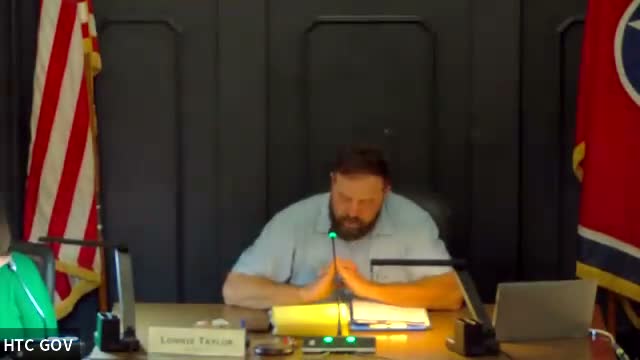
Members of the Trousdale County Board of Zoning Appeals on the evening's agenda received a training from Amanda Harrington on the Tennessee Open Meetings Act and state conflict‑of‑interest rules, focusing on when board discussion must occur in public and when recusal is required.
Harrington told those present that “serial meetings” — including a sequence of one‑on‑one calls or reply‑all email threads — can amount to prohibited deliberation outside a public forum. She said the rules can apply even when exchanges are brief and warned that, "that is a violation of the Tennessee open meetings law." She cited state statutory guidance (TCA provisions discussed during the presentation) and urged members to use disclosure and recusal to preserve procedural fairness.
The trainer explained key distinctions the board must observe: BZAs operate in a quasi‑judicial role and face stricter scrutiny than planning commissions when courts review cases. She emphasized that disclosure should be made early and on the record and that recusal — physically leaving the dais for a given item when appropriate — helps avoid the appearance of bias and preserves the record. "When impartiality might reasonably be questioned, disclose promptly," Harrington said.
Board members asked practical questions. One committee member asked whether it is acceptable to discuss a past meeting once it is concluded; Harrington replied that post‑meeting, nonpending items may be discussed, but not when an item remains pending. A board member asked what to do if a potential conflict becomes apparent during a hearing; Harrington advised not to interrupt a speaker, but to raise a point of order and state the possible conflict on the record as soon as it is realized so the board can determine whether recusal is required.
Harrington also reminded the board that two members constitute a quorum for this body and cautioned that subtle signals — body language or comments from a recused member — can still create the appearance of influence. She noted courts reviewing land‑use decisions focus on the fairness of the process and the record rather than the merits of the underlying decision; defective procedures can lead to rehearing or reversal even when a decision may seem substantively correct.
The training session was recorded; Harrington said a two‑hour recorded session exists that covers much of the material she presented. No formal action followed the training. The board moved on to other agenda items after the presentation.
Harrington told those present that “serial meetings” — including a sequence of one‑on‑one calls or reply‑all email threads — can amount to prohibited deliberation outside a public forum. She said the rules can apply even when exchanges are brief and warned that, "that is a violation of the Tennessee open meetings law." She cited state statutory guidance (TCA provisions discussed during the presentation) and urged members to use disclosure and recusal to preserve procedural fairness.
The trainer explained key distinctions the board must observe: BZAs operate in a quasi‑judicial role and face stricter scrutiny than planning commissions when courts review cases. She emphasized that disclosure should be made early and on the record and that recusal — physically leaving the dais for a given item when appropriate — helps avoid the appearance of bias and preserves the record. "When impartiality might reasonably be questioned, disclose promptly," Harrington said.
Board members asked practical questions. One committee member asked whether it is acceptable to discuss a past meeting once it is concluded; Harrington replied that post‑meeting, nonpending items may be discussed, but not when an item remains pending. A board member asked what to do if a potential conflict becomes apparent during a hearing; Harrington advised not to interrupt a speaker, but to raise a point of order and state the possible conflict on the record as soon as it is realized so the board can determine whether recusal is required.
Harrington also reminded the board that two members constitute a quorum for this body and cautioned that subtle signals — body language or comments from a recused member — can still create the appearance of influence. She noted courts reviewing land‑use decisions focus on the fairness of the process and the record rather than the merits of the underlying decision; defective procedures can lead to rehearing or reversal even when a decision may seem substantively correct.
The training session was recorded; Harrington said a two‑hour recorded session exists that covers much of the material she presented. No formal action followed the training. The board moved on to other agenda items after the presentation.
View the Full Meeting & All Its Details
This article offers just a summary. Unlock complete video, transcripts, and insights as a Founder Member.
✓
Watch full, unedited meeting videos
✓
Search every word spoken in unlimited transcripts
✓
AI summaries & real-time alerts (all government levels)
✓
Permanent access to expanding government content
30-day money-back guarantee
