District proposes restorative approach to nicotine vaping offenses; board questions ISS/OSS consequences
March 10, 2026 | Battle Creek Public Schools, School Boards, Michigan
This article was created by AI summarizing key points discussed. AI makes mistakes, so for full details and context, please refer to the video of the full meeting. Please report any errors so we can fix them. Report an error »
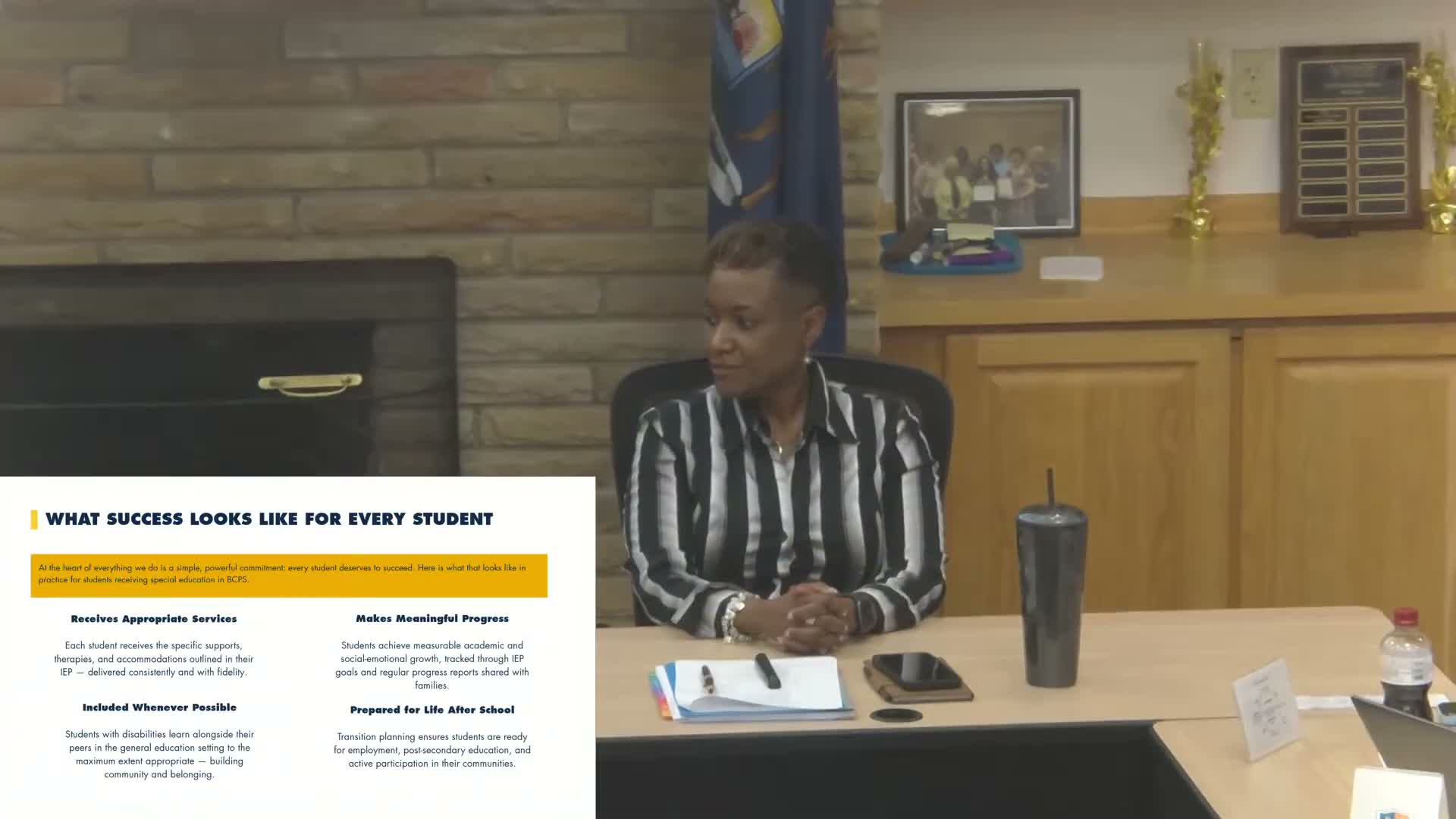
Terry, who developed a proposed restorative process for vaping at the superintendent's request, told the board the procedure is meant to address nicotine vaping (not marijuana) through education, intervention and family partnership rather than to punish addiction. The plan described a multi-step response that starts with confiscating a vape pen and parent notification, proceeds through graduated in-school educational interventions (including one-hour in-school work/education and in-school suspension for larger interventions), and reserves out-of-school suspension as a final step after repeated incidents and individualized planning.
Terry said approved educational programs are national, free to the district, and can be delivered individually or with support staff, and noted administration is considering reducing the proposed six steps to three to simplify implementation. Board members raised concerns about removing students from instructional time as a deterrent and whether repeated ISS/OSS is the right approach for a behavior some described as an addiction. An addictions therapist in the audience cautioned that education alone may not suffice and that immediate removal from class risks harming attendance and learning.
Terry also told the board that once vape detectors are installed in buildings, administrators expect a spike in recorded incidents because detectors will capture smoke events administrators cannot otherwise easily detect; the restorative procedure is intended to provide an immediate educational response at the time of detection. The board discussed implementation logistics and the administrative workload from potentially increased incident counts; no formal policy vote was recorded during the work session excerpt.
Terry said approved educational programs are national, free to the district, and can be delivered individually or with support staff, and noted administration is considering reducing the proposed six steps to three to simplify implementation. Board members raised concerns about removing students from instructional time as a deterrent and whether repeated ISS/OSS is the right approach for a behavior some described as an addiction. An addictions therapist in the audience cautioned that education alone may not suffice and that immediate removal from class risks harming attendance and learning.
Terry also told the board that once vape detectors are installed in buildings, administrators expect a spike in recorded incidents because detectors will capture smoke events administrators cannot otherwise easily detect; the restorative procedure is intended to provide an immediate educational response at the time of detection. The board discussed implementation logistics and the administrative workload from potentially increased incident counts; no formal policy vote was recorded during the work session excerpt.
View the Full Meeting & All Its Details
This article offers just a summary. Unlock complete video, transcripts, and insights as a Founder Member.
✓
Watch full, unedited meeting videos
✓
Search every word spoken in unlimited transcripts
✓
AI summaries & real-time alerts (all government levels)
✓
Permanent access to expanding government content
30-day money-back guarantee
