BOE special taxes report: alcoholic beverage and insurers revenue slightly above forecasts
March 09, 2026 | Board of Equalization, Other State Agencies, Executive, California
This article was created by AI summarizing key points discussed. AI makes mistakes, so for full details and context, please refer to the video of the full meeting. Please report any errors so we can fix them. Report an error »
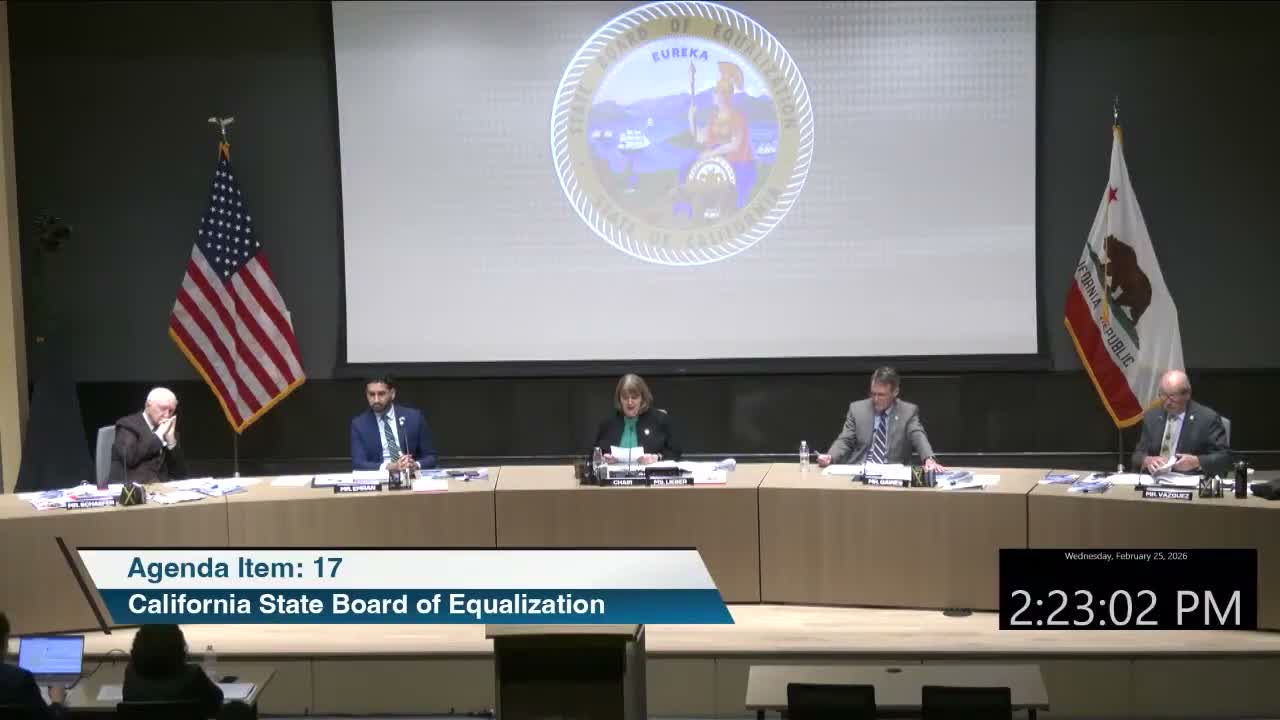
Laurel Williams, technical advisor for BOE special tax programs, presented the quarterly status for the tax and insurers program and the alcoholic beverage tax.
Williams said the tax and insurers program has 2,837 accounts and FY25‑26 revenues of approximately $2.19 billion, roughly 0.08% above the Department of Finance forecast. The alcoholic beverage program has about 10,640 accounts and revenues near $263 million for the fiscal year, about 1.2% above forecast, which Williams said equates to an increase of approximately $3 million for alcohol and about $17 million for the insurance program relative to expectations.
She described market shifts that may affect future receipts: overall alcoholic beverage consumption has declined since the pandemic peak, with beer and wine showing larger drops and a rise in prepackaged ready‑to‑drink cocktails competing for retail shelf space. Williams also described consistent opt‑out rates for public disclosure among winegrower and beer filings (roughly 65% and just over 60%, respectively).
Board members asked technical questions, including the minimum ABV threshold for taxation and whether nonalcoholic beverages or food uses of alcohol affect taxable status; Williams said the program taxes at the distributor level, relies on regulatory ABV thresholds and would follow up with a specific ABV figure on request.
Why it matters: small percentage variances at the program level translate into multi‑million dollar differences, and market shifts could change future compliance and revenue patterns for the state.
Williams said the tax and insurers program has 2,837 accounts and FY25‑26 revenues of approximately $2.19 billion, roughly 0.08% above the Department of Finance forecast. The alcoholic beverage program has about 10,640 accounts and revenues near $263 million for the fiscal year, about 1.2% above forecast, which Williams said equates to an increase of approximately $3 million for alcohol and about $17 million for the insurance program relative to expectations.
She described market shifts that may affect future receipts: overall alcoholic beverage consumption has declined since the pandemic peak, with beer and wine showing larger drops and a rise in prepackaged ready‑to‑drink cocktails competing for retail shelf space. Williams also described consistent opt‑out rates for public disclosure among winegrower and beer filings (roughly 65% and just over 60%, respectively).
Board members asked technical questions, including the minimum ABV threshold for taxation and whether nonalcoholic beverages or food uses of alcohol affect taxable status; Williams said the program taxes at the distributor level, relies on regulatory ABV thresholds and would follow up with a specific ABV figure on request.
Why it matters: small percentage variances at the program level translate into multi‑million dollar differences, and market shifts could change future compliance and revenue patterns for the state.
View the Full Meeting & All Its Details
This article offers just a summary. Unlock complete video, transcripts, and insights as a Founder Member.
✓
Watch full, unedited meeting videos
✓
Search every word spoken in unlimited transcripts
✓
AI summaries & real-time alerts (all government levels)
✓
Permanent access to expanding government content
30-day money-back guarantee
