Committee approves Cook County grant application to study Main Street; residents press for full bike network
March 10, 2026 | Evanston, Cook County, Illinois
This article was created by AI summarizing key points discussed. AI makes mistakes, so for full details and context, please refer to the video of the full meeting. Please report any errors so we can fix them. Report an error »
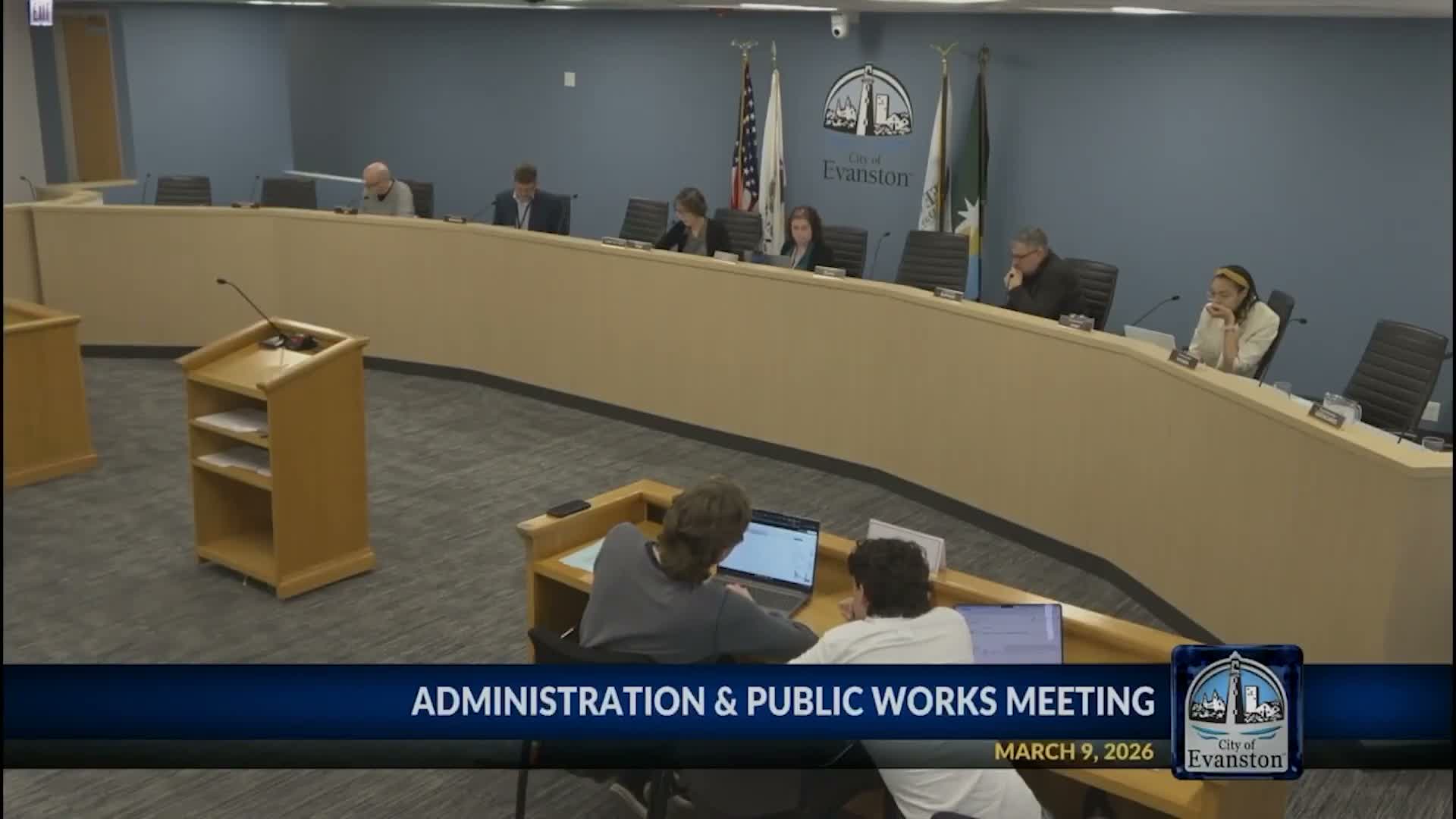
The Evanston Administration & Public Works Committee on March 9 voted 6–0 to authorize an application to the Cook County Department of Transportation and Highways for Invest in Cook 2026 grant funding to pay for design and engineering services for Main Street improvements.
Chris Sous, assistant city engineer, told the committee the grant application covers preliminary phase‑1 and phase‑2 engineering services with proposed limits from Hartrey to Asbury. Sous said the scope is intended to identify feasible improvements to safety and connectivity and cited possible measures including a two‑way cycle path between Dodge and Ashland, signal work and sidewalk improvements. "We put forth a scope of services for them to identify and provide alternatives as to what can be done within those limits," Sous said.
Public commenters who spoke before the agenda item urged broader bike and pedestrian planning for Main Street. Gabe Weiss said piecemeal improvements leave dangerous gaps and urged a connected network: "If we build a road to a highway that stops short of connecting to that highway, the engineers would be run out of town," he said. Jim Perkins and Jeff Balch also called for prioritizing bike and pedestrian safety and ensuring the project connects schools, parks and transit hubs.
Committee members pressed staff on how tightly the city would be bound to the grant’s geographic limits if the funding is accepted. Sous said the grant funds will cover work within the stipulated project limits (Hartrey to Asbury), and that expanding the funded limits after award would require city funds to pay for additional design work. He emphasized community engagement during the design phase to identify potential alternatives and adjustments.
A committee member noted that parts of Main Street are easier to retrofit than others and asked staff to flag straightforward blocks for quicker progress; Sous said those blocks were identified in the scope as lower‑effort opportunities.
The resolution authorizing the grant application was approved by roll call, 6–0. Staff said the grant application is a step to fund engineering and feasibility work; final design decisions would come after consultant analysis and public engagement.
Chris Sous, assistant city engineer, told the committee the grant application covers preliminary phase‑1 and phase‑2 engineering services with proposed limits from Hartrey to Asbury. Sous said the scope is intended to identify feasible improvements to safety and connectivity and cited possible measures including a two‑way cycle path between Dodge and Ashland, signal work and sidewalk improvements. "We put forth a scope of services for them to identify and provide alternatives as to what can be done within those limits," Sous said.
Public commenters who spoke before the agenda item urged broader bike and pedestrian planning for Main Street. Gabe Weiss said piecemeal improvements leave dangerous gaps and urged a connected network: "If we build a road to a highway that stops short of connecting to that highway, the engineers would be run out of town," he said. Jim Perkins and Jeff Balch also called for prioritizing bike and pedestrian safety and ensuring the project connects schools, parks and transit hubs.
Committee members pressed staff on how tightly the city would be bound to the grant’s geographic limits if the funding is accepted. Sous said the grant funds will cover work within the stipulated project limits (Hartrey to Asbury), and that expanding the funded limits after award would require city funds to pay for additional design work. He emphasized community engagement during the design phase to identify potential alternatives and adjustments.
A committee member noted that parts of Main Street are easier to retrofit than others and asked staff to flag straightforward blocks for quicker progress; Sous said those blocks were identified in the scope as lower‑effort opportunities.
The resolution authorizing the grant application was approved by roll call, 6–0. Staff said the grant application is a step to fund engineering and feasibility work; final design decisions would come after consultant analysis and public engagement.
View the Full Meeting & All Its Details
This article offers just a summary. Unlock complete video, transcripts, and insights as a Founder Member.
✓
Watch full, unedited meeting videos
✓
Search every word spoken in unlimited transcripts
✓
AI summaries & real-time alerts (all government levels)
✓
Permanent access to expanding government content
30-day money-back guarantee
