Ferguson‑Florissant superintendent outlines case for Prop S operating levy
March 10, 2026 | Florissant, St. Louis County, Missouri
This article was created by AI summarizing key points discussed. AI makes mistakes, so for full details and context, please refer to the video of the full meeting. Please report any errors so we can fix them. Report an error »
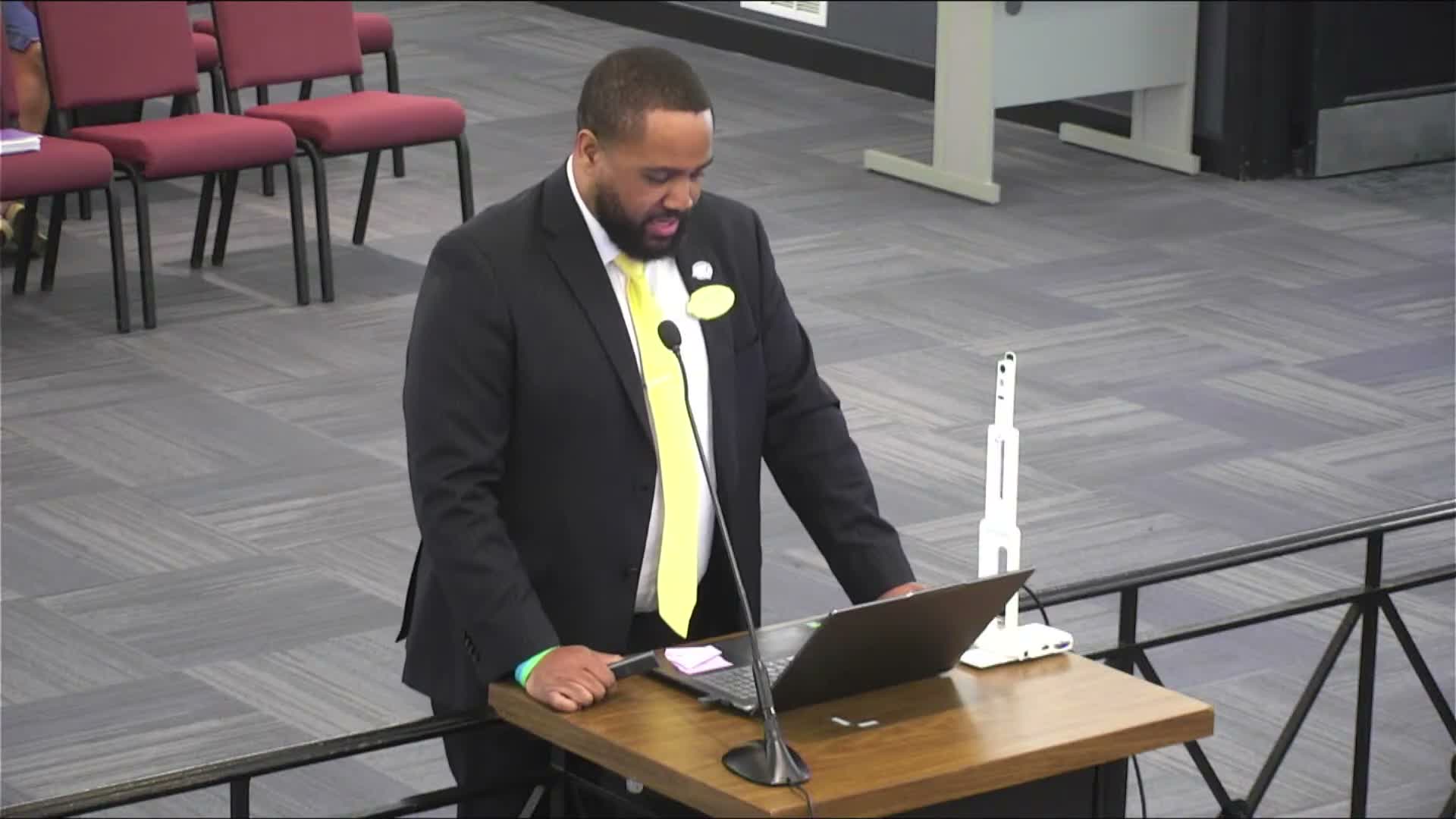
Dr. Howard Fields, superintendent of the Ferguson‑Florissant School District, told the Florissant City Council that the district will place Prop S — a proposed 48¢ operating levy increase — on the April 7 ballot to fund “safe schools, successful students, supported staff, and a strong community.” He said the measure is intended to fund security and physical‑plant upgrades, cybersecurity and improved bus‑notification technology, and to support non‑administrative staff pay increases.
Fields presented a 15‑year budget narrative showing enrollment declines, reliance on one‑time federal relief funds and a pattern of structural shortfalls that left the district with reduced unrestricted fund balances. He said the district has made efficiency moves — attrition hiring freezes, departmental reorganizations and administrative cuts — but still faces capital and operational gaps, including 1,600 cameras that need firmware and other upgrades and a lack of perimeter resistance at some high school entrances.
Fields quantified some impacts: he said a 48¢ levy would translate to roughly $91 a year (about $8 a month) for a homeowner with a $100,000 assessed value, and noted that senior‑tax‑freeze recipients would not see the increase. He also said the district has recorded about 433 RECA responses since January and about 1,000 this school year, and that claims processing will raise staff workload once compensation payments begin.
Council members asked clarifying questions about which staff categories would benefit and whether the levy covers certified teachers or only support staff; Fields said the ballot language targets non‑administrative positions broadly, including bus drivers, custodians and teachers who are not central‑office administrators. He also described constraints on levy spending under state law (for example, not covering major construction paid by debt levies) and pointed council members to more detailed budget charts he displayed.
Fields concluded by urging transparency and community engagement, saying the district hopes voters will weigh safety, staffing and long‑term fiscal stability when the measure appears on the ballot. The presentation ended with council gratitude and no formal council action recorded at the meeting.
Fields presented a 15‑year budget narrative showing enrollment declines, reliance on one‑time federal relief funds and a pattern of structural shortfalls that left the district with reduced unrestricted fund balances. He said the district has made efficiency moves — attrition hiring freezes, departmental reorganizations and administrative cuts — but still faces capital and operational gaps, including 1,600 cameras that need firmware and other upgrades and a lack of perimeter resistance at some high school entrances.
Fields quantified some impacts: he said a 48¢ levy would translate to roughly $91 a year (about $8 a month) for a homeowner with a $100,000 assessed value, and noted that senior‑tax‑freeze recipients would not see the increase. He also said the district has recorded about 433 RECA responses since January and about 1,000 this school year, and that claims processing will raise staff workload once compensation payments begin.
Council members asked clarifying questions about which staff categories would benefit and whether the levy covers certified teachers or only support staff; Fields said the ballot language targets non‑administrative positions broadly, including bus drivers, custodians and teachers who are not central‑office administrators. He also described constraints on levy spending under state law (for example, not covering major construction paid by debt levies) and pointed council members to more detailed budget charts he displayed.
Fields concluded by urging transparency and community engagement, saying the district hopes voters will weigh safety, staffing and long‑term fiscal stability when the measure appears on the ballot. The presentation ended with council gratitude and no formal council action recorded at the meeting.
Don't Miss a Word: See the Full Meeting!
Go beyond summaries. Unlock every video, transcript, and key insight with a Founder Membership.
✓
Get instant access to full meeting videos
✓
Search and clip any phrase from complete transcripts
✓
Receive AI-powered summaries & custom alerts
✓
Enjoy lifetime, unrestricted access to government data
30-day money-back guarantee
