Evanston council introduces property‑tax 'circuit breaker' pilot, amends eligibility and tables final action to April
March 10, 2026 | Evanston, Cook County, Illinois
This article was created by AI summarizing key points discussed. AI makes mistakes, so for full details and context, please refer to the video of the full meeting. Please report any errors so we can fix them. Report an error »
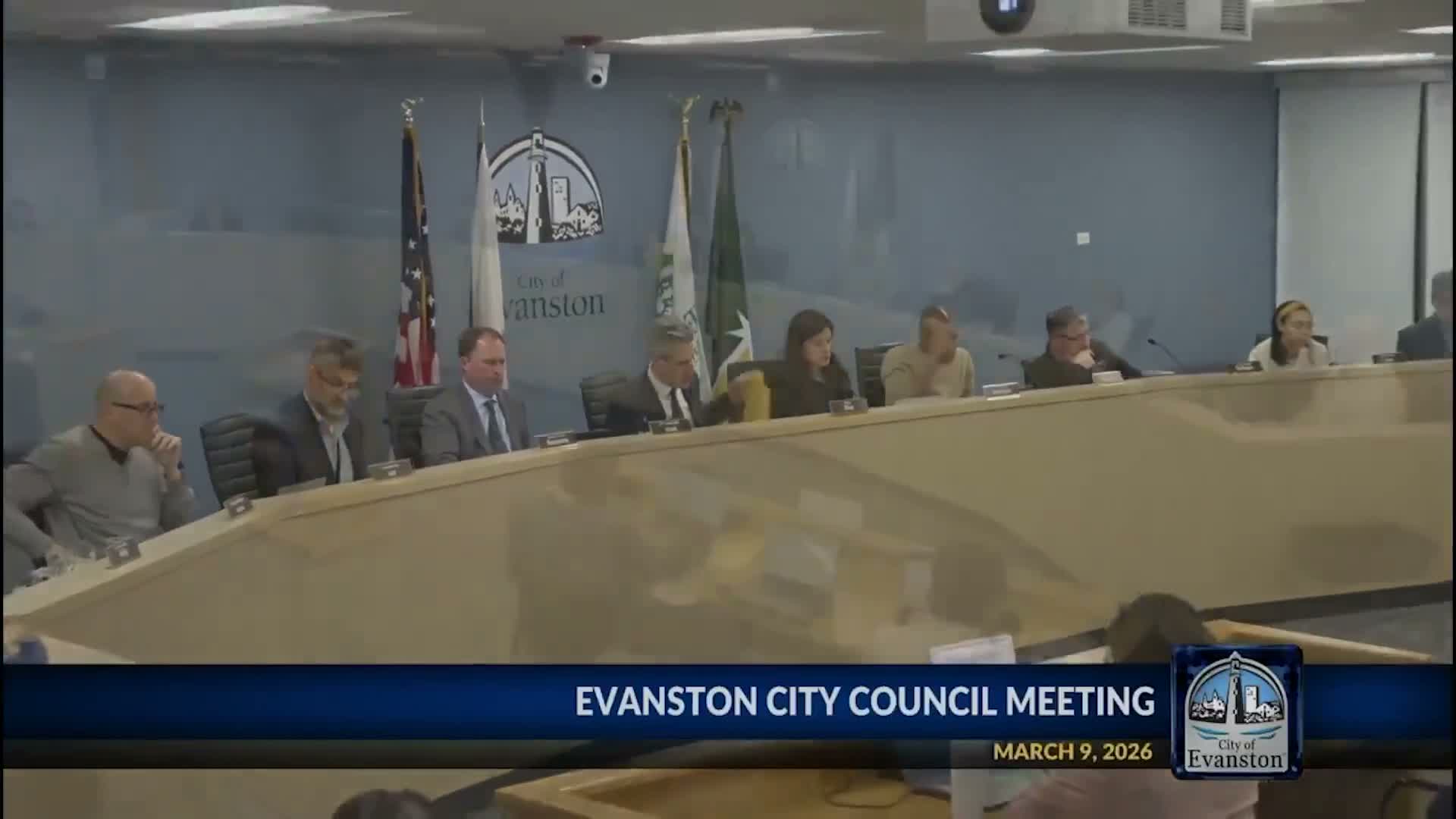
The Evanston City Council on March 9 introduced an ordinance (22 O 26) to create a pilot property‑tax circuit breaker intended to provide targeted, short‑term relief to qualifying long‑term homeowners and then voted to table the item until its first regular meeting in April after extensive public comment and council debate.
Councilmember Claire Kelly, the ordinance sponsor, said the program is meant to preserve long‑time homeownership and help households facing rising property‑tax burdens. Kelly said the program would verify eligibility and require applicants to exhaust other available deductions or exemptions first. "We would make sure and verify that the applicant has applied for all other available property tax deductions, exemptions, or other forms," Kelly moved on the floor as an amendment; the council adopted the amendment unanimously before the item was tabled.
Supporters in the chamber and online urged quick action. Tricia Connolly, a Second Ward resident, asked the council to allocate $500,000 from the Northwestern Good Neighbor Fund for a pilot circuit breaker program to help long‑time homeowners remain in their houses. "People need relief now," Connolly said. Multiple other residents, including Malika Gardner and several speakers during the online public comment period, described research, identified eligible populations and pleaded for prompt council action as tax bills arrived.
Opponents and some councilmembers urged caution. Several members said the measure should be considered within the broader Strategic Housing Plan and asked staff for clearer administrative language, eligibility tests and a full cost estimate. Councilmember Nusma Iles Suffredan, among others, said the draft ordinance lacked clear language about how the city would make payments (the city does not issue property tax bills) and did not set thresholds to exclude applicants with substantial unreported assets. "If the intent is for the city to write a check, hey — so be it. Let's just clarify who that check is going to be written to and write that into the ordinance," he said.
Councilmember Burns moved to table the ordinance to the April meeting so that staff can reconcile the proposal with the Strategic Housing Plan and provide additional cost and eligibility analyses; the motion passed 5–4. Burns said tabling preserved the item for further work rather than killing it outright.
Councilmembers and staff agreed on several follow‑up tasks before the April meeting: clarify whether payments would be applied directly to tax bills or paid as reimbursements or grants, estimate the number of likely applicants under the proposed income and size thresholds, add asset‑and‑resource tests to eligibility language and identify administrative costs. Several councilmembers said they would also propose alternative ways to target anti‑displacement funds, such as expanding existing emergency assistance programs.
The ordinance will return to council in April with staff analysis and any new amendments.
Councilmember Claire Kelly, the ordinance sponsor, said the program is meant to preserve long‑time homeownership and help households facing rising property‑tax burdens. Kelly said the program would verify eligibility and require applicants to exhaust other available deductions or exemptions first. "We would make sure and verify that the applicant has applied for all other available property tax deductions, exemptions, or other forms," Kelly moved on the floor as an amendment; the council adopted the amendment unanimously before the item was tabled.
Supporters in the chamber and online urged quick action. Tricia Connolly, a Second Ward resident, asked the council to allocate $500,000 from the Northwestern Good Neighbor Fund for a pilot circuit breaker program to help long‑time homeowners remain in their houses. "People need relief now," Connolly said. Multiple other residents, including Malika Gardner and several speakers during the online public comment period, described research, identified eligible populations and pleaded for prompt council action as tax bills arrived.
Opponents and some councilmembers urged caution. Several members said the measure should be considered within the broader Strategic Housing Plan and asked staff for clearer administrative language, eligibility tests and a full cost estimate. Councilmember Nusma Iles Suffredan, among others, said the draft ordinance lacked clear language about how the city would make payments (the city does not issue property tax bills) and did not set thresholds to exclude applicants with substantial unreported assets. "If the intent is for the city to write a check, hey — so be it. Let's just clarify who that check is going to be written to and write that into the ordinance," he said.
Councilmember Burns moved to table the ordinance to the April meeting so that staff can reconcile the proposal with the Strategic Housing Plan and provide additional cost and eligibility analyses; the motion passed 5–4. Burns said tabling preserved the item for further work rather than killing it outright.
Councilmembers and staff agreed on several follow‑up tasks before the April meeting: clarify whether payments would be applied directly to tax bills or paid as reimbursements or grants, estimate the number of likely applicants under the proposed income and size thresholds, add asset‑and‑resource tests to eligibility language and identify administrative costs. Several councilmembers said they would also propose alternative ways to target anti‑displacement funds, such as expanding existing emergency assistance programs.
The ordinance will return to council in April with staff analysis and any new amendments.
View the Full Meeting & All Its Details
This article offers just a summary. Unlock complete video, transcripts, and insights as a Founder Member.
✓
Watch full, unedited meeting videos
✓
Search every word spoken in unlimited transcripts
✓
AI summaries & real-time alerts (all government levels)
✓
Permanent access to expanding government content
30-day money-back guarantee
