Committee advances bill barring some out‑of‑pocket costs for breast cancer diagnostic follow‑up
March 09, 2026 | 2026 Legislature Arizona, Arizona
This article was created by AI summarizing key points discussed. AI makes mistakes, so for full details and context, please refer to the video of the full meeting. Please report any errors so we can fix them. Report an error »
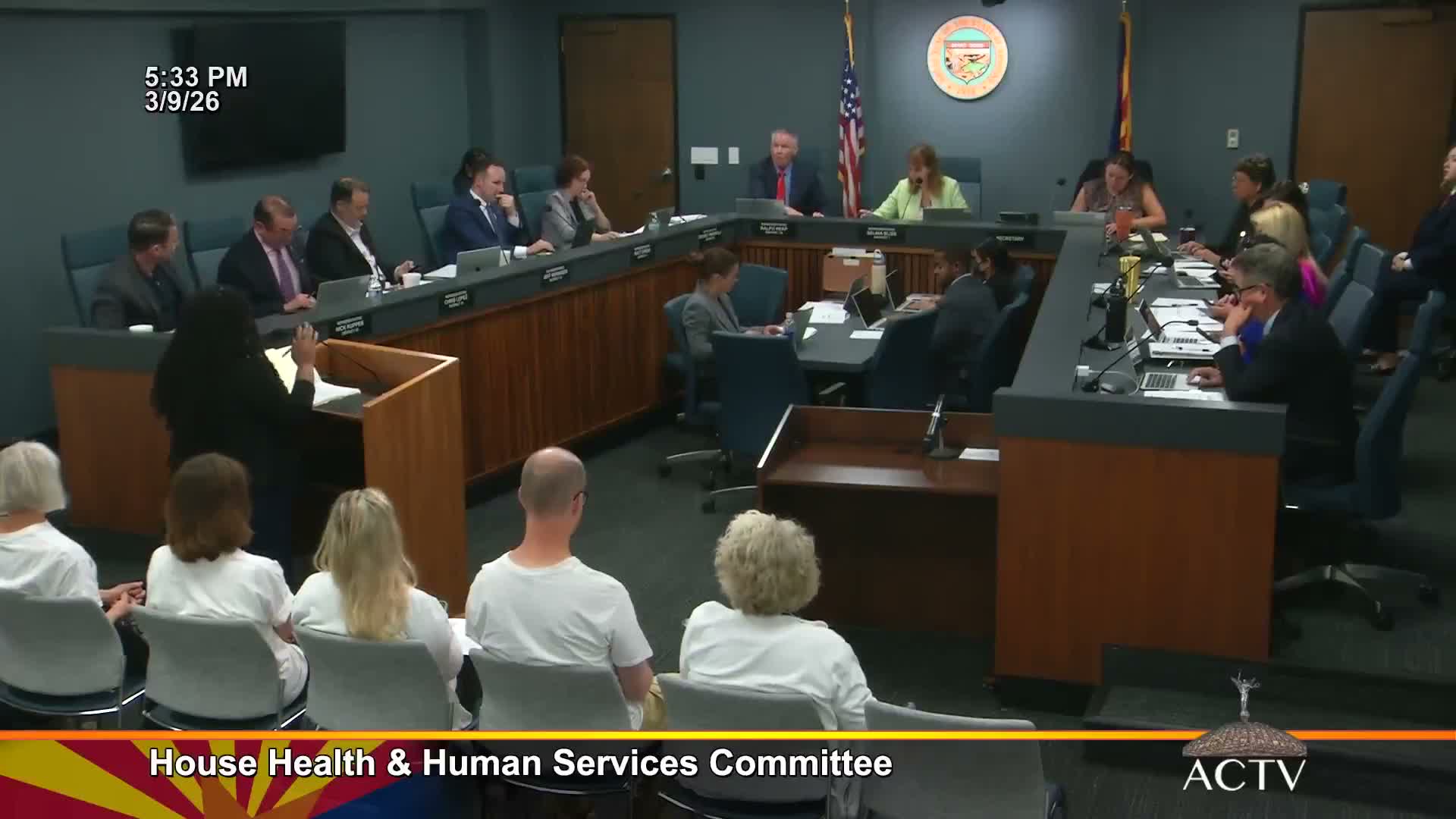
Senate Bill 11‑65, sponsored by Senator Hilda Angus (LD 30), received a due‑pass recommendation from the House Committee on Health and Human Services after sponsors and advocates described real‑world cases in which follow‑up diagnostic testing led to surprise bills or delays.
The bill, which sponsors said would take effect Jan. 1, 2027, prohibits an insurer that issues, amends, delivers or renews a commercial policy on or after that date from imposing cost‑sharing for preventive screening services for breast cancer and for additional screening services required to complete the screening continuum, including diagnostic breast exams and supplemental examinations.
Senator Angus described her own experience with an unexpected bill after a diagnostic follow‑up and said she was motivated to work with the American Cancer Society and Susan G. Komen to remove a financial barrier to diagnosis. "I got a bill for $2,500," she said, describing the surprise cost after follow‑up testing.
Stuart Goodman, representing Susan G. Komen, told the committee the measure addresses a common problem: "About 20 percent of women will delay the diagnostic testing that results after an abnormality," he said, and the bill is intended to ensure the continuum of testing to reach a diagnosis without imposing cost penalties that deter follow‑up. Goodman said he and stakeholders negotiated language with insurers including Blue Cross Blue Shield, which remained neutral on the measure.
Supporters said the bill targets the commercial insurance market and does not change Medicaid coverage, which already lacks the same type of cost‑sharing. The committee returned SB 11‑65 with a due‑pass recommendation by a vote of 12‑0.
What the bill does and why it matters
Proponents said eliminating out‑of‑pocket costs for follow‑up diagnostics will reduce delays in diagnosis that can worsen outcomes and increase downstream costs. Stuart Goodman said dozens of other states have adopted similar laws; sponsors portrayed the measure as a targeted fix for a specific financial barrier to timely cancer diagnosis.
Next steps
SB 11‑65 will be scheduled for the next steps in the House process following the committee recommendation. Supporters asked lawmakers to preserve the committee language and noted they had negotiated the bill text with insurance stakeholders.
The bill, which sponsors said would take effect Jan. 1, 2027, prohibits an insurer that issues, amends, delivers or renews a commercial policy on or after that date from imposing cost‑sharing for preventive screening services for breast cancer and for additional screening services required to complete the screening continuum, including diagnostic breast exams and supplemental examinations.
Senator Angus described her own experience with an unexpected bill after a diagnostic follow‑up and said she was motivated to work with the American Cancer Society and Susan G. Komen to remove a financial barrier to diagnosis. "I got a bill for $2,500," she said, describing the surprise cost after follow‑up testing.
Stuart Goodman, representing Susan G. Komen, told the committee the measure addresses a common problem: "About 20 percent of women will delay the diagnostic testing that results after an abnormality," he said, and the bill is intended to ensure the continuum of testing to reach a diagnosis without imposing cost penalties that deter follow‑up. Goodman said he and stakeholders negotiated language with insurers including Blue Cross Blue Shield, which remained neutral on the measure.
Supporters said the bill targets the commercial insurance market and does not change Medicaid coverage, which already lacks the same type of cost‑sharing. The committee returned SB 11‑65 with a due‑pass recommendation by a vote of 12‑0.
What the bill does and why it matters
Proponents said eliminating out‑of‑pocket costs for follow‑up diagnostics will reduce delays in diagnosis that can worsen outcomes and increase downstream costs. Stuart Goodman said dozens of other states have adopted similar laws; sponsors portrayed the measure as a targeted fix for a specific financial barrier to timely cancer diagnosis.
Next steps
SB 11‑65 will be scheduled for the next steps in the House process following the committee recommendation. Supporters asked lawmakers to preserve the committee language and noted they had negotiated the bill text with insurance stakeholders.
Don't Miss a Word: See the Full Meeting!
Go beyond summaries. Unlock every video, transcript, and key insight with a Founder Membership.
✓
Get instant access to full meeting videos
✓
Search and clip any phrase from complete transcripts
✓
Receive AI-powered summaries & custom alerts
✓
Enjoy lifetime, unrestricted access to government data
30-day money-back guarantee
