Bill to require guardian notice in court‑ordered treatment wins committee approval after emotional testimony
March 09, 2026 | 2026 Legislature Arizona, Arizona
This article was created by AI summarizing key points discussed. AI makes mistakes, so for full details and context, please refer to the video of the full meeting. Please report any errors so we can fix them. Report an error »
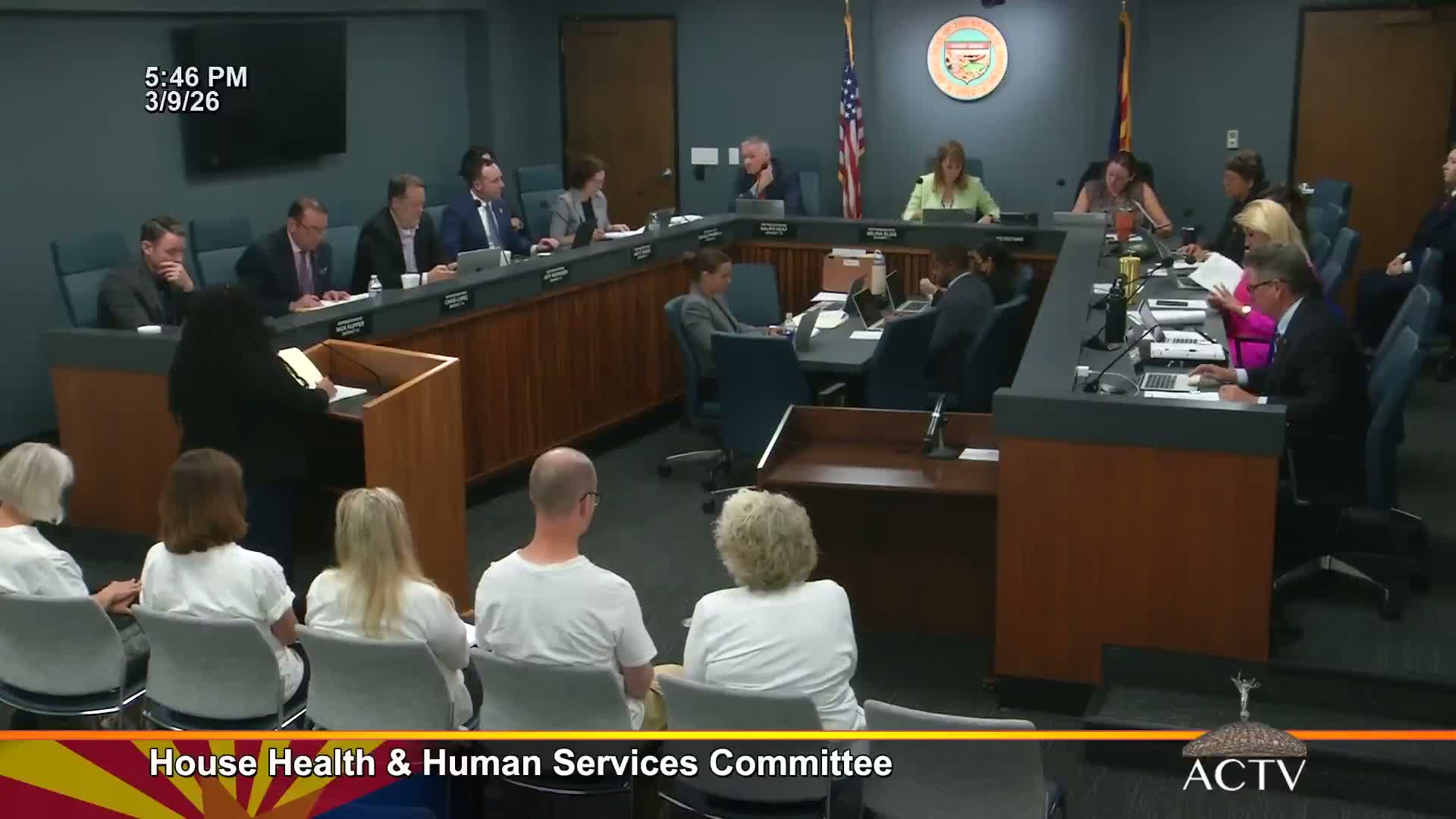
Senate Bill 12‑43, sponsored by Senator Hilda Angus, would add the guardian of a patient under court‑ordered treatment to the list of people a medical director must notify before discharging the patient and would allow a guardian to file an application to continue court‑ordered treatment.
Sponsor testimony and speakers from advocacy groups described incidents in which court orders lapsed or were discontinued without notice to caregivers or victims. Rachel Strife of Arizona Mad Moms recounted that treatment orders are often the most dangerous time for people with severe mental illness: "If those orders are not renewed... that's the dangerous time," she told the committee. Maureen Petkowitz described a family case in which her son, who developed schizophrenia, was discharged without treatment orders and later decompensated; she urged lawmakers to support the bill.
Supporters said treatment orders involve due process and medical review, but that communication failures between state systems and tribes or guardians create dangerous gaps. The committee returned SB 12‑43 with a due‑pass recommendation, 10‑0, with two members absent.
Why supporters say the bill is needed
Witnesses described cases in which orders expired or were discontinued without notifying guardians or victims, creating a period when a person with severe mental illness could lose access to court‑ordered medication and treatment. Sponsor Senator Angus said the measure grew out of interim oversight hearings and stakeholder meetings focused on improving coordination between DCS, tribes and state providers.
Next steps
SB 12‑43 will proceed in the House process after the committee's due‑pass recommendation. Supporters asked legislators to maintain the committee‑approved language so that guardians and caregivers receive timely notice of changes to court‑ordered treatment.
Sponsor testimony and speakers from advocacy groups described incidents in which court orders lapsed or were discontinued without notice to caregivers or victims. Rachel Strife of Arizona Mad Moms recounted that treatment orders are often the most dangerous time for people with severe mental illness: "If those orders are not renewed... that's the dangerous time," she told the committee. Maureen Petkowitz described a family case in which her son, who developed schizophrenia, was discharged without treatment orders and later decompensated; she urged lawmakers to support the bill.
Supporters said treatment orders involve due process and medical review, but that communication failures between state systems and tribes or guardians create dangerous gaps. The committee returned SB 12‑43 with a due‑pass recommendation, 10‑0, with two members absent.
Why supporters say the bill is needed
Witnesses described cases in which orders expired or were discontinued without notifying guardians or victims, creating a period when a person with severe mental illness could lose access to court‑ordered medication and treatment. Sponsor Senator Angus said the measure grew out of interim oversight hearings and stakeholder meetings focused on improving coordination between DCS, tribes and state providers.
Next steps
SB 12‑43 will proceed in the House process after the committee's due‑pass recommendation. Supporters asked legislators to maintain the committee‑approved language so that guardians and caregivers receive timely notice of changes to court‑ordered treatment.
Don't Miss a Word: See the Full Meeting!
Go beyond summaries. Unlock every video, transcript, and key insight with a Founder Membership.
✓
Get instant access to full meeting videos
✓
Search and clip any phrase from complete transcripts
✓
Receive AI-powered summaries & custom alerts
✓
Enjoy lifetime, unrestricted access to government data
30-day money-back guarantee
